Digging deep: Cliffs asks owners for $60M
The fallout from a bad economy that is wreaking havoc on the high end of the leisure residential market, as well as an unfortunate bet on Tiger Woods, may have caught up with upscale Cliffs Communities in North and South Carolina. According to a Cliffs property owner, developer Jim Anthony is testing residents' and club members’ appetite to commit $60 million in debt financing, or about 40% of what The Cliffs has reportedly invested in its High Carolina community, including land and Woods’ alleged $20 million design fee.
The $60 million would be raised in the form of bond notes that will pay a minimum of 12% interest
The Cliffs investigated outside debt financing but their payments would have exceeded 12%, according to the owner. Such interest rates imply great risk and, if anything, compromise The Cliffs' well worked public image of sophistication. That image, however, has taken a beating courtesy of the Woods scandal and the ill-timed placement of embarrassing billboards around Asheville.
By offering ownership of the debt to residents, The Cliffs avoids the potentially unpleasant publicity of a “junk” rating. It also avoids the potential that, in the case of a default on the loan, outside investors would likely rush to liquidate their investment, an especially unpleasant scenario for owners of Cliffs properties who could see their property values plummet along with the value of their club memberships (for which they paid as much as $150,000).
According to our owner contact, who says he is inclined at this point to buy into the bond note, The Cliffs has opened its books to residents, and Jim Anthony has put up his personal assets, along with The Cliffs amenities. Cliffs owners and club members, some of them lawyers and financial experts, are proceeding with due diligence, but no matter what they decide, they appear to be between a rock and a hard place. They can either support The Cliffs with the requested $60 million or risk outside investors carving up their communities in the event of default.
Give Jim Anthony and The Cliffs organization props for coming up with an offer owners can hardly refuse.
 Home On The Course newsletter
Click here to sign up for our Free monthly newsletter, loaded with helpful information and observations about golf communities and their golf courses.
Last minute trip south
It has been a cold and long winter without golf, and I was looking forward to a March trip to South Carolina. But my wife, bless her heart, has convinced me to head south next week to attend the annual meetings of the property owner association and golf club at Pawleys Plantation, where we own a vacation condo. Along the way, I intend to visit and review a golf community each day and, if weather permits, play golf for the first time in three months. And I will still get to play golf in the Myrtle Beach area in March.
Here is the tentative list of golf communities I will review on my drive south:
Bayside Plantation, Shelbyville, DE
This will be my first visit to a Delaware golf community, and even though many people will not consider a community so far north as a place for retirement or a vacation home, the Jack Nicklaus Signature Course has received positive reviews and the community's proximity to the ocean makes it a solid summer vacation venue. Although New Jersey is an entire wide bay away, the ferry from Cape May, NJ, to the charming town of Lewes, DE, provides excellent and frequent service and cuts out more than hour of time and the many headaches of traveling the awful New Jersey Turnpike.
Kilmarlic Golf Club, Powell's Point, NC
In my 20s, I played Outer Banks golf for the first time, in Kill Devil Hills, site of the Wright Brothers first flight. It whet an appetite for coastal golf that is now four decades old. I don't know much about Tom Steele, Kilmarlic's architect, but I do know the course was good enough to host the North Carolina Open championship twice in the last five years. Being chosen for that honor in a state that boasts the Pinehurst courses and so many other great ones says something about Kilmarlic.
To be determined (Raleigh area)
I have asked a local real estate agent who specializes in golf real estate to suggest a location for me to visit on the east or south side of this growing metro area. There are many to choose among.
River Landing, Wallace, NC
This will be a return visit to the community, which was built and continues to be owned and developed by a local family. Against the tide, they have continued to add amenities including 18 more holes of golf in the last couple of years. Some of the 36 holes by respected architect Clyde Johnston roll along the Cape Fear River. River Landing's proximity (about an hour) to both Raleigh and Wilmington, two interesting but very different cities, is another plus.
I will be in the Myrtle Beach area next weekend. If anyone has a particular course or golf community they would like me to check out, send me a note.
These Guys Aren’t So Good: The PGA Tour and golf itself needs a new mantra
According to Golfweek magazine, a group of golf organizations have hired a high-profile lobbyist to buff the game’s image in Washington. According to Golfweek’s Gene Yasuda, the PGA of America,
The recent turn in golf’s reputation makes one nostalgic for the days when the game was mostly criticized for its mythical uniform -– white belts and shoes, lime green pants, etc. These have been rough months for golf, especially for the PGA: First Tiger Woods’ “accident” and then, this week, allegations by Scott McCarron that Phil Mickelson is a “cheater” because he is using a faux-legal square-grooved wedge in competition. Mickelson’s rejoinder that the club is not illegal and that three other players are using it (out of more than 140 on tour) doesn’t exactly elevate the sport’s honorable image, nor does the ungentlemanly dust-up between the tour’s #2 player and a journeyman.
Golf has been fortunate that the conduct of its principals has largely
The PGA Tour’s formerly clever ad line, “These Guys Are Good,” rings hollow; and with the disclosures about Woods, it is filled with unfortunate double entendres. Better the tour should start intensify its inconsisten emphasis on its contributions to charities. Perhaps start with a campaign under the banner “These Guys Do Good.”
Talking the walk: Boomers trending toward urban environments, like Daniel Island

Daniel Island features Tom Fazio and Rees Jones golf courses as well as a community that puts many houses within walking distance of all shopping and services.
For years, golf communities at a distance from urban areas have been a lure for retirees. Some folks are content with homes far from a bustling city and do not mind being totally reliant on a car to take them to where any action is, modest though that action may be in the boondocks.
Not me. Although I am resigned to live most of the year in a home on the South Carolina coast,
I thought I might be a little odd in this regard, at least as far as baby boomers go. But according to a recent Urban Land Institute report, I’m actually going with the flow. The ULI reports that, “75% of retiring Boomers said that they want to live in mixed-age and mixed-use communities, i.e. in urban settings.”
The report went on to add that, “Not all will want to move to the central city, and walkable, urbanized suburban town centers will see an influx of aging Boomers.”
Near our home in Connecticut, nearly all condos in such a mixed-use development have sold, despite the extreme troubles in the condo market. Blue Back Square in West Hartford is like a mini-city,
This kind of manufactured urban setting is not new, although the momentum has stalled somewhat during the last five years (hasn’t everything?) as the condo resale market has virtually collapsed. But, adds the Urban Land Institute, “once the Boomers can sell their homes and buy condos, these centers will thrive during the decade ahead.”
Few of these urban centers have the space to include golf courses within their perimeter, but one place that comes close is Daniel Island, outside of Charleston. Daniel Island is more or less self-contained, with many attractive Charleston style homes within walking distance of supermarket, offices, shops and restaurants. Two 18-hole golf courses (Tom Fazio and Rees Jones) are within the confines of Daniel Island but a short drive from most of the housing. Still, Daniel Island captures the spirit of what is often referred to as “new urbanism.”
If the demographers and sociologists are right, Daniel Island could be ahead of its time.
Sunday Best: Week In Review

The clubhouse at Colleton River, where some property prices are as low as $20,000, looks out to the Pete Dye golf course and beyond to marsh and river. The community also includes a Jack Nicklaus Signature course.
Golf lot prices hit harder than homes. I was surprised to see a “foreclosure” golf-view lot for sale for just $49,900 in the upscale Colleton River community just off Hilton Head. At .59 acres, this is no patio lot. I figured the bank was desperate to cash out, but when I looked further at prices in Colleton River, they were as low as $20,000 (not foreclosures). “…lots in our golf communities have all taken a big hit,” says Bluffon, SC, area real estate agent Tom Jackson. “Great timing for someone who wants to build.” Figure $175 a square foot to build a home in keeping with those around it, and you could be all set for under $550,000 in one of the south’s best regarded golf communities. Most homes in Colleton River range from the high six figures to $1 million plus. The golf is excellent, featuring both Jack Nicklaus and Pete Dye golf courses that are studded with live oaks and marsh views.
Here we go again? Most economists point to minimal down payments and low interest loans as fundamental reasons for the current housing mess. My brother Bob, a San Francisco-based financial
Cliffs Communities in UK press report. United Kingdom newspaper reporters love a good scandal, and they have probably written as much as U.S. papers have about Tiger Woods’ problems. This past week, the Guardian of London’s web site took a more business-oriented tone and looked at the
Grape expectations. Homes in golf communities in Florida suffered some of the nation's worst price drops in the earliest days of the housing crisis. Since 2005, many homeowners associations and developers have been retrenching, cutting costs and staff to get by. The last thing they are spending money on is marketing, especially fancy brochures, but one Florida golf community is bucking that trend. I settled back in my recliner early one morning this week, opened up my copy of the Wall Street Journal, and a large, eight-panel, full-color brochure from Vineyards fell to the floor. Vineyards is located in Naples and features condos starting in the $400s and single-family homes from the $600,000s in an amenity-rich community. The Vineyards brochure declared the development is “debt free,” which is a very nice place to be these days. I will write more about Vineyards in coming weeks.
A robot comes out of its hole and sees its shadow… PETA, or People for the Ethical Treatment of Animals, wants the organizers of the annual Groundhog Day in Punxsutawney, PA, toPall in the family: Glenmore shoulders on in the wake of embezzlement
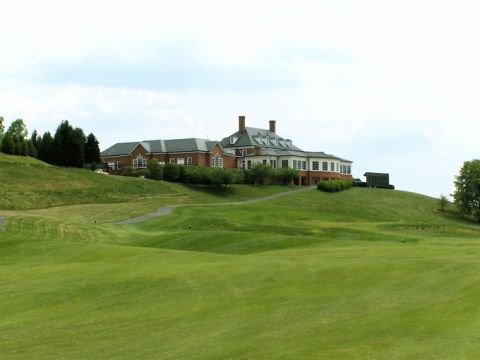
The clubhouse and golf course at Glenmore are up for sale in the wake of an embezzlement by a member of the family that owns the club.
Glenmore, just outside Charlottesville, VA, and one of my favorite communities, has been living a nightmare since last July with the news that a family member had embezzled $700,000, mostly from the coffers of the homeowner’s association but a portion from the golf club as well. Mike Comer, 45, both the president of the Glenmore Golf Club and treasurer of the HOA, disappeared in July after being called to a special meeting with Glenmore officials to discuss irregularities in the community’s balance sheet. He was found a month later, arrested and indicted in September.
Comer is the husband of former Glenmore director of golf Kandi Kessler, daughter of the
The family has paid back half the money lost and has pledged to return the rest by this August. A few developer lots remain in the almost totally built community, and the family has reportedly pledged to sell them if necessary to cover the balance. Because of the humiliation brought upon them and a loss of appetite for managing the club, they have put the golf course and clubhouse up for sale. According to people I know at Glenmore, two potential buyers have emerged, one a wealthy resident of the community. The club’s value is estimated around $4 million. Homes in Glenmore are priced generally in the mid- to high-six figures.

Glenmore's John LaFoy golf course is links style, in keeping with the overall Scottish theme in the community.
With all the tumult, Glenmore is in better shape financially than you might think. On-site real estate sales director Tom Pace told me that he has seen more potential buyers visit the community in January than in the entire second half of 2009. The homeowner’s association had enough in reserve to cover expenses in the short term; residents saw their annual dues increase to a modest $797 from $766. Residents in dozens of troubled communities in Florida and elsewhere only wish their dues had gone up $31. The Glenmore Club, which charges $20,000 for initiation fees per couple and a modest $500 per month in dues, lost a handful of members to nearby Keswick Club. The Keswick clubhouse is a baronial work of art, but its Arnold Palmer golf course is much fussier than the classy John LaFoy layout at Glenmore.
Glenmore has handled the embezzlement by being upfront and forthright about it. Before they toured the community, a couple I referred to Glenmore met with Tom Pace who informed them of the embezzlement and explained the steps Glenmore was taking to weather the storm. That is precisely the way to handle it.
The Glenmore family may be shattered, but family values seem to have survived intact.Bogey golf: Mickelson plays a bad stroke
It seems that just about everyone but his wife wants Tiger Woods back. Now we learn that Phil Mickelson misses Tiger too. He told reporters a couple of days ago that he wants the wayward star back on tour.
"The game of golf needs him to come back,” said Mickelson. “I mean, it's important for him to come back and be a part of the sport."
What’s next? Hillary Clinton urges John Edwards to return to national politics?
Woods’ two months of silence has worked a kind of rope-a-dope magic on Mickelson, PGA Tour Commissioner Tim Finchem and the many bloggers drooling at the prospect of a near-term return for the superstar.
Finchem and company will tell you that much more than prize money is at stake without Woods playing, and that the $100 million or so the tournaments generate for local charities are at risk without Woods. But the Travelers Championship in small-market Hartford, CT, raises more than $1 million per year without Woods ever showing up; a little more creativity on the part of the PGA Tour, and its partners could make up for much of any shortfall.
Memo to PGA Tour: Learn the lesson of baseball, whose celebration of paper heroes like Mark McGwire and Barry Bonds was a flawed strategy. By dancing around the golden tiger and anointing Woods bigger than the tour, Mickelson and Finchem are acknowledging that the PGA’s competitive model is fundamentally flawed and that all those non-golfers we thought didn’t understand the game have been right all along: Golf is just too boring to watch.
With his febrile plea to Woods to come back, Mickelson pulled out the wrong club and swung too hard.Semi-frozen SC golf club, but members warm to it
The recent deep freeze that reached as far south as Orlando and put a serious hurt on citrus crops there did not deter dedicated golfers in the deep south. Greenville, SC, real estate professional Lee Cunningham sent the photo below as testimony that New England and Midwestern golfers do not have the market cornered on cold weather play (although Greenville boasts of more days of sunshine annually than any other city in the state). Perhaps golfers at The Thornblade Club saw the frozen ponds (foreground in photo) as hazard insurance, although no meterological condition could neutralize the effects of the Tom Fazio bunkering on the classic course.

Frozen ponds may keep golfers at Tom Fazio's classic Thornblade Club out of the water hazards, but plenty of sand hazards await.
I have written about The Thornblade Club often since I first played the golf course and dined in the clubhouse nearly five years ago. Read my comprehensive golf course review here. Thornblade, which hosts a
Greenville did not suffer a dramatic increase in house prices before the 2005 market drop and, therefore, area prices have not suffered the way more high-growth areas like Myrtle Beach have. And according to local data, more new house permits were issued in the Greenville area in the second half of 2009 than in the first half, which typically accounts for 60% of the year's new permits. That signals some confidence among builders and a possible strengthening of the market.
Lee Cunningham, a member of our network of real estate professionals throughout the southern U.S., sent us a photo of a 5 BR, 4 1/2 BA, 5,900 square foot home currently for sale in Thornblade. "It's on a great street and backs to a natural area with a creek for privacy," says Lee, and includes a finished basement, multiple decks and a private backyard. The house is listed at $699,900, $125,000 off its original price. Fifteen minutes away, comparable properties in the hyper-amenitized Cliffs Valley community run into the seven figures, but some include golf membership in six clubs, currently valued at $150,000.
Greenville has about a dozen golf communities in the metro area, as well as excellent private clubs, like Thornblade, and semi-privates that are central to residential neighborhoods. If you would like more information on life and real estate in the Greenville area, or a free copy of a newsletter I dedicated to some Greenville area golf communities, contact me.
Duh: You are smarter than an economist
Most of the reports today of a drop in new home sales include the footnote that “economists were surprised.” Well, there’s a news bulletin for you. Aren’t these the same guys who stood mute as the whole economic mess unfolded, and then made livings out of unhelpful after-the-fact analyses?
According to reports, these geniuses expected the new home sales figure for December to be about 44,000 homes more than the reported 342,000. Oops...again.
I was an English major; therefore, almost by definition, numbers are not my strong suit. But you don’t
Sure, back in the days when price was almost irrelevant in buying a home in a rapidly rising market, most people wanted that new house smell. It is a rush to be able to select your color scheme, appliances and flooring. But that was then, and this is now: Millions of homeowners so desperate to unload their homes before they face foreclosure that you could probably gut and refinish a 20-year old home to your desires and still have some money left over, compared with what you’d pay for a comparable new home.
In this economy, a tremendous bargain smells a lot better than a new home.
‘Tis the season for Coastal golf community discovery tours

The new Cape Fear National Golf Club is part of the $179 three-day discovery tour courtesy of Brunswick Forest, near Wilmington, NC.
Photo courtesy Cape Fear National.
Golf communities know that if they can get a couple to stay on their property for a few days, try out the golf course, maybe have a nice meal in the clubhouse and partake of the area’s cultural and entertainment activities, they have a fair chance of making a sale. Back when the market was good, some communities told me nearly 20% of those who visited wound up buying property. Today, the number is closer to 5%, but if you are selling dirt for, say, $150,000, a hit rate of 1 in 20 still is not bad if the total acquisition cost is just a few thousand dollars.
Communities use the lure of a cheap vacation to generate traffic to their properties. For a couple hundred dollars or so, they offer “discovery tours” that typically include a couple of days of lodging, golf
Further up the Carolina coast, Ocean Ridge Plantation, a mature and golf-loaded community, is running a $199 3 day, 2 night discovery special to celebrate the opening of new properties. It includes lodging in a golf cottage on site, a round of golf at one of the club’s six courses, and lunch in the clubhouse. Ocean Ridge is substantially built out, and its publicly accessible “Cats” golf courses (all named after jungle felines) are popular, especially Tiger’s Eye. It is just a few miles from the ocean and about 20 minutes from Myrtle Beach.
The lowest priced discovery tour I have seen anywhere is at
These are just a few of the many discovery tours available throughout the southeast, and even those communities that don’t promote them can make arrangements for a stay. (Note: If you are interested in arranging a couple of days at a particular community, contact me and I will make the arrangements for you.)
A few discovery tours packed into a week can make for a nice little vacation, but more importantly, they can bring the nuances of each community into sharper focus when compared with the others. If you do visit, make sure that you:
√ play at least one golf course per community;
√ dine in the clubhouses (lunch, at least) to test the food and the atmosphere;
√ define the type of home and property you are considering, and make sure the developer’s agent shows you a sample of those;
√ resist being smitten by amenities you won’t use, since you will wind up subsidizing them (in your dues payments);
√ and make sure the developer’s agent furnishes you with an accounting of all costs of living in the community, including taxes, homeowner association dues and assessments (insurance and cable TV are typically included), and club dues.
One other suggestion: During your visit, make a call with your cell phone; some properties are on the fringes of cell phone service areas.
So what’s the catch, you might ask? Well, married couples must visit together and you do have to
And you might just discover the community of your dreams.
First Cliffs Communities condos open
Your good deed for today, with a bonus

Now on Sale

- The only book about golf communities in the last 10 years.
- 156-page step-by-step guide to finding your dream golf home.
- Info on nearly 100 golf communities the author has visited.
- Paperback version costs less than a sleeve of Pro VIs.
Here is what the experts are saying:
“The book is chocked full of information…applicable to anyone looking for a move to the Southeast regardless of whether they are looking for a golf community or not.” — John LaFoy, golf architect (Linville Ridge CC, CC of Charleston, The Neuse GC)
“Larry has done a tremendous amount of work and anyone — like me — who is looking to search for a golf home now or in a few years needs this book.” — Brad Chambers, golf blogger, ShootingYourAge.com
“Wow! What a thorough piece of work…a must for anyone moving South. This book will help many people.” — Brett Miller, owner and founder of MMA, Inc, a golf industry consultancy
Buy It Now at Amazon.com or BarnesandNoble.com.