Dataw Island Prices Skyrocket; Community Earns Top SC Award
Dataw Island is finally getting noticed -– by experts on planned communities and by retirees who know a bargain when they see one. I had a feeling Dataw’s time had come when, after my second visit two years ago, I wrote that the community was pretty near “perfect” in terms of location, given its remote feel yet proximity to the charming town of Beaufort to the west and an ocean beach in the other direction. The golf was darn good as well, 36 holes by Tom Fazio and Arthur Hills. Read my 2015 review here.
Dataw is definitely on the map now with its designation as “Best South Carolina Community of the Year" by Real Estate Scorecard, an online service that assesses planned communities (many with golf courses). In announcing the award, the Scorecard’s Margie Casey wrote that, “Property owners revere how life flows [at Dataw] as gently as the tide.” She noted that average home prices had increased almost $100,000 to $414,000 in the last year, which our calculator says is a 30% increase. In my most recent review of Dataw, in 2015, I wrote, “No one looking for a home in Dataw will panic over its housing prices.”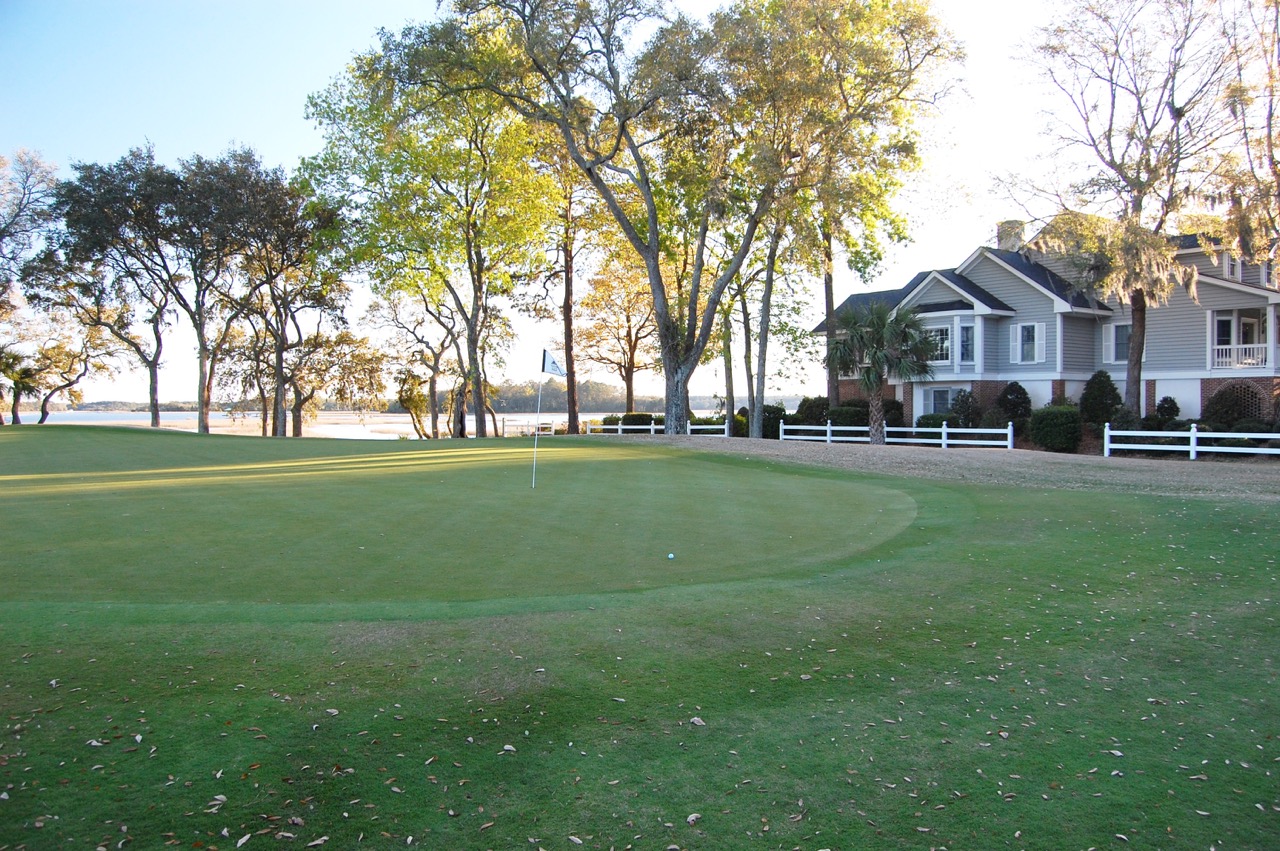 Many homes at Dataw have outstanding golf course views.
It might be time to take a closer look, if not panic. Current listings show a lot of house available in the middle price range. For example, a $400,000 current listing has 3 bedrooms, 3 ½ baths, almost 2,700 square feet and excellent views of the Arthur Hills Morgan River course. I noted 23 listings under $300,000, a few of them townhomes; one home is currently priced at $95,000, and it has a nice golf course view!
Nearby Beaufort is a full-service town just 20 minutes away, with a range of nice restaurants, good health facilities, entertainment options, shopping (the mall and boutique varieties) and a branch of the state’s university. The beach at Hunting Island is 20 minutes east on Highway 21. Parris Island and its Marine base is just as close which makes Dataw popular with former military officers.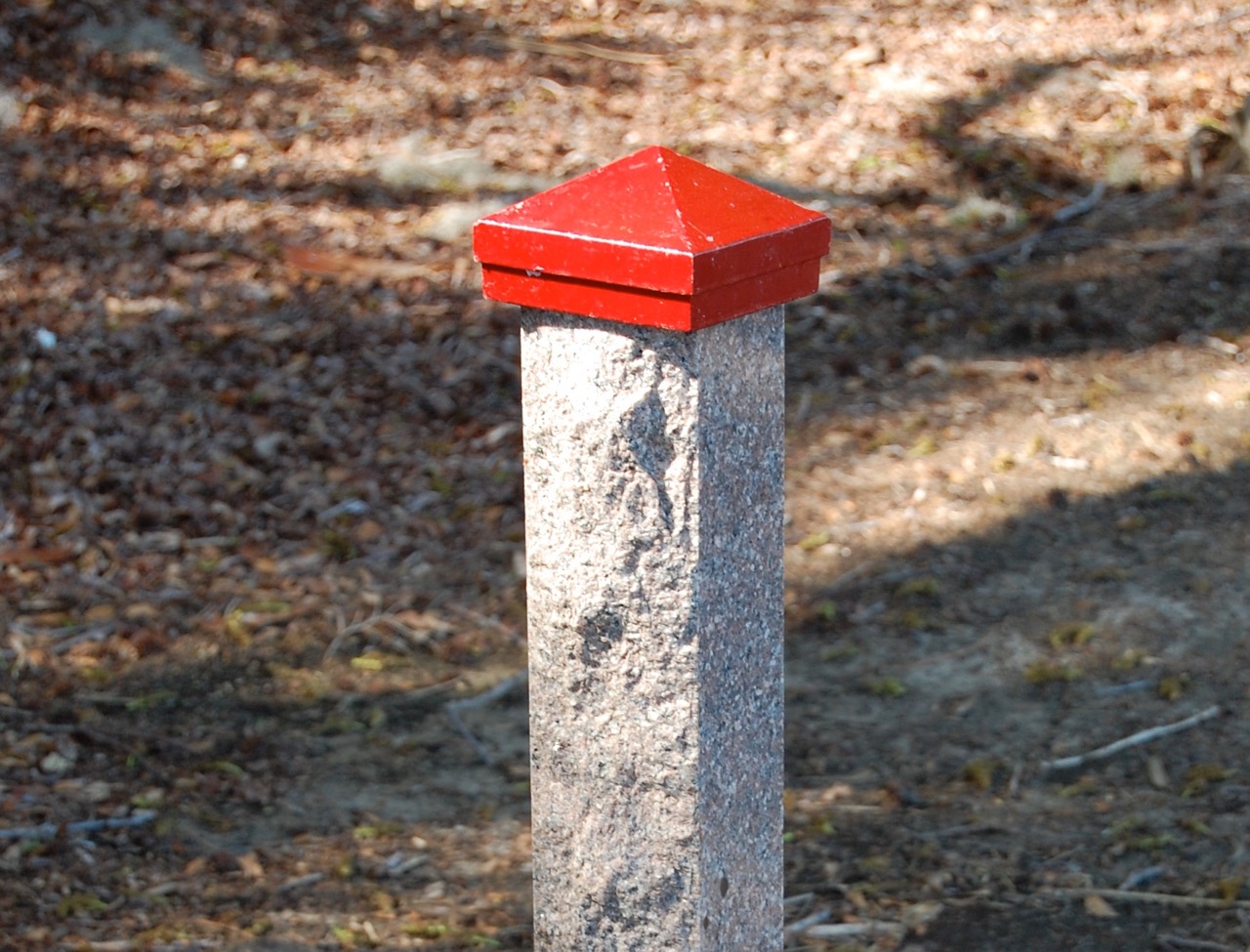 For those of us eyesight challenged, top caps on the 150-yard markers on Dataw Island's two golf courses indicate the pin position on the green.
In her analysis, Margie pointed to the more than 20 clubs that are popular with Dataw’s residents, but the club I like best is the golf club with its two excellent layouts. On my two visits, I noted that the golf courses were well used by the membership and yet in really nice condition. The two layouts are different enough -– the Hills course more a parkland layout, the Fazio more a marshland layout -– that no member should tire of the diversity of play.
Dataw Island is one of those grown-up communities on the coast that, after four decades of experience, seems to know what it is doing. If you would like a closer look, please contact me to arrange a visit.
 Home On The Course newsletter
Click here to sign up for our Free monthly newsletter, loaded with helpful information and observations about golf communities and their golf courses.
British Invasion Could Mean Florida Prices to Rise Fast
From time to time, people ask me if they can produce an article for this web site on a topic that might be of interest to my readers. For as long as I have been writing about golf communities, Great Britain residents’ have shown strong interest in Florida vacations and real estate. With Brexit looming in the UK and our own political changes in the U.S., I thought an article about investments in Florida by British citizens would be of interest.
Florida has a strong lure for British expats who are looking either to retire or vacation in the United States. A mixture of sun, sea, and beautiful golf courses make it an attractive option that is leading to many expats to invest in property in the southern US State.
One of the key reasons that Florida is so attractive to British expats, according to Business Destinations, is that property prices there remain relatively low. Business Destinations explains that many of the properties owned by British expats are not permanent homes and are instead used as second homes during the British winter or for briefer vacations. British visitors to the US are permitted to spend 90 days under the short-term U.S. Visa waiver program and property owners often apply for the B1/B2 Visa that enables them to visit the country for up to 182 days without having to pay U.S. taxes. This arrangement encourages British expats to invest in U.S. properties rather than European properties as they will likely spend longer periods in the States compared to in Europe. Business Destinations notes that Sarasota is a popular destination among British expats due to its location on the Gulf Coast and its proximity to the popular Orlando attractions.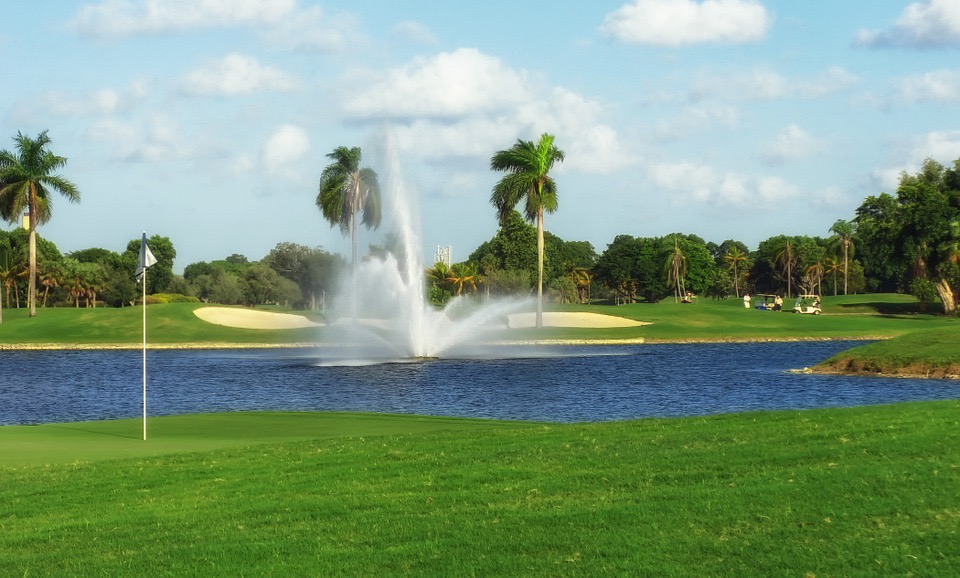
Recent political events such as Brexit have also created extra interest in the U.S. real estate market, and specifically Florida. Miami-area television station Local 10 asked real estate experts about the effect of Brexit on property in Florida. Speaking just after the European Union referendum results, real estate developer Daniel Kodsi, CEO of Paramount Miami World Center, said “London was amongst the world’s most lucrative real estate markets; however, [the] UK vote is already causing property prices to plunge, which means that Florida real estate will likely move up the list of busiest global investments.”
Many British citizens looking to invest in property should find Florida attractive as the real estate market in the UK continues to face uncertainty as the economic ramifications of the Brexit vote constantly change. US news site Reuters, in contrast to Local 10, believes that Brexit could have a negative effect on British buyers in Florida. The site spoke to one real estate broker who said that since the pound sterling had slumped to 31-year lows, “we’ve had people looking that have delayed because their money doesn’t go as far.” He did offer a more positive insight saying that many British expats are delaying, not suspending, investment in Florida.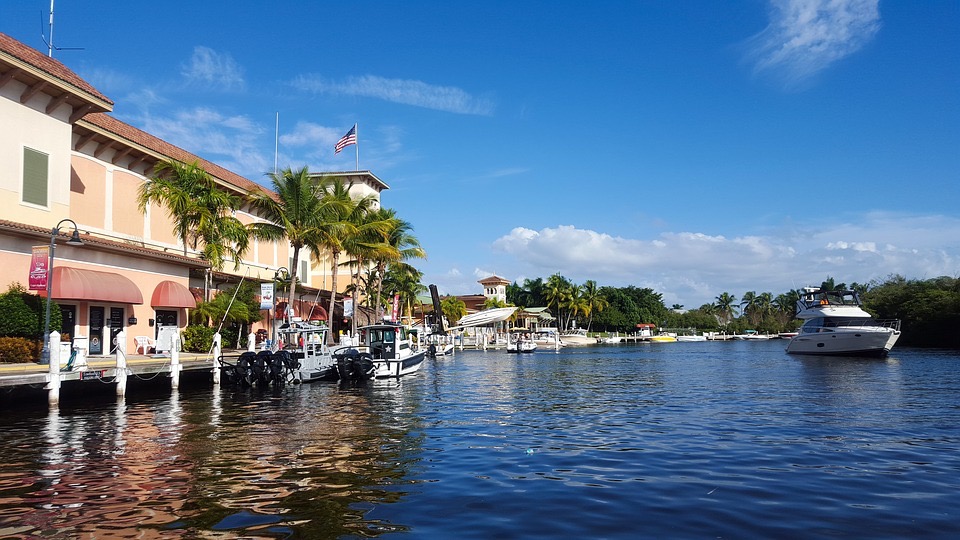
The beach-oriented lifestyle and golfing scene in Florida means that British retirees will always be attracted to invest in the Sunshine State. One sign that more British citizens are moving to Florida: British Airways is making a direct flight to Fort Lauderdale, according to One Mile At a Time, a travel website. The state boasts more than 1,100 golf courses, many of them world famous and most of them accessible to visiting players. US golfing experts Play Your Course recommends Ft. Lauderdale’s Jacaranda Golf Club as the premier public golf facility in that highly popular area. The course welcomes people from all over the world and is said to be especially friendly for retirees.
The current economic situation in the world is having an affect on British expats investing in the US, but Florida will always be one of the most sought after places for British holidaymakers and retirees.
No Time Like the Right Time to List Your Home
I read articles over the weekend that reminded me of a couple of items that should be on homeowners’ minds as the get ready to put their homes on the market (and, perhaps, move to a warmer climate). One has to do with whom you choose to list your house for sale, the other with when you list it.
First, many consumers believe that the commission they pay a real estate agency to sell their home is fixed at 6% (or 5% in some states). As I learned in real estate classes, the commission you agree to pay a brokerage if they sell your house is negotiable. True, in many areas, real estate agencies are reluctant to negotiate their fees, but that 6% is not fixed, and you are within your rights to shop for an agency willing to offer you a commission rate of, say, 5%. (Note: The risk is that when your agency publicizes the lower than typical rate in the MLS (multiple listing service), other agencies that represent potential buyers could be less than enthusiastic about pushing your home.)
More and more homeowners have taken to negotiating the commission rate, and some real estate agencies are starting to lower their rates even before being asked. The national average commission rate in 2015 was 5.26% and industry officials expect a further reduction when 2016 numbers are finalized. Of course, a percentage point difference is relative, depending
The other issue has to do with what time of year you sell your home. Based on what I have read, and my own personal experience, the answer is “whenever is most convenient for you.” On the face of it, the time between Thanksgiving and New Year’s Day should be the worst time to sell since most everyone is focused on the holidays, and all their energy to spend is directed toward malls and online shopping. But in late 1986, my wife and I were eager to live in a real colonial home in Connecticut and we took time out from the holiday shopping season to look at a 200-year-old home in Connecticut that was being sold by a divorcing couple. We loved it, they were in a hurry to sell and split the proceeds, and we wound up satisfying our old home urges at a price more than 10% lower than the listed price. I had the feeling that in the weeks the home had been on the market, few other folks had taken time out from their holiday activities to look at it. We had little competition but the sellers had the only traffic they needed.
Although relatively few people look for a home during the holiday season, you can count on those that do being serious. My conclusion is that the best time to list your house for sale is whenever it fits your lifestyle and timing. At the end of the day, your house is going to sell if it is priced appropriately no matter when.
The consumer view of whether now is the right time to buy
When it comes to the right time to buy a home, I trust the consumer’s point of view every bit as much as the so-called housing experts. After all, the consumer has skin in the game.
That is why a fourth-quarter 2016 survey by the National Association of Realtors may be especially worthy of consideration by those contemplating the purchase of a home this year.
According to the NAR survey, 78% of those they questioned said “now is a good time to buy a home.” That included 57% of all people currently renting. Sixty-two percent of those surveyed said now is a good time to sell a house, including 67% of people who currently own a home. A relatively low number of homes currently on the market, combined with a bit of pent-up demand, is causing price increases in popular markets. Indeed, 55% of those surveyed said they had seen prices rise in their communities over the last year. And, finally, 44% of those who were asked said they thought home prices would increase over the next six months; 47% said that prices would stay the same.
In short, the public thinks the current environment is both a good time to buy and sell a home. You can almost hear the sound of real estate agents across the nation rubbing their hands together in glee.
Golf Homes South of Myrtle Beach Poised for Price Increases
The median selling price for single-family homes in a group of golf and non-golf communities south of Myrtle Beach, SC, has increased steadily over the last three years. As of the end of November 2016, median selling prices in communities such as DeBordieu Colony, Pawleys Plantation, The Reserve, Willbrook Plantation, and in a selection of the top non-golf communities, showed a $26,500 increase to $336,500 compared with the $310,000 median price in 2014. The 2015 median selling price for these same communities was $320,000, according to the Coastal Carolina Association of Realtors. (Our thanks to local real estate professionals Jane Mikol-Gabrielson and Cathy Bergeron for providing interesting data from local reports.)
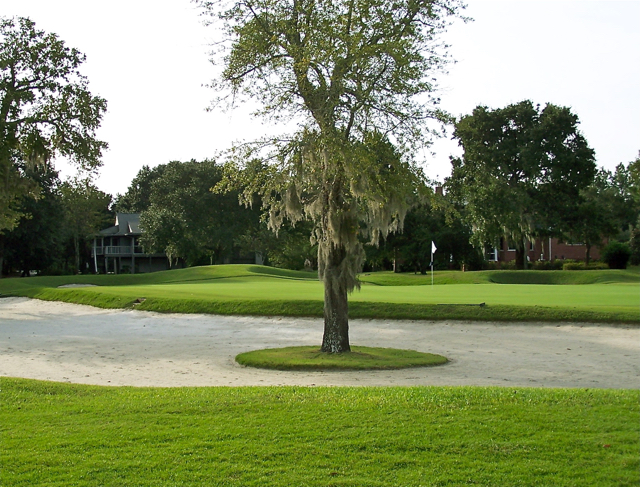 Pete Dye is always full of surprises, as he is at DeBordieu.
Although the highest-priced communities, such as the golf-oriented DeBordieu in Georgetown, SC, and the non-golf Charlestowne Grant in Litchfield Beach, showed a sharp drop in median prices in 2015 from 2014, prices this year rebounded strongly from 2015; however, DeBordieu’s $749,000 level in 2016 was almost $350,000 lower than the 2014 level of $1.08 million. The number of homes sold over the three years was 24, 24 and 27, respectively, a meaningful enough base of sales to signify that some additional price growth may be in the offing. DeBordieu features a Pete Dye designed private layout with two of the best finishing holes in all of the Myrtle Beach area’s 100 golf courses. It is located just an hour north of Charleston and about 50 minutes from Myrtle Beach International Airport.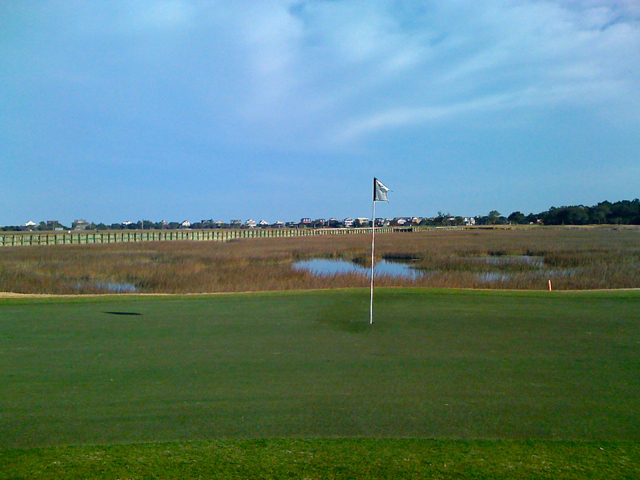 A dike that bisects the marsh at Pawleys Plantation holds the 13th and 17th hole tee boxes. This view is from behind the 17th green, looking back towards the Pawleys Island beach and the Atlantic Ocean just a half mile away.
The selling price pattern at Pawleys Plantation, where your correspondent owns a vacation condo, also implies that prices could rise in 2017 and beyond. The median selling price of $405,000 in 2016, based on 14 sales, was $39,000 higher than in 2015 (17 sales) but $23,500 lower than in 2014 (13 sales). Pawleys Plantation features one of the most popular and most challenging layouts on the Grand Strand; designed by Jack Nicklaus in 1989, the back nine explodes out onto the marsh, with a unique set of par 3 tee boxes set on the old rice plantation dike that stretches across the marsh. As I write this, 17 properties in Pawleys Plantation are on the market at an average price of $459,091. Homes in 2016 sold on average 25 days quicker than in 2015. According to our agent for Pawleys Plantation, Cathy Bergeron, "Prices are going up, and homes are selling quicker."
The Reserve at Litchfield Beach was one of the few golf communities in the group that showed a steady erosion of prices over the three-year period. The median sales price of $605,000 in 2014 decreased to $579,500 in 2015 and $577,500 through November in 2016. The youngest of the area’s golf communities, The Reserve features a Greg Norman layout that is both friendly to walkers and a joy for those who like to put from as much as 10 yards off the green. More significantly, The Reserve Club is part of the McConnell Golf Group and offers its members full access to the dozen other McConnell courses in the Carolinas and Tennessee, a few of them designed by Donald Ross. At last check, membership initiation fees at The Reserve were a reasonable $4,000 with dues less than $400 per month.
I know the area south of Myrtle Beach as well as anywhere and I would be pleased to answer any questions, suggest communities that match your requirements or help arrange for a visit to explore the area and its many terrific golf communities. And if I happen to be in Pawleys Island when you are, I would be pleased to serve as your guide around the challenging Jack Nicklaus layout. Feel free to contact me.
Reserve at Lake Keowee roots for the home team
If you consider moving to The Reserve at Lake Keowee –- and you should -– make sure your wardrobe includes something orange. You’ll feel right at home.
The Reserve, which juts in and out of the beautifully misshapen manmade Lake Keowee, features a Jack Nicklaus golf course that hosts an annual Web.com tour pro event, a large and rustic clubhouse and a huge lawn that sweeps down from the clubhouse to the lake. The community also features plenty of Clemson University fans; the school is located just 20 minutes away in the town of Clemson.
I recall on my first visit to The Reserve five years ago, I ate an early Saturday dinner in the clubhouse’s comfortable bar. As I indulged in the Swiss-chef-prepared meal, I noticed that virtually everyone arriving in the clubhouse was wearing orange. It was clear when the big screen TV was tuned in to the Clemson game that residents take their college football seriously. That enthusiasm is even more evident this season as the #2 ranked Tigers prepare for a Fiesta Bowl showdown with the #3 ranked Buckeyes of Ohio State. On that sprawling lawn below the clubhouse, a half-sized football field has been laid out with the bright orange Tiger paws logo emblazoned on it.
Go Tigers!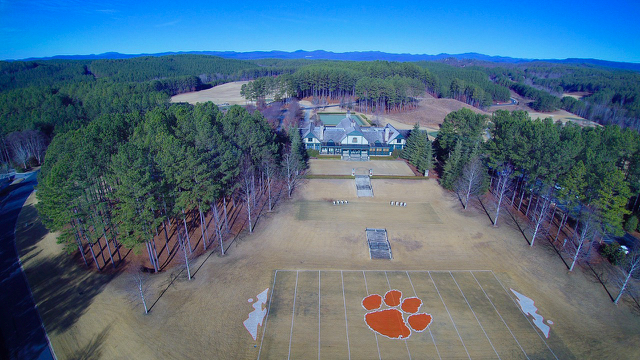
Charlottesville, home to UVA, an educated choice for a golf home
Charlottesville, VA, is one of the most underrated golf community markets for retirees. Perhaps a perception that a state just below the Mason-Dixon Line and not far from the Blue Ridge Mountains suffers through long, cold winters keeps us Yankee retirees from showing this impressive college town the love it deserves. In truth, those who live in the Charlottesville area put away the golf clubs in January and February but the weather generally cooperates in December and March and is nearly perfect the rest of the year. And in January and February, there are plenty of distracting events in a major college town like Charlottesville, home to the University of Virginia (UVA), including big-time college basketball, concerts and art exhibits. And the university’s adult education program is on a par with any in the nation.
More and more, there are signs that retirees are discovering the quality of golf living in and around this particular college town. In November, the number of sales of homes in the counties surrounding the city rose as much as 83%, in Nelson County, home to the Wintergreen Resort. At the same time, the median sales price of homes in Nelson County, the vast majority of them inside the boundaries of the ski and golf resort, was up a robust 29% while inventory had dropped 10%, evidence of the rule of supply and demand at work. My family and I have stayed at the Wintergreen Resort a couple of times and found the golf outstanding and the views of the Blue Ridge Mountains stunning (an entrance to the famed Blue Ridge Parkway is just outside the gates of Wintergreen). Condos with mountain views start below $200,000; single-family homes, some with impressive views, generally sell from the low $200s. The 45 holes of golf are from the design studios of Ellis Maples (Devil’s Knob, 18) and Rees Jones (Stoney Creek, 27). We’d be happy to put you in touch with Steve Marianella, the agent we work with at Wintergreen. (Note: The Devils Knob golf course at the top of the mountain, whose first tee is a short stroll from the top of the ski lift, closes during winter months, but the Rees Jones 27 holes at the foot of the mountain remain open, providing the unique possibility on some days of skiing in the morning and golf in the afternoon.)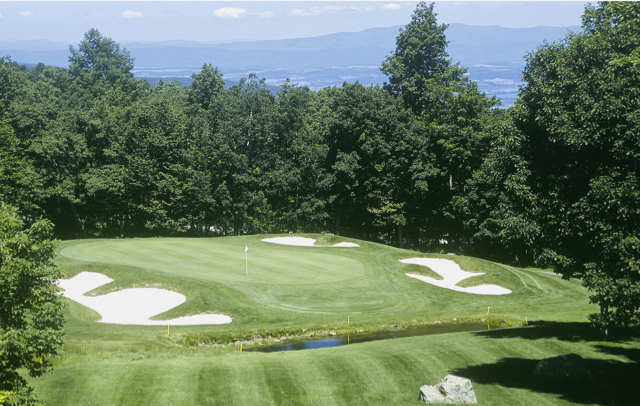
The views from the 17th at Devil's Knob are impressive, as are the views on the
rest of the course, designed by Ellis Maples.
Wintergreen is located an hour west of the city of Charlottesville. The community of Glenmore in Keswick, VA, is about 25 minutes to the east, on the way toward Richmond. The golf course, designed by John LaFoy, rises and falls along sweeping fairways through the community of indigenous, mostly brick homes set well above the funneled fairways. That provides great views from many backyards yet little intrusion on the field of play for golfers. Given the community’s Scottish name and landscaping, LaFoy’s layout could fit comfortably into parkland in the Old Sod. Few lots remain for sale at Glenmore, and current resale homes start around $500,000. Tom Pace is our agent contact for Glenmore (he and his family live there) as well as Keswick Estates (see below).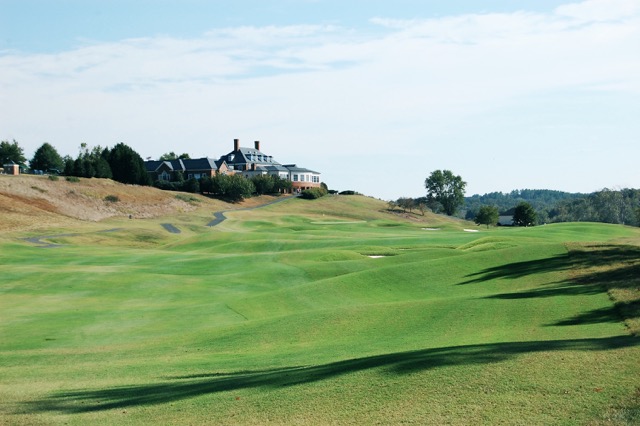
The clubhouse behind the 18th at Glenmore is a solid and welcoming sight after a
round at the John LaFoy layout in Keswick, VA.
Just a couple of miles from Glenmore, Keswick Hall Golf Club, in the heart of Keswick Estate, has captured the attention of the luxury golf home market in the area for the last two years, ever since Pete Dye redid a decent but underachieving layout by the Arnold Palmer design firm. It is hard to think of Dye, given his reputation, having “softened” the hard edges on anyone’s layout, but he has been given strong credit for doing just that at Keswick Hall without diminishing the challenge. At completion, Keswick Estates will comprise just 121 homes, with lots priced today beginning at $290,000 and resale homes, big and beautiful, for sale starting above $1.2 million.
Other golf community options in the Charlottesville area include Old Trail in Crozet, just west of the city, with a mix of condos, town homes and estate homes at prices starting in the high $300s, and a golf course that is both reasonably priced (semi-private) and challenging. Farmington Golf Club is the staid old style club in the area, with a clubhouse designed by Thomas Jefferson and a golf course that has lots of classic touches. If you would like information on any of the Charlottesville golf communities or more information on the area itself, please contact me.
Can Home-Free Golf Courses Last?
Golf courses that thread their way through housing developments have always come under criticism from serious reviewers –- as well as many of the rest of us -- who see homes beside golf courses as polluting proper design and golf layout aesthetics. (Ignoring the fact, of course, that the Old Course Hotel and the beautiful but hulking clubhouse at the home of golf at St. Andrews are very much in sight, and not far at all from the field of play.) Suffice to say that many who join a club that does not suffer from home-site pollution do so because of the natural character of the golf course layout.
More and more, such natural layouts may become relics as golf clubs continue to struggle in the post-recession economy. Some clubs that are blessed with a bit of extra land surrounding their golf courses are considering selling lots to developers in exchange for cash and, in some cases, the guarantee of additional members.
I read recently about Greenacres Country Club in Lawrenceville, NJ, whose members decided to peel off 15 of the club’s total 140 acres and sell them to national builder Lennar. Lennar’s typical model for its golf communities in warm weather locations –- I have visited a few, including Heritage Bay outside Naples, FL -– is to “bundle” golf with the sale of the home, making it essentially free to join the attached golf club but making the paying of dues mandatory. In other words, you pay dues at least for a social membership until you sell your home at some future date to someone who will then pick up your obligation.
The sale of the 15 acres at Greenacres will help fund a $5 million renovation of the golf course and the 78-year-old club’s clubhouse and pool (about 60% of the amount going toward the golf course redo). Noted designer Bobby Weed (five TPC courses, Hilton Head National, Ocean Links at Amelia Island) has been hired to totally renovate the golf course. Lennar will construct almost 100 town homes on what is currently the practice range area, which will be relocated, and should add more than 100 new dues-paying members to the 200 already on the Greenacres club rolls. The homes are being designated for people 55 and older.
One of the nice features of my own golf course at Pawleys Plantation in South Carolina is that the finishing hole runs between marsh and pine forest before emerging onto an open fairway with a large pond to the left and woods continuing on the right. The only manmade structure in close proximity is the plantation style clubhouse directly behind the elongated green; the sweeping lawn and sloping back porch and stairs of the stark white structure add a dramatic backdrop to the approach shot and contrast to the green.
But the relative purity of the hole will end in the coming year when construction begins on the first of a half dozen homes in the woods just over the cart path and within a lob wedge of the green. It will change the visual character of the hole; and although the real trouble on the hole -– the pond -- is tight on the left, I still will try not to look right.
Hitting the Links: Interesting News Items of Recent Days
The following items caught our eye in the last few days (click on each link to access article):
Cliffs community to feature new mixed-used space for public.
Parish the Thought: Golf Course in Louisiana in financial trouble; town considers buying it.
Naples Hot Again: Popular Fiddler’s Creek community sells out group of 34 homes...
...while another popular Naples community releases group of coach homes.
Ben Carson lists home in West Palm Beach golf community. (Name of club not listed, perhaps for security reasons.)
Who says they aren’t building golf courses anymore? New Nicklaus course coming to Reunion Resort community in Florida.
Canada’s Own Problems with Golf: Homes, apartments possible for Stanley Thompson 9-holer.
Out of Bounds: Small town police chief does not want carts straying from fairways.
Happy Trails: Retired Prof tells golf leaders how to build a golf trail a la Alabama’s Robert Trent Jones Golf Trail.
Burn Baby Burn: British study says golfers can lose weight.
Golf Community for the Birds: Oldfield scores Audubon designation.
Smooth Landing: Marketing Drives Sales Successes at Cypress Landing
Roughly half of those who live inside the gates of golf communities rarely or never play golf. They buy a home in a golf community because of the generally more evolved landscaping associated with the golf course and because they believe their homes have a much better chance to retain their values if a beautiful amenity like a golf course is close by. In general, they are correct.
But, ironically, some of the biggest battles inside golf communities are between golf club members and non-members in those communities where membership is not mandatory (most communities). Sometimes, such as during and after the 2008 recession, membership rolls in country clubs dip below the sustainable line; cutting back on expenses to keep the golf course in good condition can cause more member losses which, in turn, causes further cutbacks in conditioning. Feelings between golfer members and non-golfers can become uncomfortable when, to avoid the downward spiral, golf community clubs appeal to the homeowner’s association for contributions to capital budgets and for the costs of marketing to prospective new members. Once the member rolls return to proper levels, the club can sustain its necessary expenses from the added dues payments. But, in the meantime, non-club members often look on tiding the club over as throwing good money after bad; in other communities, thanks to professional communications from the club and homeowner boards, residents make the wise connection that the values of their homes are tied directly to the health of the golf club.
Strong Sales at Cypress Landing
Put Cypress Landing in the latter category. Over the last three years, the Chocowinity, NC, community of just under 600 homes has signed up more than 100 new residents thanks to a dramatic refurbishment of its web site, arrangements with five local real estate agencies to push properties for sale inside the community, an aggressive “ambassador” program that involves many of its residents, and an overwhelming recognition by residents that the value of their homes can rise and fall like the tides in the adjacent Pamlico River. Thanks to recent sales, the current inventory of unsold homes in the community is down to around 6%, a few percentage points lower than in most golf communities and a sign of a healthy real estate market; with fewer homes on the market, those that are listed have slightly higher selling prices than if there were a couple more dozen homes available.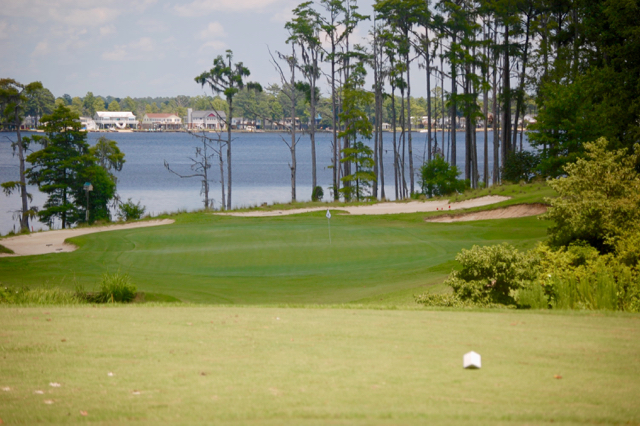 The par 3 15th hole at Cypress Landing backs up to the Pamlico River.
Cypress Landing’s board of directors maintains a strong marketing committee that has helped its fellow residents make the connection between their property values and a vibrant golf club.
“After we made the case to support capital improvements at the golf club,” says Marketing Committee co-chair Jeff Gould, “the HOA [homeowners association] voted 95 percent in favor of the proposal.”
Those good feelings spill over to new prospects when they visit Cypress Landing on its reasonable Discovery Package, just $175 for three days and two nights.
“We generate a 25 percent sales rate for those who visit Cypress Landing on the Discovery Package,” says David Grahek, the Marketing Committee’s other co-chair. “We let the couple tell us what they want to see, and then our Ambassadors accompany them.”
The Ambassadors are couples who live at Cypress Landing and are matched with prospects who have specific interests. For example, if a visiting couple is interested in golf, Grahek, who manages the Discovery Program in behalf of the board, will match them with a golfing couple for a round of golf. Boaters are matched for a river and bay tour with couples that keep a boat at the community’s 220-slip marina. Given that Cypress Landing offers dozens of amenities, activities and clubs, no visiting couple has to go without a local couple to guide them.
Creative Tension Makes for Best Decisions
I’ve served on a few marketing committees and I know that “creative” decisions evolve from often animated, occasionally contentious, discussions. On golf club boards, composed substantially of former business people, most members can act like marketing experts. But the Marketing Committee of the board at Cypress Landing actually includes five members with professional marketing experience, Jeff Gould told me. Recalling the old line about a camel being a horse designed by a committee, I asked him if “designing by committee” was an issue at Cypress Landing.
“We have diverse backgrounds on the committee," Gould said, "that lead to good decisions. Let’s just say that in the execution, we are strongly led.”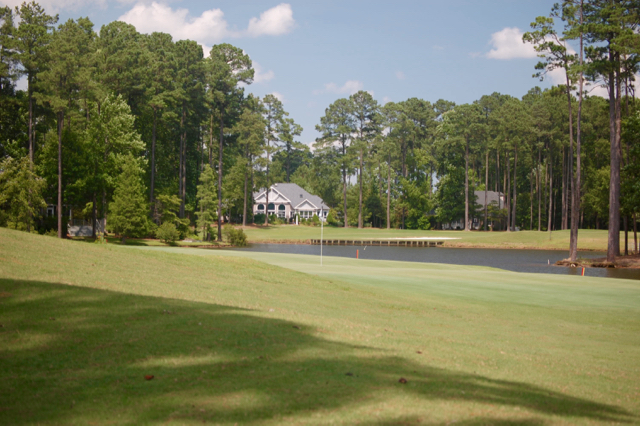 Many of the homes at Cypress Landing have views of the golf course at only a modest premium over wood view lots.
Whatever, it seems to be working. When I visited Cypress Landing for the first time in 2015 -– see article here –- I was struck by how well the community was laid out, with homes spaced well apart and the golf course nicely integrated into the landscape. The reasonable prices for most of the homes on the market belied the views of the wide and attractive Pamlico River and Chocowinity Bay and were comparably low for a community not that remote from an active town like Washington and a bustling small city like Greenville. In many cases, homes on the market today, despite the short supply, are priced at barely more than $100 per square foot. Cypress Landing, which has not maintained an on-site sales office since owners purchased the community in 2003 from original developer Weyerhauser, the giant paper company, has made arrangements with five local real estate brokerages to handle sales. Unusually for a golf community, Cypress Landing’s web site (http://cypresslanding.com) lists a few homes for sale by owner, a nice little touch for residents looking to avoid the customary 6% commission rate, and for potential buyers looking for a better priced home, unburdened by thousands of dollars in real estate commissions.
Next Challenge, Lots
When I asked one of my favorite questions -– “What type of couple is not right for Cypress Landing?” -– Messrs. Grahek and Gould responded almost in unison, “recluses.” I get that a lot, but for a modestly sized community, it would be hard for any couple to hide at Cypress Landing given the several dozen activities and clubs on site, the town of Washington on the other side of the river, just 10 minutes away, and Greenville a half hour down the road, and home to Eastern Carolina University and a large medical complex with which any aging baby boomer aware of his or her mortality will identify.
Given their success in marketing the community over the last three years, I asked Grahek and Gould what their next target was and they mentioned that 49 lots remain unsold in the community, all in private hands (some, no doubt, by residents who decided to make an ill-fated extra investment before the recession). The average lot price in Cypress Landing is $72,000, with water-view sites a little higher and plain wooded sites priced a little lower; many of the “average” lots have views of the Bill Love designed golf course. Since customary construction costs in the area run to about $135 per square foot, a couple looking to build their dream home to their own specifications could certainly do so at less than $400,000, land included, for a 2,500 square foot house. Given just $1,224 annually in homeowner association dues, a very reasonable $258 per month in golf club member dues per couple and no initiation fee, Cypress Landing is undeniably one of the better buys in comprehensive golf community living.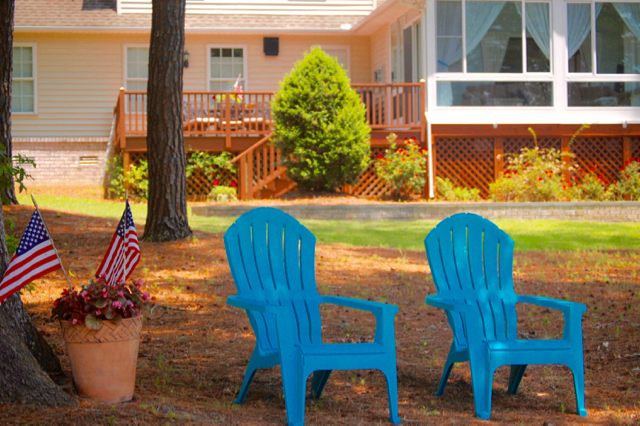
Intrinsic Home Values Hide Important Numbers
Voters Bid No Trump Near Donald’s Golf Clubs
Southern Comfort Even for Democrats

Now on Sale

- The only book about golf communities in the last 10 years.
- 156-page step-by-step guide to finding your dream golf home.
- Info on nearly 100 golf communities the author has visited.
- Paperback version costs less than a sleeve of Pro VIs.
Here is what the experts are saying:
“The book is chocked full of information…applicable to anyone looking for a move to the Southeast regardless of whether they are looking for a golf community or not.” — John LaFoy, golf architect (Linville Ridge CC, CC of Charleston, The Neuse GC)
“Larry has done a tremendous amount of work and anyone — like me — who is looking to search for a golf home now or in a few years needs this book.” — Brad Chambers, golf blogger, ShootingYourAge.com
“Wow! What a thorough piece of work…a must for anyone moving South. This book will help many people.” — Brett Miller, owner and founder of MMA, Inc, a golf industry consultancy
Buy It Now at Amazon.com or BarnesandNoble.com.