The south comes north for a weekend
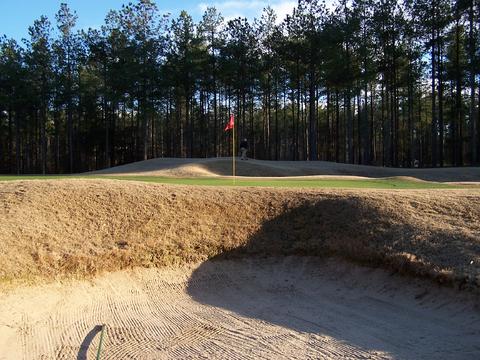
The sweet spot for home prices in Aiken's Cedar Creek Plantation is under $400,000. The Arthur Hills golf course gets a lot of play but is a bargain for members.
You wouldn't know a housing crisis is upon us or a recession looms by the crowds at the Live South real estate show yesterday in Greenwich, CT. Exhibitors representing more than 70 residential communities in the south didn't have much downtime during the two hours I spent at the show early in the afternoon.
Live South is a great way to collect a lot of brochures and information about specific communities but, like most "bazaars," everyone thinks their product is the best. Until you visit, you won't know how the golf course plays, the proximity of the houses to each other and many of the other nuanced information brochures can't tell you. If you are interested in visiting any communities in the south, please let me know and I will be happy to put you in touch with a real estate agent in the area of your choice who can help you understand what the brochures and salespeople don't tell you. There is no cost or obligation.
Here are a few observations from my visit to the Live South show yesterday:
- I asked some of the exhibitors how property sales were going. The consistent response was that although transactions had slowed a little, prices were holding up well. This is supported by independent data that shows prices in such markets as Wilmington and Asheville, NC rose around double-digit percentages last year.
- The migration from Florida to the Carolinas continues. Thompson Grove, an articulate young man at The Preserve at Wolf Laurel booth, told me most of that community's sales in recent months have been to Floridians. "They are tired of the summer heat," he said, adding that most of them are opting to live year round in his community, even though there isn't too much to do on the 4,000-foot mountain in the winter. They must really be tired of the heat.
- Despite the challenges and expenses of golf course operation, communities in the south are not shying away from building new layouts. River Landing in Wallace, NC, midway between Raleigh and Wilmington, added another nine since my visit a couple of years ago, bringing their total to 36 holes. And the Rarity communities, strung along the huge Tellico Lake in Tennessee, have opened a Bob Cupp course at Rarity Pointe with water views and a decidedly more challenging layout than their original course at Rarity Bay, which was fun when I played it but way too easy. "We think the new course will challenge the Honors Course in terms of quality," said Rarity consultant John Haney. The Honors course, near Chattanooga, is typically ranked in the top 50 courses in the country. Perhaps a little sales hyperbole there, but the photos of the Rarity course looked nice.
- At times during my stroll through the exhibits, I felt as if I was in a bazaar in Marrakesh. Maybe it was competition among the exhibitors or, perhaps, self-consciousness that they had made an investment in the booth and had better engage customers to pay it off. But I thought the show exhibitors were a tad more aggressive this year than typical, although never anything but friendly. I tried to avert my eyes from a few non-golf communities as I strolled down the aisles of the show, but they stepped so close to me that I could not ignore their entreaties to stop and talk. It was friendly but definitely a change from my experience at past shows.
- As always, Myrtle Beach was the best represented area at the show, with 20 Grand Strand communities participating. But the best representation per capita (or per golf course) was probably Aiken, SC, which is just across the border from Augusta, GA. Representatives from four Aiken area communities - Woodside, Pine Ridge, Cedar Creek and Mount Vintage - parried many questions from show goers looking for a nice lifestyle at reasonable costs. Aiken is one of those in-between areas - neither coastal nor mountain - and home prices reflect it. People looking for an amply sized single-family home in a nice community won't pay more than $400,000 for one in Pine Ridge or Cedar Creek, and they could pay a lot less if they want. These communities are good options if you are willing to share your golf course with daily fee players. Woodside and Mount Vintage, more upscale communities, feature sleek private courses by name designers, and their higher price points reflect that, although Woodside has taken some hits in the past for inconsistent maintenance of its three golf courses.
 Home On The Course newsletter
Click here to sign up for our Free monthly newsletter, loaded with helpful information and observations about golf communities and their golf courses.
Boomers or bust: Will largest generation save the housing market?
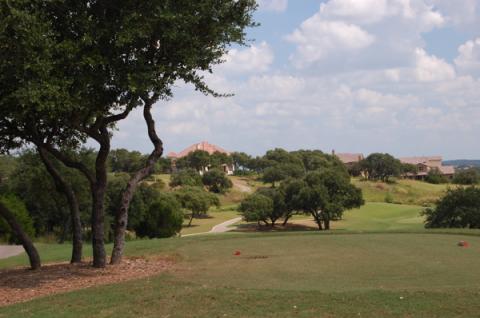
Home prices in communities like Falconhead near Austin, TX, have held up because of job growth at companies in the area and Austin's popularity with retirees.
I reconnected yesterday with an insurance agent I hadn't spoken with in 25 years. Alan sold me disability and life insurance policies back in the early part of my career, but circumstances change, and now I am looking to either convert the policies or just let them lapse. I called him to discuss my options.
In the course of conversation, we got around to the current housing market, and Alan said an interesting thing: "I don't think people can go wrong buying a retirement home, even now." Noting popular places like Miami, San Diego and Las Vegas, whose housing markets have tanked, I suggested that some people could have gone very wrong if they had bought there three years ago. "Look," he replied, "this baby boomer
Alan went on to explain that he had purchased a second home in Tampa, FL, a few years ago and runs his business from there and from his Long Island, NY, house, splitting his time pretty equally between both. He is 61 now and plans to move south permanently in a few years.
Alan works with many baby boomers at or nearing retirement, so his feel for market trends is worth considering. First, and most obvious, numbers are on his side. The 75 million or so boomers, arguably the wealthiest generation in history, are between the ages of 46 and 62. Sure, some will stay put in retirement especially if their homes are paid off and their kids and friends are nearby. But many more, like a couple from Ohio I am working with, would rather play golf than shovel snow in February and, anyway, their children and some of their friends have moved away.
Second, and perhaps more important to the argument, is that this generation is self possessed, selfish really. I can say that because I am a member of the tribe. We have always wanted what we wanted and when we wanted it. And whenever we have latched onto something, as Alan, a leading edge boomer, argued, "prices have always gone higher."
Remember when water from the tap was good enough and safe enough for us all? Then we had the great
There is certainly some evidence in southern real estate prices to support the contention that baby boomers are having a salutary effect on the markets. A number of areas I have visited in the last couple of years are seeing almost housing-boom type price increases despite housing-bust conditions in the rest of the country. In December, a Money magazine article indicated that Wilmington, NC, had seen a 9.2% increase in real estate prices over the prior 12 months. Asheville, NC, was even higher, at 10.9%, and Austin, TX, close with 10.8%. Richmond, Charlotte and Raleigh also showed strong price increases.
For sure, job growth in these metropolises was probably more important to prices than were retirees. Demand for homes there, especially new ones, has been high, and retirees have filled a more supplementary role in terms of real estate purchases than a primary one. But with the brakes now being applied to
I think of a couple living in the Boston metro area whose heart has been set on a retirement in Asheville, NC. Last year, homes in some areas of the Boston market depreciated 5% while in Asheville they increased 10.9%. More of the same in the next few years, and our Boston couple might be priced out of a home in Asheville or have to settle for a much different one than their sights are set on.
If your hearts and minds are set on moving south, don't hold out for the last dollar on your primary home. Deal with the fact your home is likely not worth what it was last month, let alone last year or two years ago. Accept any fair offer before the spread between your eventual selling price and what you will have to pay in the south a few years hence widens beyond your ability to pay the difference.
The harsh but appropriate old line from the stock market is worth repeating here: "Pigs may get fat, but hogs get slaughtered."
Note: I am currently working with a few couples to identify the areas and communities that best match their lifestyle criteria. If I can help you, please send me a note. There is no cost or obligation whatsoever.
The romance of golf communities
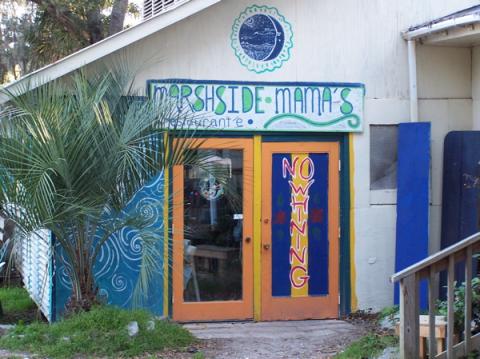
After a pleasantly exhausting day of golf on Daufuskie Island, kick back at one of the few restaurants outside the communities. Marshside Mamas seafood, music and funky atmosphere is legendary on the island.
On this St. Valentine's Day, I've combed my memories and files for a few ideas on how to spend a romantic day at some of the south's best golfing communities:
Osprey Cove, St. Mary's, GA
Play a morning round at the challenging Mark McCumber course. Then take the five-minute drive into the charming seaside town of St. Mary's and catch the boat to Cumberland Island, a 20-minute ride. Wander the paths and beaches of Cumberland, keeping an eye out for the wild horses that populate the island (the only human residents are the guests at the famous Greyfield Inn, where John Kennedy Jr. was married). On the return to St. Mary's, dine at the tiny Sterling's Cafe, on the site of an old dry goods store, where owner and cookbook author Marianne Thomas pampers her guests without robbing their wallets.
Cliffs at Glassy, Landrum, SC
Roll out of bed to play the high and mighty Tom Jackson layout, with scintillating views in all directions. Drive to the very top of the community and its chapel, where you can fall to your knees and thank the Lord you found each other. Out back of the chapel is a bench with the most commanding view of mountains and valley that you are likely to see. On Valentine's Day, the two of you will feel on top of the world.
Mountain Air, Burnsville, NC
Most people own a second home here, and some fly their own planes and land on the strip that bisects the Scott Pool golf course on the very top of the 4,500-foot high mountain. If you are among the lucky few, park the plane, then play the course with your heads literally in the clouds. Have a casual lunch overlooking the runway, cheering your fellow pilots as they land, and then make your reservation for dinner in the expansive log cabin clubhouse. The clubhouse is closed for the winter season, but you are a 10-minute drive down the mountain and more than a half hour into Asheville. You are such special members that Mountain Air's general manager is happy to call in the chef and get the huge stone fireplace going. After a bottle of wine and a rich dinner, you can stoke your own embers back at your house on the mountain.
Debordieu Colony, Georgetown, SC
If the weather is nice, roll out of bed with thermos in hand and walk the community's two-mile beach, searching for whatever the ocean has given back during the night. Then play the typically wind blown but atypically designed Pete Dye course. Few railroad ties in evidence, just a surprisingly straightforward layout that doesn't quite reach the ocean, which you can hear and smell but not see. Return to the beach to work out the kinks before dining on quail and grits at The Rice Paddy, a renowned in-town restaurant in a former bank. Order a bottle of wine stored in the bank vault. Drive carefully and watch out for marsh deer on the five-mile ride back home.
Ford Plantation, Richmond Hill, GA
Awake and, over coffee, thank each other that life has been good enough that you can afford to live in a 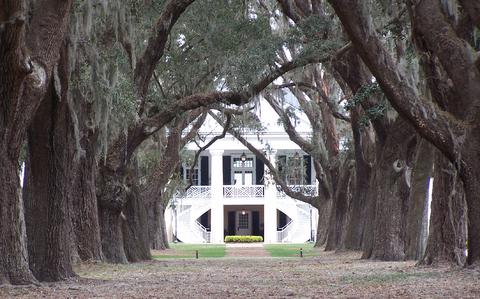 community of mostly six figure homes and majestic live oaks. Then play an uncharacteristic but terrific Pete Dye course along the banks of the Ogeechee River. Beg the management of the Plantation to let you spend the night in either Clara (Mrs. Henry) Ford's former bedroom or the old man's room. Don't waste too much time looking for the secret passageway Henry allegedly used to make his way to a love nest 100 yards across the lawn (his, ahem, "laboratory" he called it). Dinner is in the stately Main House, down a flight of stairs from the Fords' bedrooms.
The Landings at Skidaway Island, GA
Share a cart with your loved one for two rounds on any of the six excellent courses. My recommendation is to play the Arthur Hills Palmetto course in the morning; it is the most challenging of the group and by a designer who doesn't get enough credit for his fine work. After lunch in one of the community's multiple clubhouses, head for Tom Fazio's playful Deer Creek for a relaxing afternoon round. Get a two-hour nap in before driving the 15 minutes into Savannah for dinner at your choice of restaurants, as long as it isn't Lady & Sons, Paula Dean's tourist trap testament to cholesterol. Hire a carriage for a ride through some of the city's more than 20 squares, spending midnight in the "garden of good and evil."
Haig Point, Daufuskie Island, SC
No man is an island, nor is a woman, but an island like Daufuskie can insinuate itself into your soul. Reached only by ferry, the island's marsh, ocean, live oaks and general atmosphere give cabin fever a good name. If you are feeling perky, go the full 27 holes at the recently refurbished Rees Jones layout, with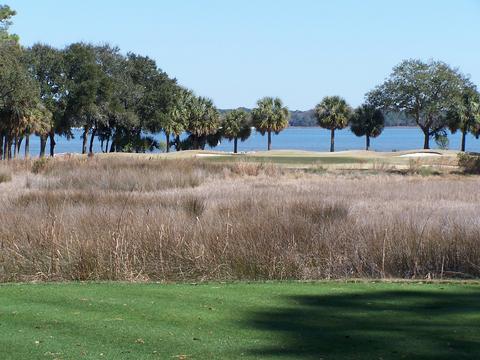 dramatic views of the marsh and Hilton Head Island beyond. After golf, take your personal golf cart - they typically come with the purchase of a home -- to the Daufuskie Island Resort just five minutes away. Try for a seat at the windows overlooking the ocean in the resort's stately dining room. If you haven't had your fill of golf, time your afternoon round at Nicklaus' Melrose course, a fine early example of his work, so that you are coming down the oceanfront 18th at sunset. Alternately, get a his-and-her massage at the resort's renowned Breathe Spa. If you haven't collapsed with exhaustion by dinnertime, head for the funky Marshside Mama's, one of only a few eateries on the island.
Governor's Club, Chapel Hill, NC
If you just want to indulge yourself without wandering off the reservation, there is no better community to do it. Sleep in, then play 27 holes of challenging Jack Nicklaus Signature golf, with a leisurely stop for lunch after 18, and most of your day is spoken for. You could drive 15 minutes into town for a meal at one of a handful of excellent restaurants in the college town, but you could hardly do better than the expertly prepared food in the club's modern and sleek clubhouse. Of course, if one of you has scored two tickets to the University of North Carolina basketball game, then start your engines and grab a hot dog before tipoff.
Pawleys Plantation, Pawleys Island, or The Reserve at Litchfield Beach, SC
After breakfast at the popular Eggs Up Grill in Litchfield, play your round at either the dramatic Nicklaus Signature 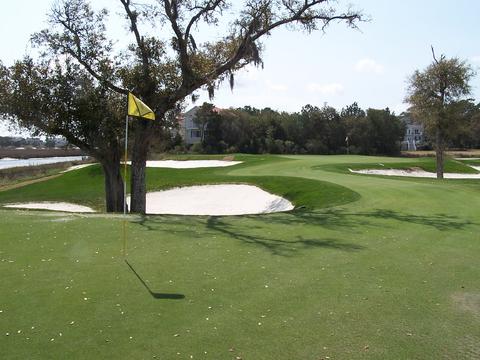 course at Pawleys, with a back nine that slinks along the dramatic marsh and features the connected 13th and 16th greens (pictured); or Greg Norman's less dramatic but finer conditioned layout for the Reserve. No matter which, finish your round in time to take lunch at the Caledonia Golf and Fish Club, for the endless views across the marsh, the efficient if bustling service, and the wide range of menu choices (the fried stuff is sinfully good). Take your after-lunch drink out on the rocking-chair-lined veranda that almost literally hangs over the putting surface of the 18th, and join others in cheering or, in jest, jeering those who three putt the enormous green. Bring a camera if you decide to play the course; the azaleas should just be starting to pop. For dinner, choose any of the eponymous and excellent restaurants in Pawleys Island - Frank's, Austin's, or Louis'.
Amelia Island Resort, Amelia Island, FL
Amelia is all for one, or better all in one, with four golf courses, a long clean beach and all the amenities a topflight resort has to offer. We have friends who have spent every Thanksgiving here for over a decade. For your morning round of golf, choose Long Point, a splendid Tom Fazio layout, the best of the four courses on the property. Take your lunch at the beach club that overlooks the Atlantic, and go for a bracing late afternoon swim (okay, okay, very bracing in February). Or if you are up for another round of golf, opt for the Pete Dye/Bobby Weed Ocean Links course, with a few back nine holes along the Atlantic. Conspire to cook a luscious dinner at home, with extra bottle of wine optional. Or if you are too worn out to cook, take a short drive to Fernandina Beach, an historic ocean town, and choose among its few but choice seafood restaurants.
Bald Head Island, NC
Your fearless editor was fearful for his life when he became hopelessly lost in a golf cart on this fair-sized island one cold November night two years ago. With few streetlights and fewer residents in the cold months, Bald Head can be a lonely place or a romantic one, depending on your point of view. If you are of the latter persuasion, go for a ride in your super charged golf cart and get lost like I did. You'll be clinging to each other for hours. Alternately, take the 25-minute ferry ride to the charming city of Southport for a candlelight dinner. Make sure to buy a bottle of champagne for the ride back, glasses optional. As for the golf, the nice George Cobb layout offers many shot-making opportunities but too few views of the water. If you are lucky to have a western view from your home, point your chair in that direction and enjoy one of the finest sunsets your correspondent has ever seen. Then curl up by the fireplace to end the day.
River Place, Austin, Tex
The Tom Kite course was so difficult when first built in 1982 that the owners had it rebuilt two years later. Designed originally as a walking course only for the most physically fit, today hardly anyone plays without a cart. The course has its ups and downs in more ways than one, but the roller coaster fairways and cart paths will provide you and your sweetie with a few thrill rides. Forgo dinner at the weirdly designed clubhouse (nice views of the Texas Hill Country, though) and choose among any number of barbecue palaces within a few miles drive. Use your hands to recreate the primitively sexy eating scene from the movie Tom Jones.
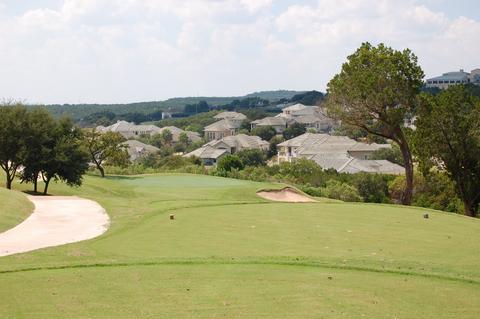
The views of the Texas Hill Country from River Place Golf Club are romance for the eyes.
Foreclosures offer food for thought
I was in my favorite breakfast place this morning. After reading in the morning papers about the astounding numbers of foreclosures in the nation, I needed the solace of a good meal. I asked the waiter about the special omelet of the day, and he described one that was loaded with sausage and cheese, with home fried potatoes on the side. I'm clearly overweight, and I know I cannot afford the extra calories, but the waiter made that omelet sound so good and it was priced as low as any dish on the menu. I just had to order it, despite the obvious consequences to my wellbeing.
When the omelet arrived, I ate it; it tasted great, but shortly after I was done, remorse set in. When the waiter delivered the check, I told him
"Yes I did," I admitted, "but obviously I am overweight, as you can plainly see, and you should not have let me order it." "Sir," he retorted, "that is too bad." Then he threatened me with a day of washing dishes or the repossession of my car.
Just then, one of our town's councilwomen rose from an adjacent table where she was eating a dish of yogurt and fresh fruit. She doesn't know me personally, but she overheard the discussion with the waiter, figured I was a constituent and approached my table to offer her help.
"You are right," my councilwoman said to me and, turning to the rest of the crowded restaurant's patrons, as well as the owners, declared, "This is an outrage, and you must reduce this man's bill, or at least give him a month or two to pay it off." Most of the patrons exploded in applause, and the owners, mindful that the town council could affect their business with burdensome new regulations, told me to come back whenever and pay for the omelet.
The restaurant learned its lesson, and I learned mine too. I'm never ordering that omelet again, at least not from that restaurant. And the councilwoman has my vote in the upcoming election. Someone has to protect me from myself.
Golf or Taxes: What drives U.S. migration?
Sometimes the Wall Street Journal cannot get out of the way of its own orthodoxy. Customarily scrupulous with the facts in its stories, the esteemed Journal sometimes plays a little fast and loose in its editorials, as it does today in trying to make the case that taxes drive our decisions about where to live.
Pointing to the recently released annual survey of United Van Lines, which plots U.S. migration between states, the Journal's editors try to make the case that Californians are moving to Texas, for example, essentially
The Journal should know its wealthy readership better than that. The fact is, the United Van Lines data shows that people move to find a better life, not to avoid a state income tax.
In the chart that accompanies the editorial, the five most popular destination states, in terms of net shipments into and from them by United Van, are North Carolina (+62%), Nevada (59%), Alabama (58%), Oregon (58%) and South Carolina (58%). Nevada is the only one of the bunch without a state income tax. But what Nevada has that California doesn't is cheaper housing, way less traffic and golf courses that don't require a degree in software engineering in order to secure a tee time.
Consider the L.A. baby boomer couple whose home has appreciated tenfold in the last 15 years and who have sat in traffic for two hours a day for much of their careers. A home in the mountains outside Vegas or in the Texas Hill Country will cost a lot less than what they sell the L.A. place for, and with the change they
Golf is a much better indicator of these migration flows than are income taxes. Just look at those top five states and consider the numbers and range of golf courses - and golf communities - in all of them. Think Bandon Dunes, Pinehurst, Myrtle Beach, the Robert Trent Jones Golf Trail...
Then look at the bottom five states: Michigan(-68%), North Dakota(-67), New Jersey(-61), New York(-59) and Illinois(-58). The Journal would have us believe that folks are fleeing those states because they all levy income taxes. But in reality, most of them are going to other income tax states in the south and west.
Florida is the best example of why the Journal is dead wrong about the significance of income taxes. The Sunshine State offers year round golf of great range and variety and charges its citizens zero income tax. But Floridians are admitting to real estate agents and journalists that they are turned off by traffic, the threat of hurricanes and escalating insurance premiums. They are exiting en masse and resettling in Virginia, the Carolinas and Georgia. These are all income tax states but, importantly, all offer plentiful and year round golf (albeit some days a sweater is necessary).
People move first and foremost to make a better life for themselves, not to squeeze every nickel from their tax returns. The Journal's point is akin to saying that, given the chance and resources, a dedicated golfer would opt to play East Podunk Municipal rather than Pebble Beach because the latter is way more expensive. I don't think so.
The United Van Lines press release is available here. The Journal op ed is available by clicking here. If that doesn't work, send me a note and I will be happy to email you a copy.
The man who made the Robert Trent Jones Golf Trail
The piece, which you can view by clicking here, indicates that the state is now building hotels and resorts adjacent to many of the more than 460 holes along the Trail. Independent developers have already opened golf communities near many of the courses along the Trail, and many more are sure to follow.
I am looking forward to my trip there early in March and to reporting on the Alabama golfing lifestyle, as well as the three golf courses I intend to play.
Great golf course doesn't mean great golf home investment
Sometimes the interests of golf course owners and local governing bodies come into conflict. When that happens, it almost doesn't matter if the golf course has been praised by everyone who plays it and by top national and regional golf magazines. That is largely the story of the Ravines Club and Lodge in Middleburg, FL, about 40 minutes outside Jacksonville.
From the time it was built in 1979, the original Mark McCumber designed course had been granted 4 stars by Golf Digest, rated among Florida's best courses, and in the top 5 of courses in the northeastern section of a state crowded with excellent layouts.
Last month, the 252-acre property, including the course, a lodge and villas owned by full-time residents and
The course's closing not only left the resort's homeowners without their golf course but also with an overgrown 150 acres in the middle of their community (see before closure and after photos below). Most important of all, the resulting loss of market value for their homes puts residents in a bind, and a foul mood. Local court appearances and zoning commission meetings have been loud affairs, and the controversy has turned a few passive letter writers into serious bloggers, some railing against the owners' greed and stupidity, and others taking the zoning commissioners to task for what is seen as narrow-minded protectionism in a rural county ripe for development. It is a messy situation all around, a lose-lose-lose proposition for residents, the property's owners and the local officials.
Coldwell Banker's National Golf Sales division lists the course for sale at $2.8 million and the entire 252-acre property, including the course, villas, lodge, and the controversial 55 acres, for $6.5 million, a curiosity given that the highest bid at the auction was just $3.7 million. If no white knight appears in the next few weeks, the property is slated for a foreclosure hearing in March.
The moral of The Ravines' story is that a well-designed, highly respected golf course is not a guarantee of stability. Bad things can happen to popular courses, including bad management and intractable local zoning laws. The oncoming recession will only make golf course ownership a more financially tenuous proposition and force course owners to seek related sources of income, prime among them residential development.
If you are considering an investment in a golf course community, do much more than talk with the salespeople and play the golf course. Stories like The Ravines' should compel us to do more homework, ask more questions and consider attending a club board meeting or two. You might even want to have a look at the club's books before you purchase your home on the course. And as always, if you can afford to rent for a few months, do it before you buy. You will pick up important information no long weekend trip will ever reveal.
Note: A Ravines resident has written a compelling short history of the community and its club. You can find it at TheRavinesOnline.com
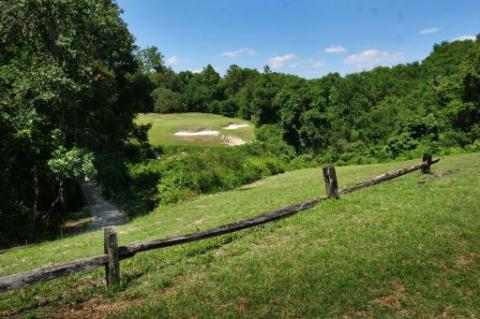
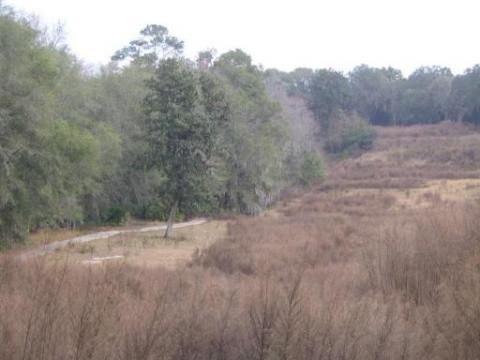
The pictures tell the sad story of the once well-regarded Ravines Golf Club. Photos by Debi Buehn for the MyClaySun newspaper.
On golf vacations, it has ever been thus
The golf vacation is something of an oxymoron when it involves a family. The dedicated golfer goes for the golf, first and foremost. The rest of the family goes for the vacation part, meaning the beach and other tourist things. For decades, sacrifices have been made on both sides: The golfer compromises his integrity by lying about his intentions; and the rest of the family unit fends for itself.
We may think this is a modern phenomenon, but it isn't:
Fees and dues: Distinctions without difference

At Fox Den Country Club in Farragut, TN, golfers pay an activity fee for such things as computer use to update their handicaps and for unlimited practice range balls. But locker room and cart fees are optional.
The other day we began a series here that details assumptions many people make when they retire to what they hope will be Paradise. I observed that living one hour away from activities in which you expect to engage in retirement is actually two hours away - the hour to get there and the hour back. Consider carefully the wear and tear on you and your car before you put yourself that far from the restaurants, theaters and museums you expect to use frequently.
Today, I discuss another assumption that warrants some scrutiny before
Romney claimed on the campaign trail that he lowered taxes when he was governor of Massachusetts. His opponents countered that he raised taxes; he just simply called them "fees," such as those he assessed on vehicles, building construction and campaign donations.
My February bill from my club in Connecticut provides a sharper understanding of the distinction without a difference between dues and fees. Here is a straight-up accounting of what was on my bill, other than food charges in the clubhouse and snack bar, and monthly dues:
Annual Handicap Fee (me) $ 30.00
Annual Handicap Fee (my son) 30.00
Annual Range Fee 192.50
Annual Golf Tournament Fee 120.00
Capital Assessment 60.00
Operating Assessment 40.00
Annual Locker Room Use Fee 33.00
Total $505.50
To be clear and fair, I voted for the assessments in the past and pay the annual fees without complaint. But seeing them all together shines the light on the true expense of belonging to a private club. Frankly, since the fees are levied on all golfing members, I'd prefer the straightforward approach of building them into the dues.
The University of Texas Golf Club near Austin does it that way. There, the dues comprise all the basics, including use of the practice range. The private club does not charge any assessments either; its $16 million clubhouse is being built at the owners' expense, and being rebuilt - after a fire - again without any charge to club members. UT members who want to store their bag at the club pay for that. If you play in UT Club tournaments, you pay a fee only for the ones you play in. Day lockers are available to members and guests at no charge, but a regular locker costs extra (again, though, totally optional).
Membership Director Dana DeLorenzo says the club's owners' experience guided their policy at UT.

"Between them they belong to 15 other clubs, and they were tired of being nickel and dimed for every little thing," says Ms DeLorenzo. "Some of those clubs were pretty high-end, too."
Lest the skeptics out there think the UT owners make it up in the price of dues, the $310 a month the club charges its members is at the lowest end of high-quality private courses. Initiation fees are a competitive $35,000, and just 70 memberships are available.
At Fox Den Country Club near Knoxville, TN, monthly dues are also reasonable at $366 a month, tax included. According to club manager Jason Hull, the dues include "operating assessment" charges; good for them for baking them into the dues. However, the club charges golfing members a mandatory "activity fee" of $45 per month to cover handicap service and unlimited practice range use. Fox Den also charges a mandatory $90 annual "Buyers' Club" fee which provides discounts to members for all pro shop merchandise, up to 20% off, throughout the year. Locker rentals and bag and pull cart storage are optional.
Cuscowilla Golf Club, about 90 minutes from Atlanta and perennially ranked in the top two or three best community courses in the nation, charges a separate, mandatory annual activity fee of $325 that includes practice range balls and the use of the club's computer for entering scores. Locker rental ($100) is optional. Monthly dues for local members are just $285 monthly, or $312 if you include the activity fee. Cuscowilla, says on site broker Jimmy Branan, charges no assessments.
Other clubs have permutations of all these plans. The advice here is that when you consider joining a private club, ask not only what the monthly dues are, but also follow-up with another question: "What are the annual fees and assessments for golfing members, and are they mandatory or optional?" For those on a fixed income, and those who don't like surprises, it will provide a true cost of membership.
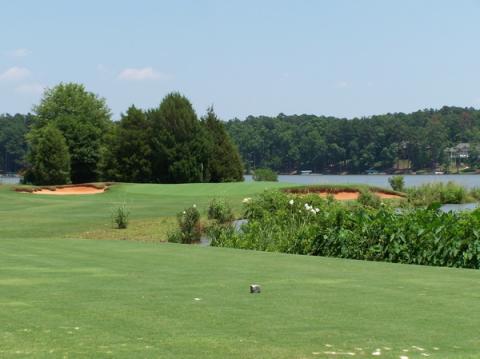
Cuscowilla Golf Club in Georgia charges members a separate activity fee, but combined with monthly dues, the overall costs are at the low end of the most quality clubs.
Real incentives: Discount prices, reasonable loan rates
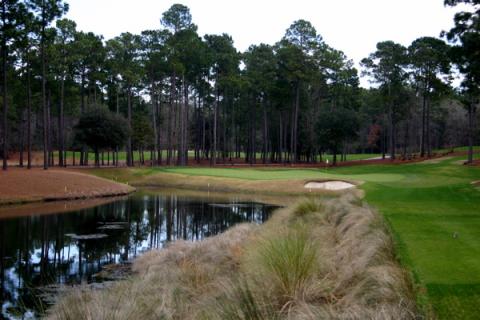
Neighborhoods near the Tournament Players Club of Myrtle Beach are included in the Centex promotion.
As you can tell from the article below, I am not a fan of complicated offers that potentially set buyer against seller. The price protection scheme being offered by some builders lasts only a few months at most, between deposit and closing, and sets up a potential argument between buyer and seller over true market value. Who needs that kind of grief?
Better is the straight-out discount, where a builder simply drops the price and you, the buyer, can figure out whether he has dropped it enough. An offer of that sort arrived in our mailbox today from Centex. This is by no means an endorsement of Centex or its homes, but we do find the offer - and the fine print - to be easier to deal with than price protection.
Centex is offering its new homes at up to $50,000 off previous prices during its Centextravaganza event the weekend of February 16 - 18 in the Myrtle Beach area. Along with the discounts on homes that begin in the $200s, Centex has arranged fixed interest loans at 4.875% APR through a local mortgage company. If you don't have any plans for either of the next two weekends, Centex has a $99 Discovery Getaway package available for a three-night stay (and the obligatory tour of the Centex neighborhoods). And if you purchase a Centex home during the event, they will reimburse to you at closing up to $1,000 in airfare of what it cost to fly to Myrtle Beach.
The Centex homes are not at the high end of the market, beginning at under $200,000 and topping out in the $400s. But some are in favored golf course communities, like the Barefoot Resort in North Myrtle Beach and Linksbrook in Prince Creek, home to the excellent Tom Fazio-designed TPC of Myrtle Beach in Murrell's Inlet, at the south end of the Grand Strand. You will find more details and the ubiquitous fine print at the Centex web site.
Father & Son event expensive, but worth it
Flexibility=value in the current market

Now on Sale

- The only book about golf communities in the last 10 years.
- 156-page step-by-step guide to finding your dream golf home.
- Info on nearly 100 golf communities the author has visited.
- Paperback version costs less than a sleeve of Pro VIs.
Here is what the experts are saying:
“The book is chocked full of information…applicable to anyone looking for a move to the Southeast regardless of whether they are looking for a golf community or not.” — John LaFoy, golf architect (Linville Ridge CC, CC of Charleston, The Neuse GC)
“Larry has done a tremendous amount of work and anyone — like me — who is looking to search for a golf home now or in a few years needs this book.” — Brad Chambers, golf blogger, ShootingYourAge.com
“Wow! What a thorough piece of work…a must for anyone moving South. This book will help many people.” — Brett Miller, owner and founder of MMA, Inc, a golf industry consultancy
Buy It Now at Amazon.com or BarnesandNoble.com.