Myrtle Beach Hot Spot for Winter Golf
Our friends in Connecticut think my wife and I are lucky since we are spending January and some of February on the coast of South Carolina; today, our New England friends are preparing for another foot of snow after the first storm dumped 18 inches last weekend. We do feel lucky, as long as the high winds and freezing temperatures back home do not cause a power failure that leads to frozen and burst pipes. But our power company is pretty good about posting notices online regarding power outages and, worst comes to worse, we can call on friends to check on the house.
Second homes require such accommodations, no pun intended. And among those are how one dresses for golf. On the Carolina coast in the dead of winter, you can expect high daytime temperatures typically in the 50s. Last week, I played three rounds in what any New Englander, upper Midwesterner or Canadian would consider ideal, early-spring conditions –- sunny, temperatures between 55 and 60, no rain (except for our final two holes one of the days). I was perfectly comfortable in a long-sleeved mock turtleneck shirt and wind vest for all three days.
Sub-60 degree temperatures may be considered too cold by some golfers. After all, temperatures in parts of Florida were a good 20 degrees warmer at times this week. And that got me thinking that there is no perfect climate in the Southeast, certainly nothing like San Diego, say, where the four seasons almost seem to merge into one mild season.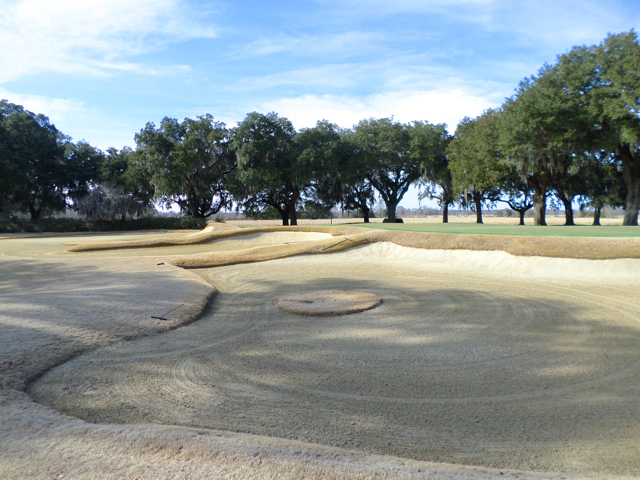 Arguably the most highly rated golf course among Myrtle Beach's 100 layouts is Caledonia Golf & Fish Club in Pawleys Island.
My contention is that there are two annual seasons from about Wilmington, NC, to midway into Florida. But they are a different two seasons depending on the geography. From Wilmington to around Charleston, for example, I would describe the two seasons as cool to warm in winter and hot in summer. From Charleston south to about Jacksonville, FL, I'd characterize the seasons as warm and hot to very hot. And along the two coasts of Florida, I'd call the two seasons warm to very warm and very hot to stifling. In summer, a few Florida golf communities can seem like ghost towns because of the heat, and even the hardiest souls know to tee off by 8 a.m.
The nice thing for golfers interested in relocating south or purchasing a second home there is that all of these climates, with few exceptions, make it possible to play golf year round. From Wilmington down to around the Myrtle Beach area, you might lose 10 to 20 rounds of golf in winter due to cold temperatures or precipitation. From Myrtle Beach to around Hilton Head, count on maybe a week and a half's worth of temperatures cold enough to make you think twice about playing. In Florida, it will only be precipitation that derails your golf plans any time of the year.
Once you reconcile that there is no perfect climate on the east coast, golf in the 50s, especially if you spend a few minutes on the practice range before your round, can be more than tolerable.
*
I'm staying in the Myrtle Beach area for the next few weeks. Even if you aren't ready to commit to a golf home in the Carolinas, this is a good time to take advantage of low hotel and golf prices, easy-access to the 100 golf courses on the Grand Strand and to see if the mild winter temperatures are mild enough. During an idle drive beside the ocean in Myrtle Beach yesterday, my wife and I noted the many signs at oceanfront hotels for $49 rooms. Couple that with deeply discounted golf in the off-season and a few choice restaurants that remain open -– not to mention the outlet shopping malls, if you are into such things -– and you could create a pretty nice long weekend or week for yourself. And if during your visit you would like to look at golf communities and a few homes, let me know and I will help you build an effective itinerary of visits to golf communities. Contact me at Home On The Course.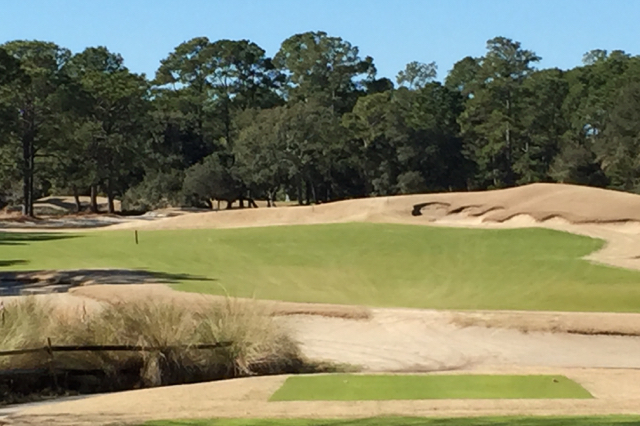 Pawleys Island's Founders Club, which longtime golfers in Myrtle Beach will recall as Sea Gull Golf Club, is notable for being the farthest south of the 100 golf courses on the Grand Strand, and for becoming one of nine area layouts now owned by a Chinese consortium.
 Home On The Course newsletter
Click here to sign up for our Free monthly newsletter, loaded with helpful information and observations about golf communities and their golf courses.
Condo Prices Look Like a Bargain in Myrtle Beach
I played golf yesterday at Pawleys Plantation Country Club with a man from Greenville, SC, who was making one of his frequent annual visits to the Myrtle Beach area. He told me he and friends in Greenville had purchased an inexpensive condo some years ago just up the road in Litchfield Beach, almost across the street from Willbrook Plantation Golf Club; together, they turned it into a kind of timeshare for themselves. His share was 13 weeks a year, which he used for solo golf trips as well as beach visits with his wife. I know the condo complex where he and his friends own, and I'd estimate they paid less than $100,000 for the unit six years ago, or about $25,000 each.
The Myrtle Beach golf condo market is still rife with bargains, although if the month of December is any indication, buyers are starting to notice. Of the 3,337 condos listed going into the month, 327, or nearly 10% were sold. (Single-family homes sold at an even more robust rate, 480 of 3,681.) Of the lowest priced condos, $100,000 to $150,000, 91 of 891 were sold, according to a report I received from Century 21's Harrelson Group in Myrtle Beach.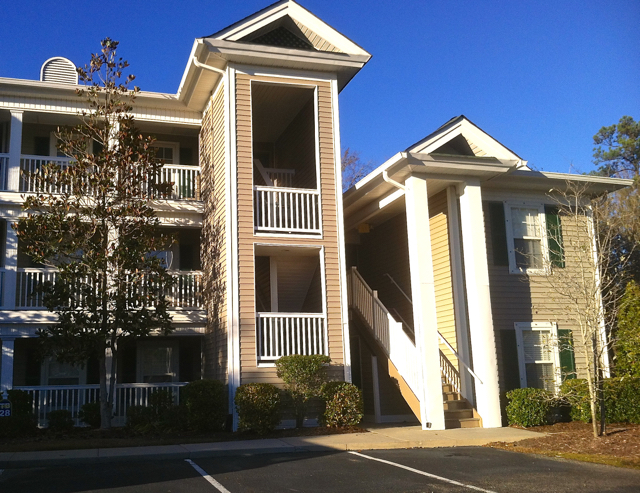 Myrtle Beach area condos, such as these across from the True Blue golf course in Pawleys Island, are listed from below $100,000.
If you are interested in a second home golf condo in the Myrtle Beach area, please contact me for more information. In the meantime, here are a few current listings in some of the best known and golf communities in the area, all under $130,000.
Pawleys Plantation, Pawleys Island, SC....$129,900
2 BR, 2 ½ BA unit with views from screened porch of 9th fairway. Potential to rent to others and generate extra income or use to your heart's content. Jack Nicklaus golf course is one of the best in Myrtle Beach area (100 courses).
International Club, Murrells Inlet, SC...$112,000
2 BR, 2 ½ BA fully furnished townhouse just a couple of miles to beaches and much shorter distance to the community's pool. Private patio courtyard and golf course, designed by Willard Byrd, is reported to have some of best greens in the area.
Arrowhead Golf Club, Myrtle Beach, SC...$87,500
2 BR, 2 BA fully furnished end unit with nice views of the golf course, which was designed by Ray Floyd & Tom Jackson and spans 27 holes. Not far from the Myrtle Beach action but surrounded by mature trees.
Legends Resort, Myrtle Beach, SC...$88,500
2 BR, 2 BA townhouse with fairway views at one of the area's most favored golf complexes, including two courses designed by Tom Doak and one by P.B. Dye. Just off Highway 501 and almost across the road from huge outlet mall.
Barefoot Resort, North Myrtle Beach, SC...$108,900
2 BR, 2 BA fully furnished unit on the corner of the second floor in the Ironwood section, overlooking 13th fairway of Greg Norman golf course, one of four at Barefoot (Fazio, Dye and Love III are the others). Ironwood has its own pool, basketball and tennis courts. Short drive to the beach, shorter to shops and restaurants.
Tidewater Plantation, Little River, SC...$104,900
2 BR, 2 BA condo beside one of the highest rated and most popular golf courses in the Myrtle Beach area, designed by Ken Tomlinson. Close to North Carolina line and multiple seafood restaurants in Calabash.
Pawleys Island goes supermarket crazy
The zip code 29585 comprises Pawleys Island and Litchfield Beach in South Carolina, two resort-oriented coastal towns rich in beaches and golf communities. The year-round population within the zip code is approximately 13,500, but that number can swell significantly during the peak beach and golf seasons that include spring and fall for golfers and summer for families looking for a week or more on some of the cleanest and most expansive beaches on the east coast.
Supermarket shopping during peak seasons at beach and golf resorts can be a chore, what with the crowded aisles and long checkout lines as well as prices considerably higher than back home. Neither of those conditions should nag visitors or residents in the Pawleys Island area.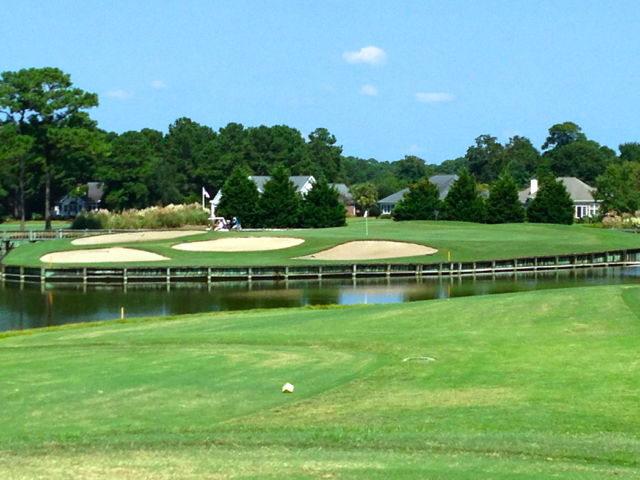 A par 3 at Litchfield Beach's River Club golf community may be difficult to negotiate, but the five supermarkets within a couple of miles of the golf community make shopping easy. Homes currently for sale around the River Club in Litchfield Beach start at just $160,000 for a 3 BR, 3 BA condo.
In March, the Publix chain of supermarkets will open a large facility on Highway 17, the main north/south thoroughfare through town that stretches all the way south through Charleston and Savannah and north through Wilmington, NC, to Norfolk, VA. The Publix is rising literally across the highway from an established Food Lion supermarket and less than a mile north of a less-than-year-old Loewes supermarket. A half mile north of the Publix is a Fresh Market, a chain of more "boutique" type produce, meats and other products has done quite well since opening a couple of years ago. Less than four miles farther north, in Litchfield Beach, a BI-LO supermarket took over the space formerly occupied by the iconic southern chain with the funny name, Piggly Wiggly. (BI-LO's previous store was ¼ mile from the former Piggly Wiggly.)
For residents of Pawleys Island golf communities, as well as visiting golfers and families renting the many condos in the area, the glut of supermarkets is good news. The intense competition will keep prices down, and the sheer number of places to shop will ensure short or non-existent wait times to check out. Supermarkets also require a large number of employees, albeit mostly low-wage jobs, but the continuity of employment in off seasons or through tourism dry spells should be an economic boost to the area.
Pawleys Island and Myrtle Beach golf courses and beach resorts are preparing for a high level of traffic this spring and summer as prices at the gas pump continue to fall. At the gas station in front of the Pawleys Island Loewes supermarket, the advertised price for regular gas is $1.99 per gallon, the lowest I recall since my early visits to Myrtle Beach in the late 1960s. Myrtle Beach real estate officials, who experienced their best year of the decade in 2014, are also anticipating more sales traffic during the peak upcoming seasons. Condo prices still have not recovered substantially from the 2008 recession, and some prices remain low enough to make a vacation home within reach of many couples and families who might have thought such a purchase exceeded their grasp. For example, a 2 bedroom, 2 ½ bath unit in Pawleys Plantation, with a short walk to the first tee of the Jack Nicklaus Signature golf course, is currently listed at $124,900. (I played the golf course yesterday and it was in nice shape for the mid-winter; the greens were fast, the fairways only a little thin, and the dormant rough thick enough to prop up the ball a bit.) That unit can also be rented out to the almost constant flow of visiting golfers and families throughout the year.
I'll have more to say about the entire Myrtle Beach housing market in the coming days. In the meantime, if you would like more information about Pawleys Island, Myrtle Beach or any golf community rich area in the southeast, please contact me.
$1 Lots Still Available in Upscale Golf Communities
For the price of an iTunes song, a ballpoint pen or a pound of chicken thighs, you can own a beautiful ½ acre lot in an upscale golf community in the Low Country of South Carolina.
In doing research for a recent article here on building a golf community home (click here to read), we noted that some home sites in such top golf communities as Belfair, Berkeley Hall and Colleton River, all in Bluffton, SC, are still priced at $1. We say "still" because this phenomenon started at the dawn of the recession roughly in 2008 after previously optimistic owners of homes in these golf communities purchased lots thinking they would appreciate in value as rapidly as they had through the early '00s. Many plunked down six-figures for a lot you can purchase today for as much as $300,000 less. The problem was that golf membership in these excellent clubs –- each with a minimum of 36 holes, and designed by the likes of Fazio, Nicklaus and Dye -– was and still is mandatory, obligating the owner of each lot to pay more than $15,000 in association and club fees. Some of the bullish owners had purchased multiple lots in the Bluffton golf communities, as well as in the Haig Point golf community on Daufuskie Island.
"Owner of this home site now owns a home in Colleton River and does not need two memberships," says one ad for a lot in nearby Belfair Plantation. "Thus he has priced for a quick sale." His sale price is $2.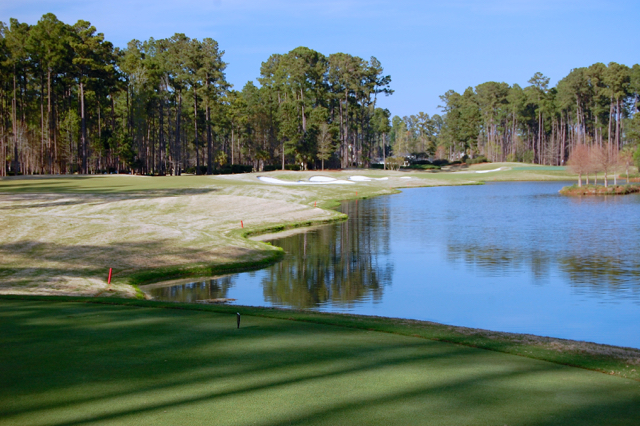 With two Tom Fazio golf courses and its Low Country location, Berkeley Hall Plantation has plenty of water and fairways to go around. A few lots selling for $1 afford views of water or golf course. The same is true at other top golf communities, including Belfair, Colleton River and Haig Point on Daufuskie Island.
You might think that lots priced at half that are the worst available in each community; but most are actually choice, with water or golf views and, in a couple of instances, a combination of the two.
"Magnificent long lagoon to green view of the 2nd hole of the Jack Nicklaus Course in Colleton River!" touts one ad for a $1 lot. "This home site...is located within a short distance of the Nicklaus Clubhouse, Bruce Boland Par Three Course, Fitness & Spa, Tennis Center and Aquatic Center."
"DOMINATING VIEW OF 17TH GREEN . . . on North Course" reads another ad, for a $1 lot in Berkeley Hall. "No one will ever build across street, no houses will ever be in view -- wonderful privacy for your dream home with screened lanai. Short walk down to 35,000 sq. ft. Clubhouse and staffed state-of-the-art Spa & Fitness Center."
We counted more than a dozen $1 lots for sale in these fine golf communities, but there are many more that we would put in the "bargain" classification. Count on construction costs in the Bluffton area to run between $140 and $200 per square foot, with the higher price for more upscale cabinets, appliances, flooring and other flourishes. Doing a bit of basic math, the cost to build a nice 2,500 square foot home in one of these high-end communities would run to $350,000 and up -– oh yes, plus $1 for the land.
The carrying costs in these communities skew a little higher than other comparable golf communities in the Southeast, but we figure you get about 10 years worth of savings with a bargain lot. (i.e. Comparable lots priced at $150K elsewhere divided by $15,000 annual costs equals about 10 years.)
If you would like more information or to make a visit to Bluffton, please contact me and I will put you in touch with our expert Realtor in the area. His commission on the sale will be about 3 cents, and my referral fee will be less than a penny but, hey, if you're happy, we're happy.
If You Build It, They Do It Quicker in the South
The common notion is that the pace of life in the southern U.S. is slower than elsewhere but, at least in one category, it is the fastest region in the nation. If you want to have a home built quickly, go south.
According to U.S. Census Bureau data and an article in a recent Wall Street Journal, it takes just 5.5 months on average to build a house in the South, compared with an average six months nationwide. Homes in the Northeast take the longest to build, 8.4 months, with the Midwest at 6.7 months and the West at 5.6 months. The averages, it seems, are related to weather; in winter, it is much harder to drive a nail, for example, in sub-freezing conditions than in the more balmy South. But the recession, and the fact construction workers went off and found other jobs, may also have an overhanging effect.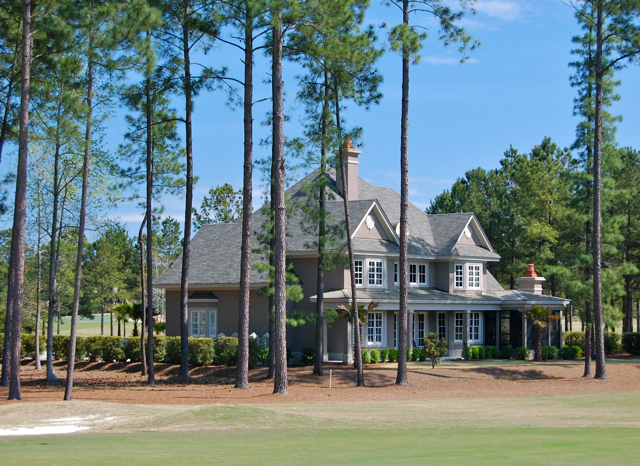 One of the beautiful homes in Berkeley Hall, Bluffton, SC.
Although most of the golf community properties our customers have purchased through the years have been already-built homes, a few who purchased lots have since built homes to their own specifications and are wildly happy with the results – despite what we have all heard about the headaches and financial vagaries of building your own home. One retired couple we worked with decided they wanted to live at Governors Club in Chapel Hill, NC, but figured it was their last chance to design a home to their dream specifications; they bought one of the relatively few lots remaining in that established golf community, rented a home for nine months, and supervised the construction of their new golf home. (It took more than the average 5.5 months, but the rock outcroppings in Governors Club are a blessing for the eye but a curse for builders.) Our couple was ecstatic with the results.
Another couple scored one of the great bargains a few years ago at the Bluffton golf community Berkeley Hall, beautifully landscaped and with two Tom Fazio golf courses just off Hilton Head Island. For just $45,000, they bought a beautiful golf home site about 200 yards beyond the tee box on a par 5 hole that gives them a 300 yard view over an adjacent pond and down the fairway. Because they spent relatively little on the lot, they were able to add some extra finishing touches to their home.
Believe it or not, there are still a number of lots in otherwise high-end South Carolina golf communities priced as low as $1. We'll explain where they are and why they are priced so low in our next article.
1990 Hot Spots Still Pretty Cool Today
My wife and I finally got around to two large boxes of newspaper clippings we had saved beginning around 1985, when we moved to Connecticut from New York City. Most of the clips were restaurant reviews of local establishments or recipes from the weekly food columns in the Hartford Courant. But buried among them were a few articles about vacation real estate. And as the sweep of history tends to demonstrate, the more things change the more they stay the same – well almost.
A Hartford Courant piece on "Investing" dated August 25, 1990 touted one expert's choice of "hot spots for second home" in its headline and focused on the Bend-Sunriver, OR, area and Steamboat Springs, CO, as well as ski areas Killington and Sugarbush in Vermont. But for those who prefer beaches to snow, the article said, three waterfront towns received high marks – Amelia Island, FL; Marco Island, FL; and Myrtle Beach, SC.
We haven't visited Marco Island, but by reputation, it is both a highly prized and highly priced suburb of Naples, which sports a wider range of housing options. (Note: In the 1990 article, the real estate expert noted a two-bedroom bungalow villa priced at $60,000; things have changed a bit in 25 years.)
We have a much better feel for Amelia Island and fancy ourselves somewhat expert on the subject of Myrtle Beach, where we have owned a vacation golf condo in Pawleys Island for 15 years and where we made our first golf trip in 1969. Amelia is a resort, about 20 minutes from Jacksonville and close by the charming seaside town of Fernandina Beach. Resident club members have to fight visiting golfers for tee times at the resort courses, but Longview, the Tom Fazio designed course that is essentially private -– resort guests have some privileges -– is a wonderful alternative. After some financial difficulties at the onset of the recession, the resort is now owned by the Omni Group which seems to be steering a steadier course.
Back in 1990, according to our retrieved article, Myrtle Beach had actually benefitted by the destructiveness of 1989's Hurricane Hugo, the insurance-backed repairs having helped to "spruce up and modernize many condominiums that frankly needed it badly." A quarter century later, many area condos could use an additional rehab, although we wish for no devastating hurricane as a fixer upper. The fact is that, given Myrtle Beach's reputation (and reality) as primarily a golf vacation destination, the area has been slow to snap back from the recession that began around 2008. Of course, that represents a buying opportunity for those looking for either a vacation home for a few weeks a year or a year-round golf-oriented condo or single-family home. We are perpetually confused and miffed at why flights to Myrtle Beach from the Northeast consistently cost three times as much as flying to Charleston, 90 minutes (by car) farther south. If Myrtle Beach's town fathers ever get their act together and cajole the airport authority into solving the cost of flights in and out and other image issues, Myrtle Beach could be a "hot spot" again. Until then, bargains abound.
Myrtle Beach Area Golf Communities to Consider
The Myrtle Beach area stretches from Georgetown in the south to the South Carolina/North Carolina border on the north end, a distance of about 60 miles. Given that the area boasts 100 golf courses, Myrtle Beach could be one of the densest golf destinations in the world. For those who choose a vacation home in the area, the number of private clubs are outweighed by daily fee and semi-private clubs about 95 to 5, making membership in any one club almost superfluous –- as does the consolidation of golf club ownership in the area. A member of the National Golf Management group of courses, for example, has more than a dozen golf courses at their disposal for deeply discounted prices and a nominal annual membership fee.
Pawleys Plantation, Pawleys Island, SC
Jack Nicklaus 18-hole semi-private golf course
Mix of condos, townhomes and single-family homes
Prices range from low $100s to $1 million
65 minutes to Charleston airport, 40 minutes to Myrtle Beach
DeBordieu Colony, Georgetown, SC
P.B. & Pete Dye 18-hole private golf course
Single-family homes from $500,000
60 minutes to Charleston airport, 45 minutes to Myrtle Beach
Note: Only beach in gated community on SC coast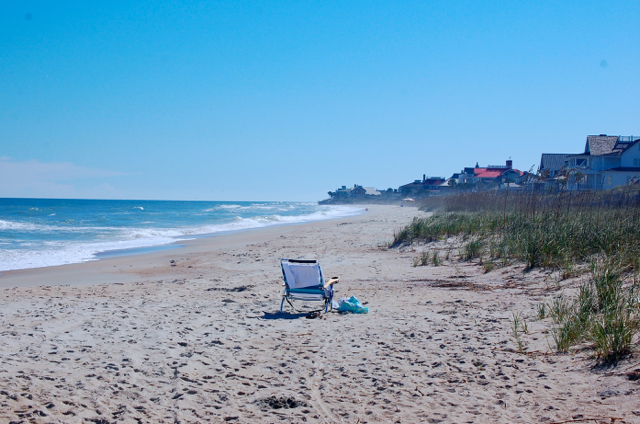 The beach at DeBordieu Colony is the only one on the South Carolina coast behind the gates of a golf community.
Reserve at Litchfield, Litchfield Beach, SC
Greg Norman 18-hole private golf course, owned by McConnell Golf
Villas, cottages and single-family homes
Prices range from $400K to $1 million-plus
Note: Member accessed beach 1 mile away
Wachesaw Plantation, Murrells Inlet, SC
Tom Fazio 18-hole private golf course
Cottages and single-family homes
Prices from $200k to $1 million-plus
Note: Beach, "Restaurant Row," hospital w/in 5 minutes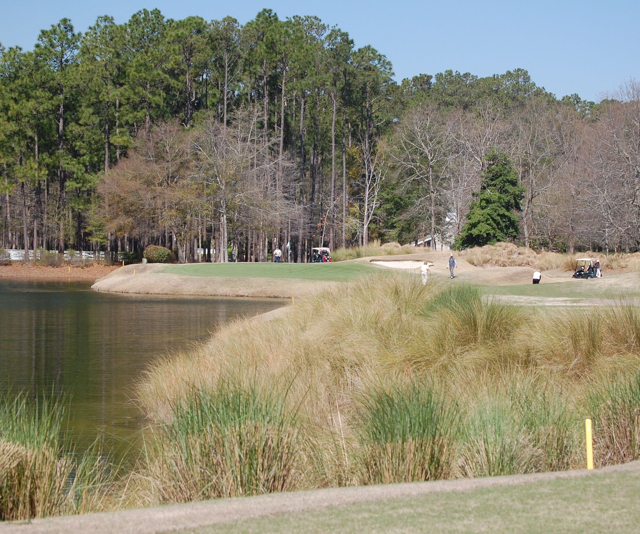 The par 3 7th at Tom Fazio's Wachesaw Plantation is one of the toughest one-shotters on the entire Myrtle Beach Grand Strand, with no bailout opportunities for the faint of heart.
Legends Resort, Myrtle Beach, SC
Three golf courses by Doak, P.B. Dye & developer Larry Young
Single-family homes from low $300s.
Note: Hoping bagpiper still plays every late afternoon.
Grande Dunes, Myrtle Beach, SC
Schreiner/Price 18-hole "Members" golf course
Rulewich 18-hole "Resort" golf course
Single-family homes from $330K
Note: Just to west of Intracoastal Waterway but within a mile of ocean.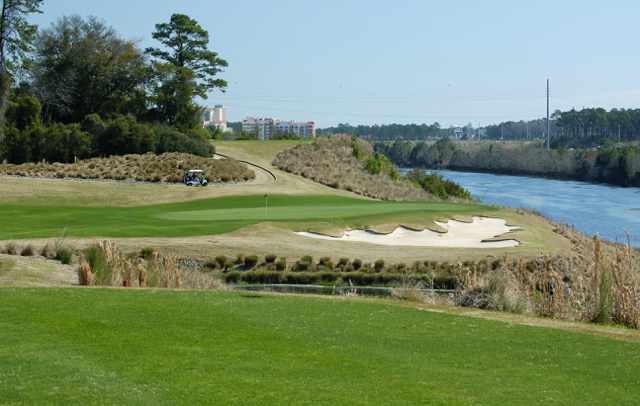 The Intracoastal Waterway slices its way through the Myrtle Beach area, providing both hazardous scenery for golfers at Grande Dunes' Resort Course.
Barefoot Resort, North Myrtle Beach, SC
Four golf courses by Fazio, Love III, Dye and Norman
Condos and single-family homes from $200s
Note: Davis Love course features "ruins" behind 4th green
Note: There are dozens more golf communities in the Myrtle Beach area to fit every price range and style of play. Please contact us for more information or to build an itinerary of golf community visits in the area.
Golf Is Dead?
If you read the headlines of some of the top business magazines and newspapers in the U.S. this past year, you might have gotten the impression that the game of golf is on life support; that devoted golfers are dying off, that they aren't being replaced by millennials (18 to 34), that the recession that began in 2008 simply hastened the sport's demise, that Tiger Woods' growing irrelevancy on the PGA Tour eroded any slight lingering interest in the sport, and that the lack of new golf community development is a strong signal that no new golf courses will be built again...ever.
That is all sensationalist drivel. Certainly, the overbuilding of golf courses through the '90s and into the '00s created an unsustainable supply, and the 100-plus courses we have lost annually in each of the last few years is a reaction to that. But just like the demise of chains
The above media-induced myths are easily dispatched:
Baby boomers have begun the re-migration South that was stalled by the recession. Many of them, during their earning years, were casual golfers, grabbing a round during company outings or charity fundraisers but never wanting or daring to spend time away from family on the weekend. That is hard to do when you are cheering –- or coaching -– your kids on the soccer fields. But in retirement, there is no such Hobson's choice, and many boomers are engaging with the game. The clubs in the golf communities we follow are all reporting modest to significant increases in the number of golf club memberships, spurred further by lowered initiation fees and such innovative programs as "legacy" memberships (children and parents of members are members in their own right without payment of additional initiation fees or dues).
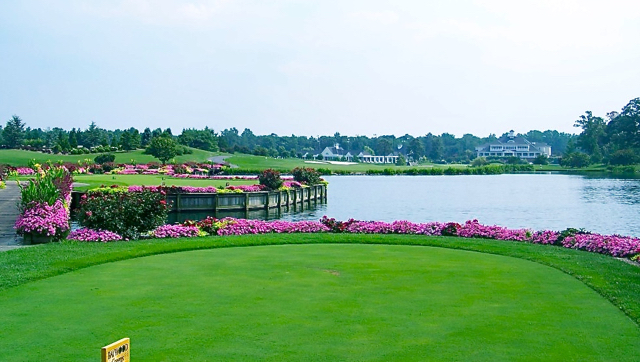 Baywood Greens on the Delmarva Peninsula is just a few hours from population centers in the Northeast. The golf industry should spend less time apologizing for its shortcomings and more on touting the availability of the game and how its handicap systems makes it fair for all.
As for millennial disinterest in the game of golf, that is just not true, according to the National Golf Foundation, which indicates that 25% of all golfers, or 6.2 million, are members of the 18-to-34 year old age group. I have personal, albeit anecdotal, evidence of young persons' interest in the game. Our son is now 25, squarely in the millennial group, and much of his free time is spent on the golf course. He was a competitive junior golfer and a collegiate golfer, and I attended many local and regional tournaments with him that included hundreds of other junior golfers. There were thousands more competing nationally and many more thousands who played recreationally, as I did when I was a teen. Did they all give up the game when they graduated from college? The interest that is stoked at a young age does not evaporate, even given the challenges of new careers and tight budgets. Interestingly, according to NGF, the millennial group spends about $5 billion per year on golf fees, equipment and clothing.
The media has always overstated the influence of Tiger Woods on golf's popularity. Just as professional baseball has flourished well after Babe Ruth's passing, golf was enormously popular before Tiger Woods joined the PGA Tour in 1996 and it will survive as he becomes just another player. Golf's issues are more about marketing than about anything inherent in the sport. Clever though they were, the past year's series of ads under the title "While we're young" were strategically dumb, an advertisement to those who might take up the game that wasted time awaits and a reminder to the rest of us that
New golf courses are scheduled to open in the coming few years, giving further credence to the sport's viability. But it is true that many of the most publicized newer courses –- like the famed Bandon group on the Oregon coast and the upcoming Cabot Cliffs, which will join Cabot Links in a remote area of Nova Scotia –- are financially and literally out of reach of most middle-class golfers. And even new golf community courses, like Esplanade outside Naples, FL, will only appeal to those able to pay $700,000 and up for a single-family home in the community. Those responsible for promoting the game should work to divert some money into more aggressive promotion of reasonably priced golf, as in Myrtle Beach, Hilton Head Island, even the courses in the Pinehurst area that aren't part of the famed resort there, many that are good and reasonably priced (and for those seeking a golf home, located in nice golf communities).
A good weekend of golf is closer than many folks think. There are a couple of dozen golf courses, for example, on the Delmarva Peninsula, just a ferry ride from New Jersey and well under six hours from Manhattan, that do not get their fair share of play and yet are challenging and reasonably priced, as are nearby hotels and resorts. (Long Neck, DE's beautiful, well-conditioned and challenging Baywood Greens, for example, charges less than $40 for green fees between now and March, cart included.)
Golf isn't dead. It is just waiting for a proper wake-up call.
Florida 3rd most populous state; Naples rises again
Rumors of the death of Florida were greatly exaggerated during the recession that began in the late mid-2000s. Indeed, according to a U.S. Census Bureau report recently, Florida has surpassed the state of New York in terms of population, growing by almost 300,000 in the one-year period that ended July 1, 2014. New York's population increased by just 51,000 in that same period.
California is the most populous U.S. state followed by Texas and, now, Florida.
After rampant building of new golf communities up until the mid-2000s and then a total stop during the recession, developers are accommodating the renewed influx of population with new construction. Naples, formerly one of the hottest markets in the state and one of its most depressed during the recession, has rebounded so quickly that it has spurred national developers like Arizona-based Taylor Morrison to announce a new golf community in the area. Esplanade, located just three miles from Interstate 75, will comprise nearly 1,800 acres and include more than 1,100 homes and an 18-hole golf course. One thousand acres of the gated community will remain "natural," including over 170 acres of lakes.
Homes in Esplanade begin in the upper $300s.
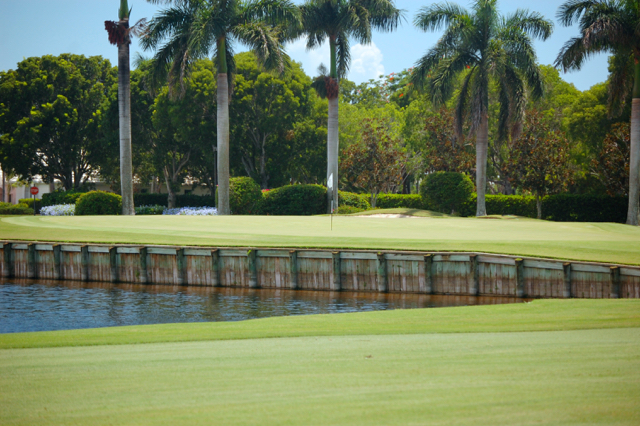 Audubon Golf & Country Club, Naples, FL The Naples area, which has a reputation for attracting wealthy residents, nevertheless is home to dozens of golf communities with the widest range of price points. For example, Heritage Bay, which was built by another national powerhouse developer, Lennar, and offers golf club membership "bundled" with the price of a home, features condos that begin in the mid $100s and coach homes that start in the low $300s. Heritage Bay's 27 holes of golf were designed by Paul Azinger and Gordon Lewis. At the other end of the price spectrum, Mediterra and its 18-hole Tom Fazio golf course, has only a few homes listed below the $1 million mark. In between the two golf communities are plenty of choices for folks looking for either a year round or seasonal home in a warm weather location.
For more information or two identify a home in Naples that will suit your temperament and pocketbook, please contact us.
It's the most wonderful time of the year...to sell your house
It is tempting to assume that winter is a terrible time to sell a house, especially in the northern U.S. when things stop growing and blooming, even if they aren't covered in snow. But according to a 2013 study by real estate organization Redfin, updated last month, winter is actually the best time of year to sell your home.
February, according to the Redfin survey, is the best month to list a home for sale, with 66% of those homes selling within 90 days. And during the December to March timeframe, more homes sell for above their asking prices than they do during the spring and summer months. Perhaps some of us, sick of winters up North and dreaming of a golf community in the South, are pumping up the numbers in winter.
Other reasons for what appears to be an anomaly are simple; since most sellers believe, erroneously as it turns out, that they will command higher prices by listing their homes in the warm weather months, when the plants and flowers are in bloom and the lawns are green and mown,
In a 2011 study, 80% of real estate agents responding to a survey by the website Realtor.com indicated that buyers during the holiday are "serious." All this might indicate that buyers in winter will pay appreciably higher prices for homes. But those who list their homes during the holidays and are willing to skedaddle for an hour at a time during showings are also serious. My wife and I found that out between Thanksgiving and Christmas in 1986 when, on a lark, we wandered into a 200-year old home in Connecticut with a local real estate agent. We already lived in the area and were under no pressure to buy a home, but we fell in love with this one. The owners had already committed to building a new home in the same town and were more than willing to deal. Before the end of winter, we had moved in.
Weather or Not: Northern cities rank higher than southern when climate not a factor
If it weren't for the weather, most of us might choose to live out our years in the North or Midwest, according to a recent study released by the Millken Institute.
The research paper, titled "Best Cities for Successful Aging," looked at data across a range of factors, including safety, affordability, happiness, financial security, transportation, living arrangements and other attributes important for older folks -- but climate was not one of them. Based on the data rather than people's personal opinions, Millken, a west coast think tank, ranked large and small metro areas by their suitability for people ages 65 to 79, as well as for those 80 and over. Of the top 10 for "large" areas, only Jackson, MS, and Austin, TX, represent the South; in the "small metro" category, only south of the U.S. midpoint Midland, TX, makes the top 10. The Millken Institute deemed Charleston, SC, the 42nd best large city metro area for people ages 65 to 79. But this time of year, golfers are on the greens of Bulls Bay, in nearby Awendaw, and not playing golf in Madison, WI, the top-rated Millken city.
Some of the choices are baffling, even in a context devoid of climate as a factor. For example, Boston, Honolulu and New York City all rank in the top 10 of the large metros, despite their lofty costs of living, especially real estate prices. Back out the need for a car in a public transportation heavy New York or Boston, and the costs to live there are still stratospheric compared with southern cities that pretty much require automobile ownership. Millken also defines the area around Bridgeport, CT (#10 for large metros), as "among the safest places to live." Most residents of Connecticut would not be likely to endorse that perspective.
As you might imagine, folks who have moved to the South or are considering it because they are fed up with cold winters, did not take kindly to the survey results.
"This list is for the birds (badly behaving birds)," wrote one of the visitors to TopRetirements.com, where the editors published some of the Millken results and top ranking metro areas. "If climate is not the criteria, which is the most important factor for seniors, then I can show you a lot more places that are far better than these. How about Iceland? Not listed here."
"If it's covered in snow and ice in the winter," proclaimed a writer from Minneapolis, "I'm not going to live there in the winter, no matter how great...winters can be so brutal, one becomes a shut-in for the other 4-6 months. I think it's life-extending to get out of here."
As mentioned, Jackson, MS, ranked in the top 10 for larger metro areas. The city, which is home to the University of Mississippi, ranked #6 for those 65 to 79, largely because it had the #1 ranking for healthcare, according to Millken, and the #5 ranking in the employment/education category. Austin's status as a high-tech center helped put it in the #1 ranking for financial status and #9 overall for the 65 to 79 age group.
There are almost 20 golf courses within 20 miles of downtown Jackson, including Reunion Golf & Country Club in the community of the same name and located in Madison, MS. Bob Cupp designed the golf course and members enjoy tennis, a fitness center, and swimming pool, as well as golf. Homes in the surrounding golf community range in price from $350,000 to over $1 million, with the sweet spot around $500,000.
By the way, Madison, WI, ranks #1 for large metro areas for folks 65 to 79, and #3 for those 80 and over. As I write this, the high temperature for the day in Madison has reached 27 degrees. It is 65 in Austin.
You can access the Millken report, including its rankings of the top 100 large metros and top 252 small metros, by clicking here.
Right on 'Cue

Now on Sale

- The only book about golf communities in the last 10 years.
- 156-page step-by-step guide to finding your dream golf home.
- Info on nearly 100 golf communities the author has visited.
- Paperback version costs less than a sleeve of Pro VIs.
Here is what the experts are saying:
“The book is chocked full of information…applicable to anyone looking for a move to the Southeast regardless of whether they are looking for a golf community or not.” — John LaFoy, golf architect (Linville Ridge CC, CC of Charleston, The Neuse GC)
“Larry has done a tremendous amount of work and anyone — like me — who is looking to search for a golf home now or in a few years needs this book.” — Brad Chambers, golf blogger, ShootingYourAge.com
“Wow! What a thorough piece of work…a must for anyone moving South. This book will help many people.” — Brett Miller, owner and founder of MMA, Inc, a golf industry consultancy
Buy It Now at Amazon.com or BarnesandNoble.com.