In rural Georgia, sale of golf course could hold key to adjacent community's future
Values for residential golf community property are governed by the same three principles as our primary homes are -– location, location, location. Therefore, residential communities in the more remote locations are suffering the most in the current economy. Cooper’s Point is between Savannah and Jacksonville, FL, but over an hour from the former and well over two hours from Jacksonville. Moreover, it is 10 miles from Interstate 95 and, despite plans for an eventual retail center at the perimeter of the community, it is a good haul to shopping (the nearest Walmart is in Brunswick, more than an hour away). Cooper’s Point does have a restaurant on site, although dining options outside the gate are limited (and you better like seafood).

Marshview lots at Cooper's Point are priced at $200,000 and lower through the end of the month.
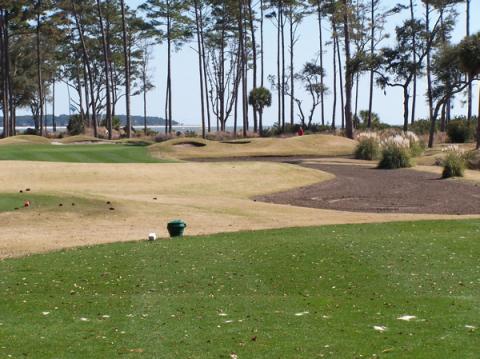
I understand that a group of local businessmen are expected to close on a contract to purchase the golf course by the end of the month and plan to invest in an upgrade to the layout, which I liked when I played it (nice links style in good condition and cheap to play, about $40 as I recall). It is reasonable to assume that in a remote, though beautiful, location like Shellman Bluff, GA, the fortunes of the real estate development are tied to the fortunes of the golf club. Unless you like to fish, boat and watch marsh birds, there is not an overwhelming number of activities in and around Shellman Bluff. A firm commitment to the golf course by its future owners could make a $29,000 or larger investment in a Cooper’s Point lot look pretty smart by next year.
 Home On The Course newsletter
Click here to sign up for our Free monthly newsletter, loaded with helpful information and observations about golf communities and their golf courses.
Glenmore Association bio brutally frank about former treasurer's embezzlement
Michael Comer, 46, pleaded guilty yesterday in a Charlottesville federal court to tax evasion and mail fraud directly related to his embezzlement of nearly $700,000 from
Glenmore Associates is a family-owned business started by the late Frank Kessler who opened Glenmore in the early 1990s. Comer is married to one of Mr. Kessler’s daughters. Glenmore Associates repaid to the Community Association an amount equal to the embezzled funds and also sold the club to a Glenmore couple earlier this year, thus ending the Kessler family’s involvement with the country club’s governance.
The Glenmore Community Association is brutally frank in its published biography (read it by clicking here). Its 18-year history is spelled out clearly, warts and all, including the embezzlement episode. Those who know the Glenmore story may see particular irony in the description of Michael Comer’s involvement with the golf club and community association. “Mike Comer,” the history indicates, “provided book-keeping and administrative services at no cost to the GCA [italics mine].” Or so they thought.

The John LaFoy layout at Glenmore dominates the community. For the most part, homes sit above the golf course's rolling fairways.
Note: I revisited Glenmore last summer and played a round of golf on its fine John LaFoy layout with my son, on-site real estate broker Tom Pace, and his daughter, an excellent Virginia state high-school golfer. The course was in very good shape, although it was almost deserted on a beautiful fall Saturday morning –- tailgating had begun for the University of Virginia football game that afternoon. Glenmore is among the most stable communities in the southeast; its developers say only 3% of the 750 homes in the community are currently on the market, about half the national average for planned communities. New sections of the sprawling golf community are slated to open in 2011, including one area with properties ranging in size up to 20 acres. Typical prices begin in the mid-six figure range to above $1 million. For those contemplating a golf community home close to a major college city with excellent educational, cultural and college athletic activities within minutes, Glenmore remains an excellent choice. Please contact me if you would like more information about the community or an introduction to Tom Pace.
Ignore indecipherable housing data
I also wonder, “Why bother?” thinking about national sales data. It is irrelevant to our own personal situations. If you have a game plan to buy golf community property, either as a second-home or permanent home, your schedule and requirements should govern how you proceed. With
In general, the cost of living in the south is lower than in the north and far west. A move to the south at any time is likely to save you money every year into the future. Ignore what the housing pundits say about where the market is going. Get on with your life.
You can read Toby’s post by clicking here.
Irish Eyes Not Smiling: Home prices near iconic golf may be worth Americans' look
I haven’t really kept up with real estate prices near some of Ireland’s iconic golf courses, like Ballybunion and Lahinch, so I can’t be sure how far they have fallen. However, new two-bedroom homes across the street from Ballybunion, arguably one of the 10 best golf courses in the world, are listed at 169,000 Euros, about $223,000 US. Compare that with similar homes near our own nation’s iconic golf courses, like Pebble Beach and the Ocean Course at Kiawah Island – many well into the millions -- and some may find a summer place on the Irish coast too big a bargain to pass up, even toting up trans-Atlantic airfares and the travel times.
Before any potential buyers raise a glass to the affordability of Irish golf real estate, however, consider McMahon’s cautionary words about the Irish real estate market.
“…keep in mind,” he writes, “that the deals may get even better if Irish homeowners start to sell their weekend and holiday homes to raise cash.”
The best advice here, if a base in Ireland next to legendary golf seems attractive, is to combine a little prospecting with a few golf vacations on the Old Sod. Only about the size of Indiana, Ireland currently has about 10,000 more hotel rooms than it needs. Even if you are three pints of Guinness to the wind, you can figure out that much supply with so little demand spells bargains for American golfers.Cost per square foot one measure of relative value (emphasis on “relative”)
The home listed in the email certainly fits the notion of value proposition. At 4,000 square feet, four bedrooms and four baths, and with views of two holes on the Lion’s Paw layout, the $499,000 list price certainly seems fair, maybe even better than fair. The realtor indicates the original price was $699,000 but the bank that now owns the home is anxious to sell.
What especially caught my eye was that the realtor did a little helpful math by underscoring the list price per square
Second, the per-square-foot calculation will give you a read on how good a bargain you are getting relative to other homes in the immediate neighborhood. Outside of older communities like Levittown, the legendary post World War II community on Long Island, NY, homes in a neighborhood are rarely exactly the same size and configuration. In looking at larger and smaller home prices down the street, the square foot price gets you closer to an apples-to-apples comparison.
In comparing one community to another with a different location, different set of amenities, different housing stock and all the other personality differences, cost per square foot cannot do much more than make you feel better –- or, perhaps after the fact, worse –- about the decision you made.
[Note: I am pleased to say that one of my first customers purchased a home site five years ago in the aforementioned Ocean Ridge Plantation; recently he sent me an email to announce that he and his wife would begin building their dream retirement home there early next year. If you would like more information on Ocean Ridge or would like me to arrange a “discovery” weekend for you, please contact me (click here)].
Sink or Swim: County seeks to solve ferry thorny problem for Daufuskie Island
Of course, if a buyer should emerge for the entire resort, and the resort and its Melrose and Bloody Point (Weiskopf/Moorish design) golf courses should resume attracting vacationers, increased ferry fares should be enough to justify continuing operations. Certainly new resort operators would see to it that transportation to the island was uninterrupted and frequent. But at an auction in October, no bidders emerged to offer a minimum bid of $16.5 million for most of the resort, including the Melrose golf course and most of the other amenities. (Bloody Point and the resort’s marina were not included.)
On the other side of the island, the golf community of Haig Point continues to run its own frequent ferry service. But its boats are too small to accommodate the resort’s residents. Haig Point, whose mostly second-home owners would appear to have the resources to sustain the community through the housing recession, offers free golf club membership to virtually anyone who buys a resale home on the property, but carrying costs are relatively high, somewhere around $15,000 per year for POA dues, club dues and the operating costs of that darn ferry. The 27-hole Rees Jones course is outstanding, one of the best in the golf rich state.
Properties in Haig Point show all the classic markers of a risk/reward proposition. For example, I received an email this week offering a 4 bedroom, 4 ½ bath, 4,000-square-foot home for sale for just $495,000. I say “just $495,000” because the lakefront home features a treed one-acre lot, an attached private guest suite and a previous appraisal of $1 million. On an island with a bankrupt resort and nervous residents, a discount of about 50% does not seem far-fetched or out of line.
Some Daufuskie Island and county residents are talking about two potential solutions to the resort’s ferry problem –- either to permit casino gambling on the island or to build a bridge from Hilton Head. In conservative South Carolina, it is an open question which would take longer to build –- the bridge itself or a consensus on casino gambling. Either way, it could be decades.
The 16th hole at the Jack Nicklaus-designed Melrose course at the Daufuskie Island Resort. The resort is available for sale post bankruptcy.
Business as Usual? Bankrupt communities open for business…on Internet
Then, everything came crashing down in the era of credit default swaps and other dicey financial manipulations. In mid 2009, Currahee’s owners filed for Chapter 11 bankruptcy, indicating debt of a couple of hundred million dollars. Yet if you would like any updates on the bankruptcy, don’t look to the Currahee web site where its news tab leads you to an entry about a soapbox derby for the community’s kids. The rest of the “news” is equally unhelpful in terms of updates.
Golf club members are nervous and angry, as you might expect, and eager for better information.
“I feel like we have been taken advantage of during the last year,” one member posted at a blog site where other members share their frustrations. “I have really questioned what my dues buy us. Other than an expensive hamburger and movie periodically, I see no events at the club. No dinners, no bar. They collect for what? Club is usually closed.”
Currahee isn’t the only club in America that has fallen on hard times, and its web site is not the only one that gives no hint of its financial status. But Currahee’s situation is a good reminder that not all is as it seems on the Internet – and that banks don’t exactly excel at communication.
Of course, risk and reward go hand in hand, and Currahee has a foundation to succeed if its next owners have a good plan and deep pockets. Prices in the community are at their lowest since opening. Those with an appetite for a little risk and a good source of accurate information might find themselves a good deal at a golf community like Currahee.
If you have any questions about any specific golf communities, contact me and I will do my best to determine where they stand.
Thanks for those who just do it, quietly
I ran the following Thanksgiving message here one year ago. For those who read it then or since, I beg your indulgence. The example may be a year old but I hope you agree that the sentiment is timeless. To everyone, have a happy and healthy holiday.
We had a runoff election in my small Connecticut town on Tuesday. The two candidates had finished in a dead heat on November 2. On Saturday, across from the high school football field, I noticed one of the two candidates waving to passersby, his wife (or maybe a campaign worker) waving at his side. He won the runoff a few days later.
Yesterday, as I was making a last-minute run to the supermarket for Thanksgiving provisions, I noticed the winning candidate stooping to pick up his campaign signs from a supporter’s front lawn. He was alone, his car parked in the driveway next door. It was a small act for sure, but a telling one. The morning after, no doubt still basking in his victory, he was out doing the dirty work himself, no campaign helper in site.
The scene was one tiny reminder of the huge contributions selfless people make to the health of our communities and our nation — local town councilmen and women, the brave men and women serving in the armed forces, the nurses and doctors in emergency rooms and the countless millions whose names we will never know but who labor without public recognition or year-end bonuses.
The louder the Washington pols and media extremists shout, the more the quiet ones stand in contrast, the ones who actually get things done. For them, we should give thanks.
Social network comes to North Carolina; golf community hopes for new "friends"
The closest golf community to Forest City, where the data center and its 45 permanent employees will be located, is White Oak, which had the bad timing to open in the teeth of the recession and could use a few more “friends” (i.e. residents). The Tryon community, whose golf course is one of the best we’ve played in the last few years, is just 14 miles from Forest City. (Read our review of White Oak here.)
We couldn’t find a Facebook account for White Oak, but we’re betting it is only a matter of time.

After a hard day of facilitating friendships worldwide, new employees at Facebook's operations in Forest City, NC, will find a welcoming golf course and community eager for residents just 14 miles away.
Patience Rewarded: Golf club ownership a challenge, but bargain price could ease pain
That $5 million is several multiples more than the listings of other clubs for sale around the country. Musket Ridge,
A couple of hours west of Musket Ridge, Virginia National Golf Club is wedged into the historic territory between the Blue Ridge and Shenandoah Mountains. As a frequent visitor to the area, I can attest to how beautiful those mountains are, although I have not played the Davis Love Management run course in Bluemont. The Civil War Battle of Cool Spring was fought on the site, an apt metaphor for a club that has struggled for most of its 10 years. The challenging course (rating 73.3 and slope 137 from just 6,316 yards) was designed by Jerry Matthews. No sales price is listed.
Another 10-year-old club, the 18-hole semi-private Falls Village Golf Club in Durham, NC, has been on the market since last summer, after its owners entered Chapter 11 bankruptcy. Revenues for 2008 were just $1.38 million. The Falls Village course was designed by Bill Daniels of the Lee Trevino Design Group. (This could mean the layout is friendly to those who fade the ball.) According to Google Maps’ satellite view, the course is surrounded by woods but, for now at least, no homes.
In Hot Springs, AR, the Belvedere Golf Resort is listed at $1.295 million with an option to purchase an adjacent 460 acres for just $499,000. The golf course, which was designed by Herman Hackbarth, opened in 1949 and is located in Hot Springs National Park. Based on comments of those who have played the course recently, the next owner will have to invest a significant amount in renovating and reseeding a layout that has suffered in the last few years.
If you would like me to investigate these or any other clubs for sale across the nation, contact me and I will get on it. As always, there is never a fee for my services.Golf community homes under $400,000

Now on Sale

- The only book about golf communities in the last 10 years.
- 156-page step-by-step guide to finding your dream golf home.
- Info on nearly 100 golf communities the author has visited.
- Paperback version costs less than a sleeve of Pro VIs.
Here is what the experts are saying:
“The book is chocked full of information…applicable to anyone looking for a move to the Southeast regardless of whether they are looking for a golf community or not.” — John LaFoy, golf architect (Linville Ridge CC, CC of Charleston, The Neuse GC)
“Larry has done a tremendous amount of work and anyone — like me — who is looking to search for a golf home now or in a few years needs this book.” — Brad Chambers, golf blogger, ShootingYourAge.com
“Wow! What a thorough piece of work…a must for anyone moving South. This book will help many people.” — Brett Miller, owner and founder of MMA, Inc, a golf industry consultancy
Buy It Now at Amazon.com or BarnesandNoble.com.