Odd choices in best golf course rankings
Consider, for example, the state-by-state rankings. In South Carolina, Caledonia Golf and Fish Club in Pawleys Island is considered by most raters and vacationing golfers as one of the two or three best courses on the Grand Strand of Myrtle Beach.
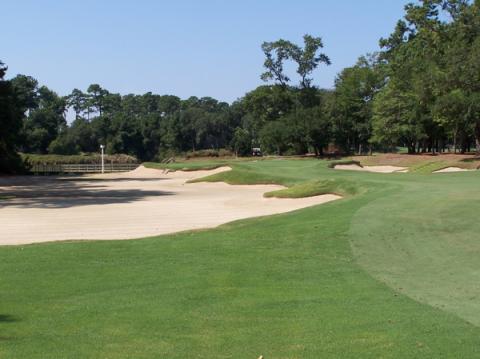
Mike Strantz's Caledonia Golf & Fish Club layout in Pawleys Island, SC, is considered to be one of the top three on the Grand Strand of Myrtle Beach, but you wouldn't know it by reading Golf Digest's state rankings.
Across the border in North Carolina, that state’s golf ratings panel differs widely with Golf Digest’s assessments. Whereas the magazine rates Old North State Club and Pine Needles #13 and #16, respectively, the NC Rating Panel anoints Old North State the 3rd best in the state and Pine Needles #5. And whereas Golf Digest gives Wade Hampton its #1 ranking in the state, the state’s own rating panel drops it to #17. Golfweek, which always rates Wade Hampton highly, puts it at #19 among all golf courses built after 1960.
Some of the golf communities we have reviewed here fare well in the Golf Digest rankings, although the magazine’s raters appear to discount golf courses built with adjacent real estate. Near Charleston, the fine Golf Club at Briar’s Creek on Johns Island, designed by Rees Jones, ranks 13th in South Carolina; once the developer sells more land and builds a few more homes on the periphery of the golf course, count on that rating to drop. Haig Point, another Rees Jones layout on the troubled Daufuskie
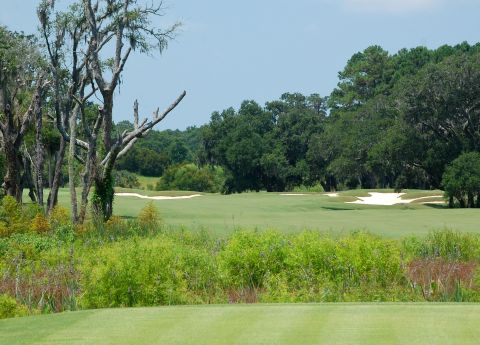
The development called Briar's Creek on Johns Island, near Charleston, may have been a little slow to take off, but it is not for want of an excellent Rees Jones layout, which features a great Low Country combination of sand, marsh and live oaks (and a few dead ones).
Island, holds down the 17th position in the state; the nearby Daufuskie Island Resort went bankrupt, and no one stepped forward at auction early this year to make an offer. The Ralston Creek course at Daniel Island, yet another Rees Jones layout, sits at #19, two spots ahead of the challenging, smartly conditioned Jack Nicklaus layout at The Reserve at Lake Keowee. The Reserve recently introduced a trailblazing membership program that gives full-member status to the parents and children of members, no matter their ages. The Cliffs Communities’ two Tom Fazio courses are also represented on the South Carolina top 30 list -- Keowee Vineyards (#22) and Keowee Springs (#28). My own course, Pawleys Plantation (Nicklaus), is ranked 26th, a much more generous assessment than that given it by the SC Golf Rating Panel, where it barely makes the top 50 list at #49.
Golf Digest indicates that it must receive a total of 45 evaluations for a golf course over the past eight years for it to be eligible for ranking on America’s 100 Greatest, but only 10 evaluations for Best in State. Old Tabby Links, the stunning Ed Seay/Arnold Palmer course on private Spring Island, does not make either the Golf Digest or Golfweek lists. (The SC Panel ranks it 16th, which does not do it justice in my opinion). Note to Spring Island developers: Invite more raters to play the course. Old Tabby is much too good to be ignored.
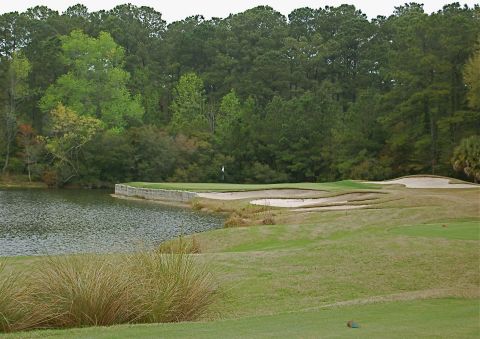
Old Tabby Links on Spring Island, SC, does not show up in either the Golf Digest or Golfweek rankings. That's a shame, because the Ed Seay/Arnold Palmer layout is one of the best in the south.
 Home On The Course newsletter
Click here to sign up for our Free monthly newsletter, loaded with helpful information and observations about golf communities and their golf courses.
Why Wait? Five good reasons why you should take the money and run south
It’s a buyer’s market for property, right? Well, not exactly, according to an interesting piece in the Wall Street Journal today [click here for access
- Your house is worth what it is worth to a buyer, not what you think it is worth. Okay, so you’ve lost 25% of the value of your home (on paper) in the last four years. But that property in the southern U.S. that you’ve had your eye on is a lot cheaper too. So why wait?
- The kids are gone from the nest, and you have either retired or are getting close. Your space requirements have changed; your next house will be smaller than your current one, which means it will cost less than what your primary home will fetch. Why wait?
- The costs to build homes in the south are much less than in the north (and land costs are generally lower as well). Even if you decide you want to replicate the size of your primary home, you will spend less when you move south, in some cases much less. I’ve seen nice homes on the market in the southern U.S. for less than $130 per square foot –- land included. You won't find prices like that in most nice neighborhoods in the north, including your own. So why wait?
- The average cost of living in most areas of the southern U.S. is less than most areas of the north. Move from Philadelphia to Columbia, SC, and you save 20% annually. (Source: BankRate.com). Go from Long Island, NY, to Myrtle Beach, and the savings are on the order of 35%. In other words, just dealing in round numbers, if you spend $100,000 annually on all expenses in New York today, you will spend just $65,000 a year in Myrtle Beach. Knowing that should help get over any angst at an offer for your home that is, say, $20,000 less than you think it is worth. Why wait?
- You worked hard for the last 40 years and have done a great job of raising your kids. It’s your turn to reap the rewards. Indeed, why wait?
The following is a representative sample of cost of living savings and real estate prices based on moves from selected metro areas in the north to specific golf communities in the south. We have visited all the referenced golf communities and can recommend them. For more information, contact the editor.
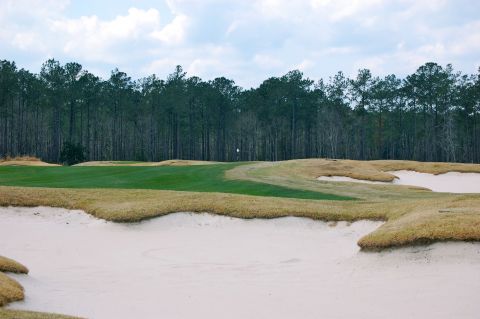
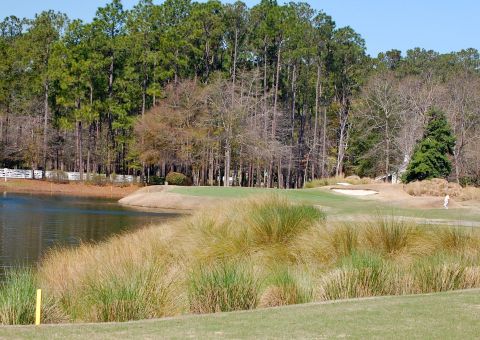
Cape Fear National Golf Club at Brunswick Forest
Napierville, IL, to Brunswick Forest, Leland, NC. Cost of living decrease = 15.5%
Single-family homes begin around $130 per square foot, land included.
Cape Fear National Golf Club (semi-private), designed by Tim Cate.
Wachesaw Plantation
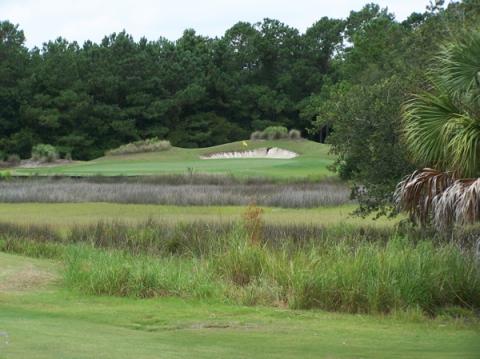
Wantagh, NY, to Wachesaw Plantation, Murrells Inlet, SC. Cost of living decrease = 35%.
3 BR, 2 ½ BA single-family home at $118 per square foot. Tom Fazio golf course (private).
Charleston National Golf Club
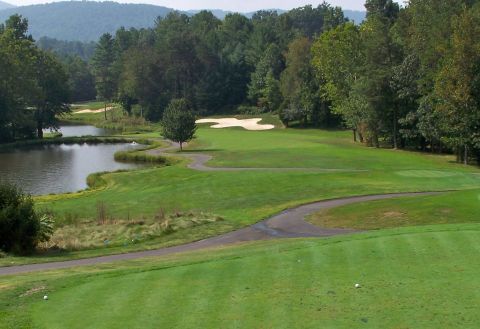
Bergen County, NJ, to Charleston National Golf Club, Mt. Pleasant, SC.
Cost of living decrease = 25%.
3 BR, 2 BA single-family home listed at $135 per square foot, with 3-car garage.
Rees Jones designed golf course (semi-private).
Reems Creek Golf Club
Philadelphia, PA, to Reems Creek Golf Club, Weaverville, NC (Asheville).
Cost of living decrease = 20%.
Single-family home, 1-acre lot, 3,859 square feet, mountain views, $165 per square foot. Semi-private golf course designed by Hawtree & Son.
Is six hours too far to travel for a round of golf? Some Japanese do not believe so
“I play every Saturday at a course six hours [by train] from my home,” he told me. I asked how long he spent on the golf course. “About six hours,” he said matter of factly, “but that includes a stop for lunch.”
The point of my story is that the Japanese love golf and
The United States, by the way, owns more than half the world’s golf courses (more than 18,000) and half the players, around 26 million who tee it up at least once annually. By the numbers, that amounts to 1,444 golfers per course. There is still some shake out to come in the golf industry, but the data imply that the golf clubs that survive will have some numbers on their side. The key for each course will be to market and advertise so well that golfers will be willing to travel a few extra hours for the experience.
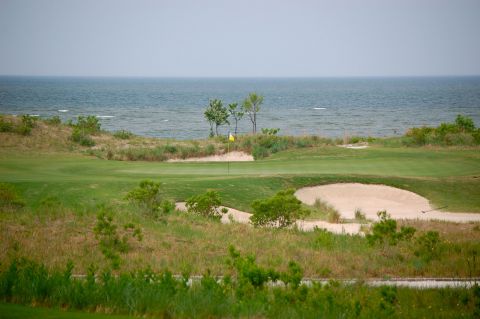
Metropolitan New York City golfers can be on the first tee at one of the golf courses at Bay Creek in Cape Charles, VA, in about six hours, the time many Japanese routinely spend in traveling to a golf course. Make a long weekend of it by staying in one of Bay Creek’s comfortable condo units, large enough for a foursome or family. The Arnold Palmer and Jack Nicklaus 18s (#4 green on the Nicklaus course shown above) are both sleek and challenging, thanks to the prevailing winds off the beautiful Chesapeake Bay.
One reader sees malice aforethought in golf club intentions on membership deposits
“Just a note about the Dominion Club members owed their initiation deposits -- many FORMER club members are also owed their deposits. We joined when the Club opened. We resigned in 2007. When checking on our position on the list to be repaid, we were advised that we were #184 and that three new members would have to join for every one former member to receive his refunded fee. When I asked when we might expect to see our money, I was advised it would be a "very long time.” I asked if we should write it in our will to go to our children, and the young lady said, "That would probably be a good idea." I left that conversation thinking that the intention was never to repay those initiation fees.”
Where golf clubs still offer the option of an equity payment or deposit as well as a lower, non-equity payment, we recommend you opt for the non-equity.
This Neuse needs no tightening; NC golf course makes going blind an eye-opener
Patience is a virtue when you play an unfamiliar golf course, but intuition is even more important to scoring well and enjoying the experience. This is especially true of golf courses with blind tee shots. It was with a bit of trepidation, therefore, that I approached John LaFoy’s design at The Neuse Golf Club in Clayton, NC, about 40 minutes southeast of Raleigh, the more so because The Neuse’s own web site describes the golf course as a “roller coaster ride.” That is usually shorthand for a routing with many blind shots that lead to a frustrating first experience.
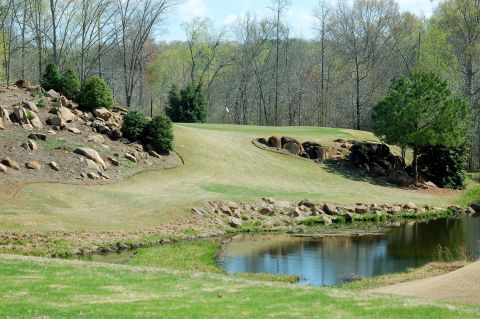
Rock On: The only safe place on the par 3 14th at The Neuse is the green.
That is not the case at The Neuse, which combines some of the adrenaline pump of a good roller coaster ride with the security of knowing you will eventually come back to earth, possibly with a good score to show for it. LaFoy has done a nice job of splitting the difference between the needs of first-timers to know where to line up their shots against the needs of repeat players who might want to push the boundaries a little bit over time. The Neuse demands some “local knowledge” only for those who want to cut corners, literally and figuratively. For those content to drive the ball where the tee boxes are aimed and where common sense, not greed, dictates, a good day and a good score are certainly in the cards.
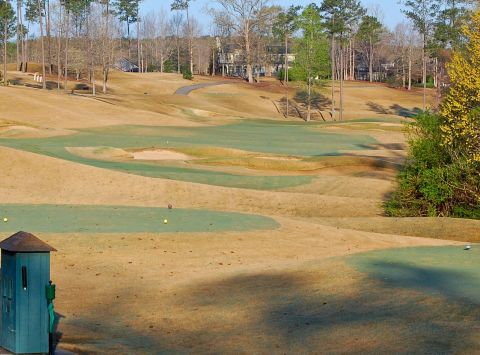
The contrast of fairway and rough made aiming a little easier at The Neuse.
The contrast of the green, slightly over-seeded fairways with the tan dormant rough certainly helped get tee shots moving in the right direction. The edges between fairway and rough showed not only a clear view of the gently bending doglegs but also brought into strong relief the side-to-side elevations of the fairways, making it clear that a ball hit, for example, high and left would bound down to the middle of the fairway. On drives where the elevations were not so clear, intuition kicked in and it was easy to assess the golf architect’s intent and aim the ball properly (fairly generous fairways also helped). The only time I felt slightly abused by a lack of local knowledge was on the par 4 13th which, from the tee box, showed a bit of a stream at the lower left base of fairway but gave little warning that the rest of the stream was in play, hidden beyond the end of the downward sloping fairway. A well-struck driver was too much here from the middle tees.
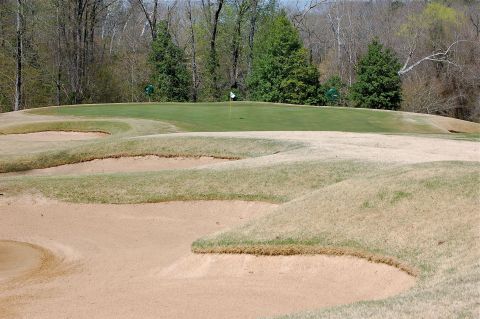
The Neuse is not just about elevation changes. John LaFoy's imaginative bunkering can change a good score into something else, as on the approach to the 17th green.
Consider that a small nit in an otherwise fine morning of golf. Besides the contrasting colors of the turf, I found also eye appealing large numerous rock outcroppings that were mostly artwork, except at the signature par 3 14th where they seemed more the devil’s handiwork. From the tee box, the only “bailout” possibility on the 192 yard hole (from the tips) appears to be the green itself, which is protected by a boulder studded hill on the left and a steep falloff in front and on the right. I pulled my iron shot (from the 143 yard tees) over the mound on the left and thought I would find a flat spot about pin high. Instead, my ball hit some unseen hard object and bounded sideways past the cup, down the embankment on the right side and into the bunker. It turned out not to be a bad bit of fortune because the up and down was fairly routine, as bunker shots go.
The nicely maintained community of Glen Laurel lies adjacent to areas of the golf course, but the elevations are such that out of bounds stakes are almost unnecessary. For a community on a golf course and within commuting distance of Raleigh, prices seemed a bargain. For example, a 4 bedroom, 3 bath 15 year old home on the 7th hole at The Neuse is on the market currently for $276,000.
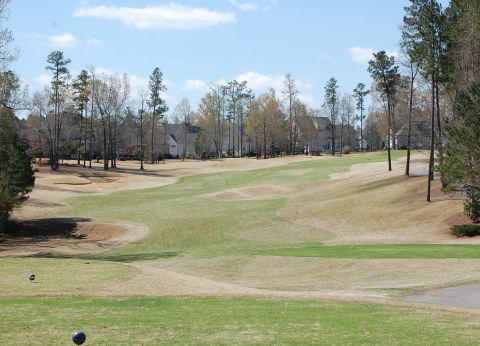
The homes along the 16th hole at The Neuse and elsewhere along the course are well back from the field of play and mostly out of view when the tree leaves return.
The golf course was just starting to emerge from its winter hibernation on the late March day my friend Bob and I played it, but the turf was already in good condition, the greens medium fast and smooth. All signs point to a great turf season ahead. Despite the blind shots, indeed maybe because of them, you can approach The Neuse Golf Club with your eyes wide open this spring and summer.
*
Neuse Golf Club, Clayton, NC. Designer: John LaFoy. The club is managed by ClubCorp. Yardages: 7,011/6,626/6,027/5,478. Rating/Slope: 74.0/133; 71.9/130; 69.1/125; 72.3/128 (ladies). Website: http://www.clubcorp.com/Clubs/Neuse-Golf-Club. Note: Make sure to end your morning round with lunch at nearby McCalls Barbecue & Seafood Restaurant in Clayton. The buffet selections are varied and the food fresh and excellent.
The end...
Pinehurst area's National Golf Club moving ahead…by fractions
In the southern U.S. there are two areas whose mere mention evokes the instant response “Golf!” Myrtle Beach is one and Pinehurst is the other, but the two promise decidedly different experiences. Myrtle Beach is first and foremost a place for golfing buddies to indulge their inner-teenager over long weekends of play, both on and off the course. Neon is the dominant design motif at the heart of Myrtle Beach. Pinehurst and the adjoining Southern Pines, NC, on the other hand, offer a classier experience. Golfing buddies searching for a bar in the Sandhills region at the end of a 36-hole day are most likely to find it in a refined hotel or quiet restaurant, with no neon to guide the way.
Where Myrtle Beach shouts, Pinehurst whispers.
The name of the famed local resort with the eight golf courses, including the newly renovated #2 designed by Donald Ross, is simply “Pinehurst,” which makes branding a little difficult for the dozens of other golf courses in the immediate area. And because Pinehurst is also a sprawling golf community, it makes it doubly difficult for other area golf communities to distinguish themselves.
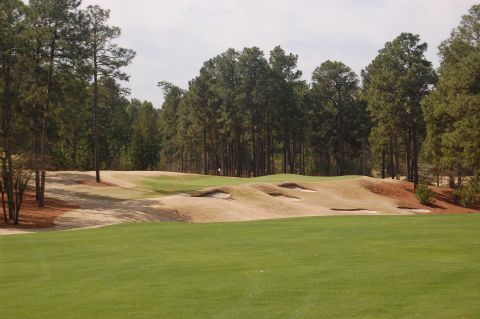
The 1st at National Golf Club exemplifies the wide fairways and aggressive bunkering throughout the Jack Nicklaus layout.
The National Golf Club's "Cottage" industry
Despite a name that does not communicate “community,” the National Golf Club in Southern Pines tries hard to stand apart and, for the most part, succeeds, in large measure by offering a unique group of fractional share units called The Cottages, the only such units in a golf community in the Pinehurst area. The rest of its appeal –- to retirees, second-home owners, resort golfers, and package golfers staying at nearby hotels –- puts it squarely up against the mighty Pinehurst golf resort, which goes after a similarly eclectic golfing crowd. If Pinehurst the town is a destination, then Pinehurst the resort is the destination within the destination, and its competitors are hard pressed to differentiate themselves without over-spending on marketing. Actually, National might benefit from sharpening its appeal to just one or two of the targets it currently tries to attract. To go a bit Old Testament about it, if you are David going up against Goliath, just one or two stones are easier to sling than a boulder. In the aforementioned Cottages, the National possesses an inherent lure for a second-home owner audience that it is pursuing aggressively.
I stayed in one of The Cottages during a recent visit to the gated community, and I can testify that the units are spacious, comfortably appointed and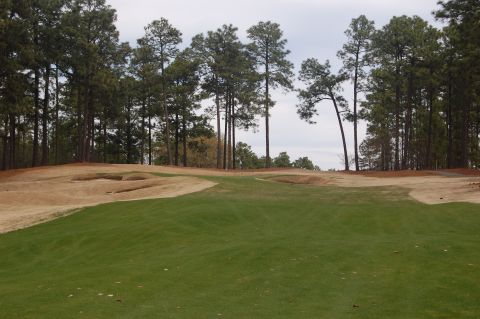 reasonably priced. They are targeted at those who might otherwise be looking at second homes to use just a few weeks a year. Cottage owners purchase a 1/13th share in a unit, which grants them a minimum of 21 days a year access. Two-bedroom Cottages (1,650 square feet) are priced from $84,000, four-bedrooms (2,616 square feet) from $96,000. Annual dues begin at $3,604, which covers all maintenance (inside and out) and golf and fitness club membership, which includes green fees, cart fees and all the range balls you can slam, as well as access to indoor pool, fitness equipment and other amenities. The only other costs are related to your stays, modest fees for trash removal, maid service and, if you want the refrigerator filled on your arrival, a $25 shopping fee (in addition to the cost of groceries).
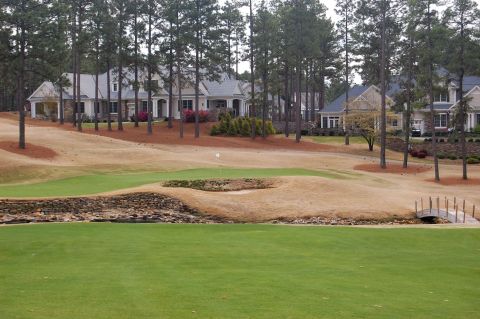
The fractional share Cottages line up attractively behind the 5th green and 6th tee.
A $500,000 villa, for a fraction of the cost
The unit I stayed in had all the comforts of home, and then some (including a nice working nook for me and my laptop). The kitchen opened up to a dining area adjacent to a spacious living room on one side (with big screen TV hung on the wall over the fireplace) and an enclosed patio on the other. The bedroom I chose looked across the 6th tee and down to the 5th green beyond, and its en suite bath area included both a huge stone shower and separate tub. The furnishings were well chosen and gave off a private-home vibe more than a resort one. In the pantry I found a pound of my favorite brand of coffee (how did they guess Peets?) and, surprise, the coffee maker was clean and made an excellent brew, totally absent any of the rancid taste produced by every hotel coffee maker in America.
Ownership in the fractional share is deeded, which means you can sell your share in the unit as you would a home, or pass it on to your heirs; and if space is available, as I was told it almost always is, you can add more days or even weeks during the year based on a slightly complicated formula we need not bother ourselves with here.
In my experience, a four-bedroom condominium located on a Jack Nicklaus golf course in a community similar to The National would price out around $500,000. Add another $50,000 for the type of furnishings The Cottages include, as well as wireless Internet, cable television and other extras, and a condo equivalent to those offered at The Cottages would run between $550,000 and $600,000. An outlay of $96,000, therefore, for a family that goes on a golf vacation a few weeks each year seems quite reasonable, especially with the easy access to golf. Of course, those who crave a beach during the summer will not be satisfied, but those who crave fun and challenging golf will be rewarded.
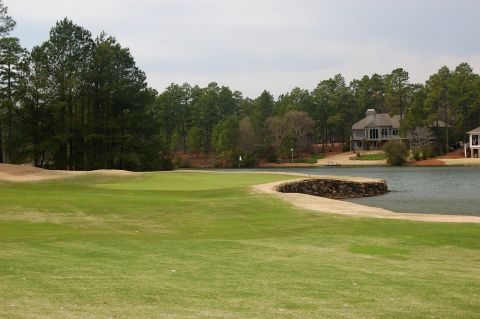
The approach to #10 at National Golf Club.
The fun part of the golf experience at National was in the generous fairways spread between the large stands of pine trees and leading to some impressively large and variable green complexes. Nicklaus rewards accurate left to right ball flight at The National, as he does at so many of his other early courses (and as he did in his professional career). This can become a little grating for happy hookers, but the fairways at the elbows are wide enough to accommodate a draw, if not a pull-hook (no course should let you “off the hook” for a bad swing). The bright green, over-seeded fairways laid down between the tan color of the dormant rough provided perfect directional runways from the tee boxes (see photos).
The greens are generally enormous, and some will require a two or even three-club adjustment between pin positions at front or back. Many of the greens are pushed up a bit above the fairways, and 40-yard chips and runouts along the entire span of a putting surface are not unusual but certainly preferable to chips from the short side of the green to pins set just at the bases of swales. The greens were not cut down to mid-season speeds, but when they are, positioning will be especially key.
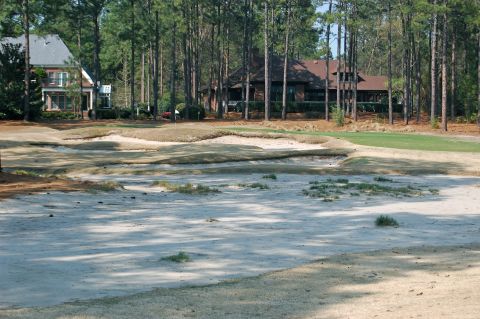
Waste of time: The 16th at National Golf Club features a wide expanse of waste bunkers.
The Golden Bear, as he does on virtually every one of his “Signature” courses, used a few of those pine trees to interrupt direct drives between tee box and greens at The National. Although big hitters might be tempted to play straight through or over the trees, the prudent will play around and turn the routing into a dogleg right or left (or either, when the tree is smack in the middle of the fairway). Play Nicklaus golf courses enough, and your attitude about those trees changes over time from “what did he do that for?” to a better understanding of the principle of risk, reward and stimulating natural golf design.
Fine layout, from beginning to (especially) end
In spite of the generally flat nature of the Sandhills area, the course features a few changes in elevation, nothing dramatic but just enough to keep you on your toes (especially if you have a side hill lie in one of the deep bunkers). Some of the longer holes, like the 18th (called Bear’s Valley) can also knock you back on your heels; from the Gold tees (6,632 yards total), the finishing hole plays a robust 434 yards downhill, a fitting finale to the series of doglegs right. The tendency is to play it safe off the tee box toward the left side of the fairway, avoiding the deadly grove of trees on the right. But a long approach from the left side of the fairway or rough must carry the lake that guards the entire green from short left to behind. A bunker nestled between the water and the green provides one last bit of challenge for those who carry the lake (or pull their approach from the right half of the fairways). Anyone who finishes a round at National with par on the 18th should feel justifiably proud.
The National Golf Club displays excellent bones in its centerpiece golf club, attractive upscale single-family homes and unique fractional share program in The Cottages. Its core appeal would seem to be to second-home owners and retirees looking for a quiet lifestyle in a golf-centric area. Some years ago, the members pushed to take the club private, and even purchased the club from developer Claude Smith. It took less than a year before the harsh reality of golf club operations compelled the members to implore Smith to take it back, which he did. Since then, the economic realities of recent years have forced the developer to accept an increasing amount of outside play which may, over time, erode some of the benefits of privilege and dues that members count on (e.g. the ability to walk up and play after a short wait).
There is some sorting out to do at The National in terms of focusing its marketing efforts, but as resort golf communities go, this is an attractive, mature and, from all evidence, vibrant development. The members I played my round of golf with, from Connecticut and Hong Kong, seemed quite pleased with the choices they and their wives made to live at The National, and they seemed non-plussed about the additional non-members playing their course. Perhaps as the economy improves and membership grows, reliance on outside play will wane, and National’s members and their club’s owners can get back to where they once belonged.
*
National Golf Club, Southern Pines, NC. Web: NationalGolfClub.com. Designer: Jack Nicklaus. Yardage/Rating/Slope…Black Tees: 7,132/75.1/143. Gold: 6,632/72.3/135. Blue: 6,150/70.2/128. White (women’s): 5,474/72.3/129. Red: 5,006/70.3/119. For more information or an introduction to the real estate associates at The National, please contact Editor Larry Gavrich.
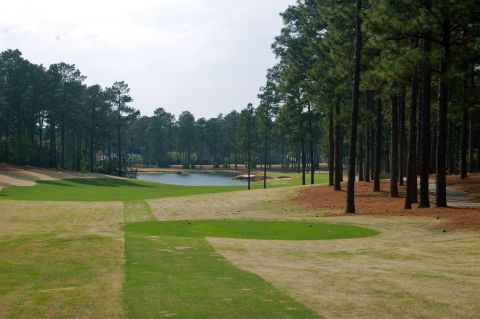
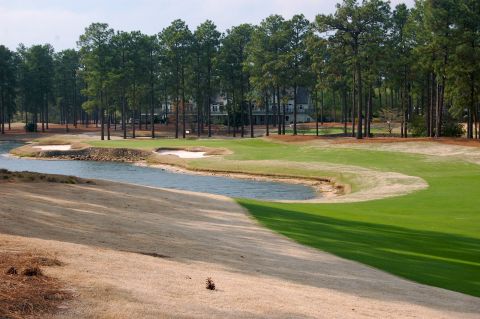
The finishing hole at National is beautifully constructed, and a challenge, from tee (top) to green. Beward the left side of the fairway; the approach is filled with treachery.
Reynolds sales staff shoulder on…honestly
One thing at Reynolds remains consistent: Ask the real estate office a question, and you get back an honest, unadorned answer. They demonstrated this recently
I was impressed, and such straightforward responses imply that anyone considering property in Reynolds can be confident of an honest response to their tough questions. These days, it is not just important to ask tough questions but to expect straight answers in return.
Morally Bankrupt? Richmond club members sue owner for deposits
From all appearances, Dominion’s owner should have a steady stream of cash flow from its ownership of the club. Few 18-hole clubs can boast 800 dues-paying members, as can Dominion. That should be enough of a base to provide a steady stream of income from the golf course (cart fees, lessons, pro shop merchandise) and the clubhouse’s dining rooms (not to mention dues 800 members). Bankruptcy laws, which were designed to protect the assets of truly troubled operations while they reorganized themselves back to health, are often used by large, multi-division organizations to skirt their obligations. This is what Dominion's members are claiming. But in at least one other case we know, members themselves actually used the bankruptcy court to engineer the sale of their club.
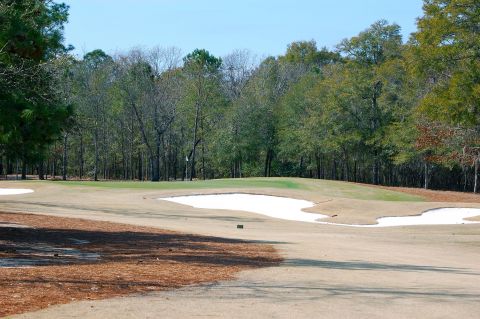
Former members at The Reserve at Litchfield Beach, SC, tried to hold up a sale of the club in an attempt to recoup their original membership deposits. A bankruptcy court judge put the sale and survival of the club ahead of the former members' claims.
It happened at The Reserve Club of Litchfield Beach, SC, where a membership concerned about the financial viability of their private club agreed to sell it to multi-course operator McConnell Group for just $1 (and the promise of improvements to the golf course and clubhouse). But when former members who were owed a return of their equity deposits balked and brought a class-action lawsuit to block the sale, The Reserve Club stopped paying its taxes and went into receivership. A bankruptcy judge in Charleston decided that the survival of the golf club was the top priority, and he permitted the sale to McConnell to go through in exchange for the new owner’s payment of the back taxes, about $400,000. Shortly thereafter, McConnell closed the course temporarily and replanted the greens and reshaped the bunkers, and everyone -– except the former members who are out as much as $33,000 each -– seems content. I played the course recently and it was in splendid shape.
The Dominion case is different, although the overriding tactic may appear to be the same. Besides the club’s apparent financial health, those owed the deposits are current members, not former ones. And the Hunt group wants to retain ownership of the club once the court waives the owners' obligations to the members. That seems a classic cake-and-eat-it-too scenario; in effect, the members would be funding Hunt's ongoing operation of the club by forfeiting their deposits.
Whereas survival of a golf club was at stake at The Reserve, in Richmond the claimants are charging that the club’s owner organization is simply trying to avoid its obligations, even though it can afford to pay. On the face of it, it seems the members have a compelling case. We will stay tuned to see if the local courts agree.
Footnote: Many thanks to my three dedicated readers who all sent me the news article on Dominion Golf Club within an hour of each other. I appreciate your thoughtfulness.
Rounds played in February
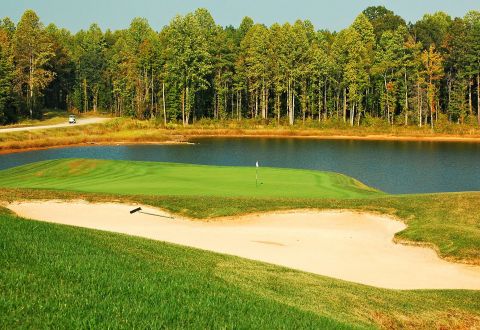
Southern golf courses like Richmond's Federal Club benefited from a generally mild February.
As the weather goes, so goes golf…mostly
Golf courses struggling for survival would certainly benefit by putting a particular crusty, unpredictable, temperamental independent contractor in charge of their operations. Of course, Mother Nature is not for hire, so praying for sun and warm temperatures will have to do for now.
The National Golf Foundation just released its monthly report for rounds played across the United States, and where it was warm, albeit wet,
Nationally, rounds played in February were up a total of 19%; year to date, the increase was almost 14%.
In the southeast, the focus of most of our attention here at Golf Community Reviews, rounds were up nearly 29% as Mother Nature was at her most cooperative. (Temperatures averaged 9 degrees higher than in February 2010 and precipitation was off 17%). In the area from Texas east to the Mississippi River, rounds were up 55%. These were the only two regions with a positively perfect storm of weather in February -– higher temperatures and lower rainfall readings.
If you are contemplating the purchase of a primary or second home in the southern U.S., not only will you find accommodating weather next winter, but right now you will find prices in many fine golf communities at their lowest points in years. Contact me and I will be happy to discuss which golf communities will suit you best.
You can sign up for the National Golf Foundation's free newsletter by clicking here.
Nowhere Fast: Tiger Woods golf design business stalled; other odds & ends
New York Times columnist Paul Sullivan has written a comprehensive article in the “paper of record” about Tiger Woods’ design business. There isn’t much new in the article; the golf star’s three international projects are stalled, to put it mildly, and one Dubai golf official goes so far as to say the Woods project there is “as good as dead and buried. (Desert sand is beginning to blow across and bury the six completed holes.) Closer to home, Cliffs Communities developer Jim
The Times article indicates that Anthony is scrambling for additional financing for the High Carolina golf course, which may be a mistaken impression on the part of the writer since High Carolina was figured into the $64 million loan.
You can read the NY Times article by clicking here. If you cannot get access to it, contact me and I will forward a copy.
Where the job growth is
According to Local Market Monitor, which publishes economic data pegged to, you guessed it, local markets, the southern U.S. markets with the strongest job growth include Raleigh, Washington, D.C., Nashville, Dallas and Houston. Of course, job growth logically helps prop up home values and, the Monitor’s latest summary says, “Not surprisingly, home prices have bottomed out in the markets with strong job growth, with the
Cities like San Jose, Honolulu, Bethesda and Pittsburgh should see home prices in the 2 to 4 percent range in the coming year, according to the Monitor. Retirees in Pittsburgh who have been waiting for their homes to increase in value before moving south should stand at the ready.
The Local Market Monitor web site is at www.localmarketmonitor.com. You can purchase individual market reports from the site or subscribe for full access to the 315 markets they cover.
Reynolds Rap: Upscale community's owners may have to dig deep to keep amenities out of bank's hands
Our friend Toby Tobin, the hardworking Florida blogger, reports that Reynolds Plantation residents have been offered the community’s amenities for $44 million. Paper ballots were sent to all 3,600 owners in the last week. Toby’s comprehensive article goes on to quote at length local bloggers who have been following the Reynolds story. One conclusion is
Couples who have been considering a purchase at Reynolds should keep an eye on the residents’ vote and further news about the community. Of course, all markets abhor uncertainty; the acquisition of the amenities by Bank of America through foreclosure could very well cause a drop in property prices at Reynolds. But if BofA sells the amenities to a respected operator, the long-term consequences could be minimal and panic by some Reynolds property owners could turn into a buying opportunity. Stay tuned.
You can read Toby’s coverage at www.gotoby.com.
Myrtle Beach shows signs of rebound
Golf play is picking up in the Myrtle Beach area, and that is good news for the recession-affected “supermarket” of golf. A representative of the Waccamaw Golf Trail, a string of a dozen golf courses at the southern end of the Grand Strand, reported recently to the Georgetown County Tourism Management Commission that, “bookings are through the roof.” The trail and commission have partnered to promote the Trail through a series of ads on the Golf Channel and its web site. The campaign, according to the local Coastal Observer newspaper, has generated 130,000 online requests for green fee quotes and has helped build the Trail’s database to more than 90,000 contacts.
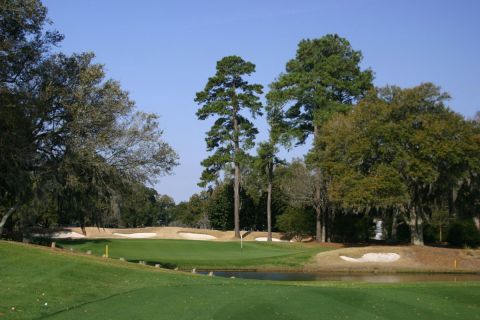
Caledonia Golf & Fish Club is one of a dozen fine golf courses that are part of the Waccamaw Golf Trail at the south end of Myrtle Beach.
I can report personally that rounds are up significantly at Pawleys Plantation, one of the Waccamaw Trail golf courses; the famed Caledonia Golf & Fish Club, True Blue and Founders Club are also members of the Trail. Two weeks ago, I couldn’t book a normal tee time at Pawleys Plantation two days before I wanted to play; March in the Myrtle Beach area is popular with Canadian golfers, and the only tee time available was 4 p.m., eh? Last year, Myrtle Beach National purchased the Jack Nicklaus Signature golf course from the original owner and is promoting it as the anchor of its own portfolio of 14 courses on the Grand Strand.
Home prices in the Myrtle Beach area have dropped so far that golfers
In another bit of good news for the South Strand, Southwest Airlines has begun flights to Charleston International Airport, about an hour from Pawleys Island. Hopefully, this will put pressure on U.S. Airways, Delta and other carriers who serve Myrtle Beach International Airport to massage their prices for trips to and from the northeast and midwest. Prices to fly into Myrtle Beach from northern cities are generally higher than to Charleston.
Myrtle Beach is utterly reliant on golf for its economic wellbeing. It is good to see things are starting to break in the Grand Strand’s direction. Potential homebuyers should take note.
Fortune magazine says real estate is back

Now on Sale

- The only book about golf communities in the last 10 years.
- 156-page step-by-step guide to finding your dream golf home.
- Info on nearly 100 golf communities the author has visited.
- Paperback version costs less than a sleeve of Pro VIs.
Here is what the experts are saying:
“The book is chocked full of information…applicable to anyone looking for a move to the Southeast regardless of whether they are looking for a golf community or not.” — John LaFoy, golf architect (Linville Ridge CC, CC of Charleston, The Neuse GC)
“Larry has done a tremendous amount of work and anyone — like me — who is looking to search for a golf home now or in a few years needs this book.” — Brad Chambers, golf blogger, ShootingYourAge.com
“Wow! What a thorough piece of work…a must for anyone moving South. This book will help many people.” — Brett Miller, owner and founder of MMA, Inc, a golf industry consultancy
Buy It Now at Amazon.com or BarnesandNoble.com.