Lao and Order: A dozen bits of wisdom to put yin in your drive and yang in your putt
by Rick Vogel
Golf is beyond words and beyond understanding. Words may be used to speak of it, but they cannot contain it.
Golf and its many manifestations arise from the same source -- subtle wonder within mysterious darkness. This is the beginning of all handicaps.
When golfers find one course beautiful, another consequently becomes ugly. When one golfer is held up as good, another is judged deficient.
Golf is the hidden secret source of all life. Good men recognize that golf provides for them and, therefore, they esteem it. Bad men don't recognize this, but golf doesn't stop providing for them.
Similarly, golfers and non-golfers balance each other; difficult and easy lies define each other; long and short putts illustrate each other; high and low bunkers rest upon each other; swing and score meld into harmony; what is to come follows upon what has been...scratch golf!
The wise golfer sets an example by emptying the mind, opening the heart, relaxing ambitions, relinquishing desires, cultivating character and keeping head down. There is no greater calamity than hook, no greater curse than slice.
The weak putt overcomes the strong. The soft putt overcomes the hard. Everyone knows this, but none have the ability to practice it. Golf is a whirling emptiness; yet, when played, it cannot be exhausted but can result in a gimmee.
Know the universe as your self, and you can golf absolutely anywhere in comfort. Love the course as your self, and you'll be able to care for it properly. This is the way of golf: Do your work, replace your divots, then quietly step back. If you compete with no one, no one can compete with you.
The perfect swing is formless form, un-seeable image, elusive, evasive unimaginable mystery. Confront it, and you won't see "the shanks.” Follow it, and you can't find a bogey. Perceive its ancient subtle heart, and you become master of the game. Know what came before time, and the beginning of a hole in one is yours.
A caddy is subtle, intuitive, penetrating, profound. His depths are mysterious and unfathomable. The best one can do is describe his appearance: The caddy is alert as a person crossing a winter stream; as circumspect as a person with neighbors on all four sides; as respectful as a thoughtful guest...well, perhaps Steve Williams excepted.
The greatest virtue is to follow golf, and only golf. You might say, "But golf is illusive! Evasive! Mysterious! Dark! How can one follow that?" By following this: Out of silent subtle mystery emerge birdies. These birdies coalesce into eagles. Within each eagle is contained the seed and essence of life. Thus do all eagles emerge and expand out of darkness and emptiness.
Because its essence is real and evident in the origins of all things, the game of golf has survived since the beginning of time.
This is not the first visit by Asheville, NC’s Rick Vogel to these pages, but it is the first time he’s gone all metaphysical on us. You might recall his treatise on golf ball hunting earlier this year, one of the most commented upon articles in the history of Golf Community Reviews (Rick swears the letters weren’t all written by his relatives). Although he is not a golfer, Rick lives on a golf course in North Carolina where he is teaching his dog Goldie to hunt for golf balls and quote Confucius...or is it David Carradine?
 Home On The Course newsletter
Click here to sign up for our Free monthly newsletter, loaded with helpful information and observations about golf communities and their golf courses.
High times for low-priced golf properties
I am headed to The Manor golf resort in rural Virginia next week to watch a two-day college golf tournament hosted by Hampden-Sydney College. Back in the heyday of planned community development, which is to say before the housing market became so overheated that it took only a few matches like Countrywide Financial’s greedy lending practices and Lehman Brothers’ bankruptcy to send everything into flames, The Manor seemed like a no-lose proposition to its developers and the banks that backed them. Today, however, the story is too familiar: Unable to sell enough property or to appeal to enough cash-strapped vacationers, the Manor's developers have gone bankrupt and those who remain -– bankers, other local investors, property owners, the young couple recruited just last year to open the upscale restaurant on site -- are left to sort things out.
These disasters, though, spell opportunity for shrewd businesspeople whose deep pockets have survived the recession. It is always instructive to remember that some people became rich -– or maybe the right term is “richer” –- during the Great Depression by
As we have reported in this space, John McConnell, a software millionaire, has taken a slightly different approach to the deep discounts in the market. He has bought up six excellent private golf clubs in recent years in the Carolinas and transformed them into his own private “golf trail,” providing club members with a variety of golfing experiences for one membership fee. All these clubs, especially Raleigh Country Club,
Rich investors are not the only ones who benefit from the tenuous nature of golf clubs. Those of us who are ready to make the leap into a retirement living situation that involves golf will find that, with a little appetite for risk, we will pay prices for land and existing homes on golf courses that are dramatically lower than just a few years ago. Risk, of course, is directly related to the perception of the community’s owner and his financial resources. You can mitigate the risk by doing your homework, looking at the owner’s history and maybe even calling him or her personally (in this market, they are likely to take your call). Or contact me, and I will call him.
I will have more to say about financial security in golf communities in the September issue of our free newsletter, Home On The Course, which will be ready within the week. Sign up by clicking the box at the top of this column.

Musgrove Mill is one of six private golf clubs purchased in the last few years by Raleigh businessman John McConnell.
AARP weighs in on best overseas retirement locations
We wrote here the other day that International Living magazine had anointed Ecuador as the best place for Americans to settle in retirement. In its latest issue, AARP magazine provides its take on the best places to retire abroad. Ecuador is not on the list, but the
A retirement home outside the U.S. is a far fetch for many Americans who worry about language and security issues, as well as distance from children and other relatives. But consider an apartment at $1,000 per month that is within walking distance of the ocean and good restaurants, and an easy drive to multiple golf courses. Compare that $12,000 per year with, say, a second home in a U.S. golf community in which taxes, homeowner fees, and club dues well exceed $12,000 annually. At $1,000 per month, you could use the apartment less than 12 months per year and not feel too guilty about it (or you could rent it out to other Americans who might just be looking for a month or two).
A home overseas may not be for everyone, but for those with a little adventure in their soul, it is worth considering. For AARP’s list of its top 10 places to retire overseas, click here.
Another great moment in golf community ad copywriting
Fairfield Glade and Fairfield Glade North comprise a huge golf community in the eastern half of Tennessee, with reasonable access to the cities of Nashville, Knoxville and Chatanooga. The golf community has a lot going for it, including five golf courses I have not played but understand are in good condition and nicely arranged (Joe Lee, whose courses we like, designed one of the five). They are on my list for a visit. With 11 lakes, 12 tennis courts, four swimming pools, numerous walking and hiking paths and the obligatory recreation and wellness complexes, Fairfield Glade offers something for just about everyone looking for an active lifestyle.
Active indeed. According to the golf community's ad in Where to Retire magazine (July/August issue), "would you believe you can play an 18 round game on one of our championship golf courses for less than $26!?" By our calculation, that works out to about $1.44 per round.
Virginia golf resort sorting out problems
What started on Friday as a simple quest to book a room at a Virginia golf resort and arrange to look at some real estate turned into a day of phone calls to a golf shop, restaurant and Virginia college. Hours later, I felt a bit like a forensics expert on an episode of CSI, although I did not really solve the case (yet).
My son’s team from Washington & Lee University is slated to play in the Hampden Sydney College golf tournament in late September at The Manor Golf Club and Resort, about one hour southwest of Richmond, VA. The resort’s web site indicates real estate for sale beside the golf course as well as lodging availability in a few recently constructed cottages.
Next, I dialed the toll-free number for room reservations on the resort’s web site. It rolled over to a pre-recorded message that instructed me on what extensions to dial if I wanted to connect with one of The Manor’s three cottages (each is split into two sections, so the message was interminable). There were no instructions about how to book a room or to contact the resort’s main number. I found a separate number for the upscale restaurant on the property, dialed it and left a message, asking for a return call.
I assumed that the golf course was in operation, since it was holding a college tournament later this month, and I dialed the pro shop. The person
There was no mention of a Facilities department on the Hampden Sydney web site. As a former public relations exec, I know that when you call a PR office, there is a good chance they will either get the information you need or forward you to the right person. The PR employee who answered the phone informed me that the college did not own the land surrounding most of the course but forwarded me to their business office for more details. The attendant there promised a return phone call later Friday afternoon after her boss returned from a meeting. (Note: They did not return the call, but it was the Friday before a holiday weekend…)
In the meantime, Maxine Rutledge of Maxine’s Fine Dining restaurant
The golf course, which was designed by Rick Robbins, opened to acclaim in 2007 and was designated one of the best new courses of the year by Golf Digest magazine. It plays to more than 7,200 yards from the tips, and the par 5 finishing hole appears to be a classic risk/reward play, under 500 yards from the next to longest tees and with a forced carry over a lake for anyone tempted to go for the green in two. The longer way around still requires a third shot over the water.
I am hoping The Manor is not under water by the time I arrive later this month. More on this familiar-sounding saga after the visit, if not sooner…WSJ features Spring Island house
Old Tabby Links at Spring Island, SC, is one of the best golf courses I have played in the last couple of years. It is very private, which means you don’t get to play it unless you are the guest of a member, and it is not cheap either, with initiation fees running into the six-figure range and annual dues of about $15,000. Homes are for the most part well into the seven-figure range, but today’s Wall Street Journal features three homes in private clubs, one of them on Spring Island and listed at a relatively bargain of $895,000. The home is just 1,570 square feet with two bedrooms and two baths, smaller than other Spring Island houses, but it does sit on 2 ½ acres.
The Arnold Palmer-designed golf course, one of his best, is worth the price of admission, if you can afford it. To read my earlier review of the golf community and its course, click here.
Please contact me if you would like more information about Spring Island and Old Tabby Links.

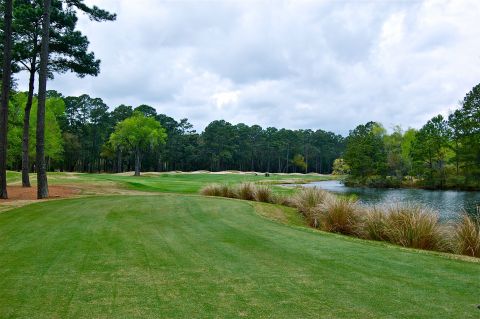
Old Tabby Links on Spring Island, SC. Photos by L. Gavrich
And the best country for retirement is…Ecuador
I subscribe to International Living magazine, and in the publication’s September issue, the editors rank countries by their suitability as retirement destinations. The annual “retirement index” ranks a couple of dozen countries across a number of categories, including real estate prices, overall cost of living, culture, health, infrastructure, safety/stability, climate and “special benefits”(emphasis on discounts for senior citizens). The five top countries are featured, and for 2010, they are (in rank order) Ecuador, Panama, Mexico, France and Italy. The United States, largely because of a low rating on “real estate,” is tied for 13th on the list, although it scores perfect 100 ratings for “infrastructure” and “safety/stability.” France is the only other destination that racks up two scores of 100 (health and safety/stability).
Accessible golf was not one of the criteria the editors used to determine the best places to retire. Even promotional web sites for
The magazine claims that a couple can live “a millionaire’s lifestyle” in Ecuador for $1,200 per month. Four course lunches in Quito can run as low as $2, a taxi ride $1 and a nice hotel no more than $20 per night. Two-bedroom, two bath condos with either city or ocean views are less than $50,000.
Panama ranks second largely because of its retiree residency program which supplies deep discounts to foreign pensioners. These include, according to International Living, 50% off entertainment, 30% off public transport and 25% off dining tabs. A mountain home will cost as little as $85,000. Along the golf course at Tucan Country Club and Resort near Panama City, villas start in the high $200s.
Despite all the negative news coming out of Mexico, the magazine gives the country a score of 81 on a scale of 100 for its safety and stability. A colonial home in the Yucatan Peninsula will run less than $200,000, with monthly total expenses per couple of about $2,000. There are more than a half dozen well-regarded golf clubs in the Yucatan, including the well-respected Playacar Club de Golf.
France and Italy may not offer much in the way of cost advantages for retirement living, but you will eat well. And the golfing, while not abundant,
Unintentional “resort,” another Ginn legacy
Toby Tobin, the Florida real estate blogger who has followed the Bobby Ginn saga closely, is on a roll. We reported a few days ago about Toby’s piece on how the Ginn organization has failed to pay its fair share for certain amenities at the Reunion Resort while property owners get hit with ever increasing assessments (see article immediately below).
Toby is now reporting at GoToby.com that 170 single-family homeowners in the Ocean Hammock community in Palm Coast, FL, are petitioning to amend Ginn “master documents” that permit their fellow homeowners to rent their houses on a nightly basis. The lack of a prohibition in the original documents, some believe, was an effort by Ginn to clear the way for nightly rentals at the nearby Hammock Beach Resort. Whether that was the case or it was simply an oversight, the consequence is that what owners expected would be a quiet, upscale neighborhood at Ocean Hammock may soon mimic the golf resort at Disney World, with transient vacationers who are not invested -– literally or figuratively -– in the community.
“This (the nightly rentals) has the clear potential of converting our wonderful residential community into a transient resort community,” the petition states. The homeowners seek a language change that would make one month the minimum term for all rentals.
The dust-up at Ocean Hammock provides yet another object lesson for those seeking a golf community home. Target only those communities whose developers have established records of success and little if any debt. Bobby Ginn, who left the Hilton Head area in the late 1980s under a cloud and later borrowed more than $600 million from Credit Suisse for his now defunct empire, should not have passed either of those tests.Golf community owners still paying for Ginn
Property owners at the Reunion Resort near Orlando continue to pay for having purchased property from Ginn Development. Recently they were notified of the next series of increased assessments for road and swimming pool maintenance. Those facilities are financed and managed through a Community Development District, or CDD, a “special purpose government entity” that is separate from the property owners association. The increased assessments are a consequence, at least in part, of the fact that a Ginn-controlled entity owes nearly $11 million to the CDD, and isn’t paying, according to Toby Tobin, a Florida blogger who has followed the Ginn saga as closely as anyone.
The property owners, who were able to protest their way to a reduction in 2011 annual assessments from $472 and $482 to between $293 and $302, respectively (depending on which side of the golf development they live), are tilting at some significant windmills. Holding the gavel at the CDD Board meetings, according to Tobin, is John Gray, Ginn Development’s own vice president of operations. Ginn Development will continue to lead the board of the CDD until 250 single-family properties are sold in each half of the golf community.
Ginn followed a similar strategy at The Conservatory at Hammock Beach, where the developer kept title to three of that golf community’s lots in order to retain all three spots on the community’s three-member board. The Ginn controlled board hired outside contractors for security and other duties; reportedly, Ginn was an investor in the companies doing the work. In one case, says Tobin, property owners were paying $20 per parcel for property management services while residents in other golf communities in the area were paying $4 to $5. Once the developer sold 90% of the properties at The Conservatory, Florida law mandated that property owners take control of the POA. After they did, they changed contractors.
The Ginn saga is like a multi-volume saga without a final chapter. You can read the latest chapter in this twisted tale at Toby Tobin’s web site, GoToby.com.
Jobs key to housing recovery, and some cities look better than others
Economists and the man on the street generally agree that the housing market will not recover until the jobs market does. An unemployment rate of 9.5% is not going to help chip away at the inventory of houses for sale, more than a year’s worth currently.
Local Market Monitor, a service based in Cary, NC, that does essentially what its name implies, indicates in its latest newsletter that 100 of the 315 markets it covers are creating jobs again. Among these are Charleston, Austin, Augusta and Durham, NC. As we wrote recently, if you are looking for a golf community home and are not set on what city should be nearby, looking at the most stable ones -- those that are creating jobs -- makes sense. There are excellent golf communities and non-golf housing options in all of these city areas; contact us and we can give you our take on the best.
Other optimistic words of wisdom from Local Market Monitor:
“…Consumers are spending again. Retail spending dropped about 12 percent during the recession, and is up 7 percent this year. Big-ticket items like cars, furniture and TVs lag behind, but spending for clothes is back to pre-recession levels [and Internet shopping is up 15 percent].”
“Big spending won't happen for another year or so…but consumers' financial situation is already getting better: credit cart delinquencies dropped from almost 7 percent in early 2009, to 4.8 percent in the second quarter. A normal level is around 3 percent.”
“What does all this mean for real estate markets? The average home price was down almost 7 percent in the last year, and we forecast another 3 percent drop in the next 12 months. But the remaining damage is confined to a handful of really bad markets. Others have already hit bottom, including San Jose and the Los Angeles area, or will do so shortly, and some are good bets for the longer term: Bethesda, Charleston, Jacksonville, Albuquerque, Portland, even Stockton and Modesto.”

According to Local Market Monitor, Charleston, SC, is a "good bet" for the longer term which could mean an uptick in sales at upscale communities like Briar's Creek on nearby Johns Island.
Richmond’s Federal Club sold on the cheap
New look for Golf Community Reviews
My golf course sold
Airline catching up with migration south
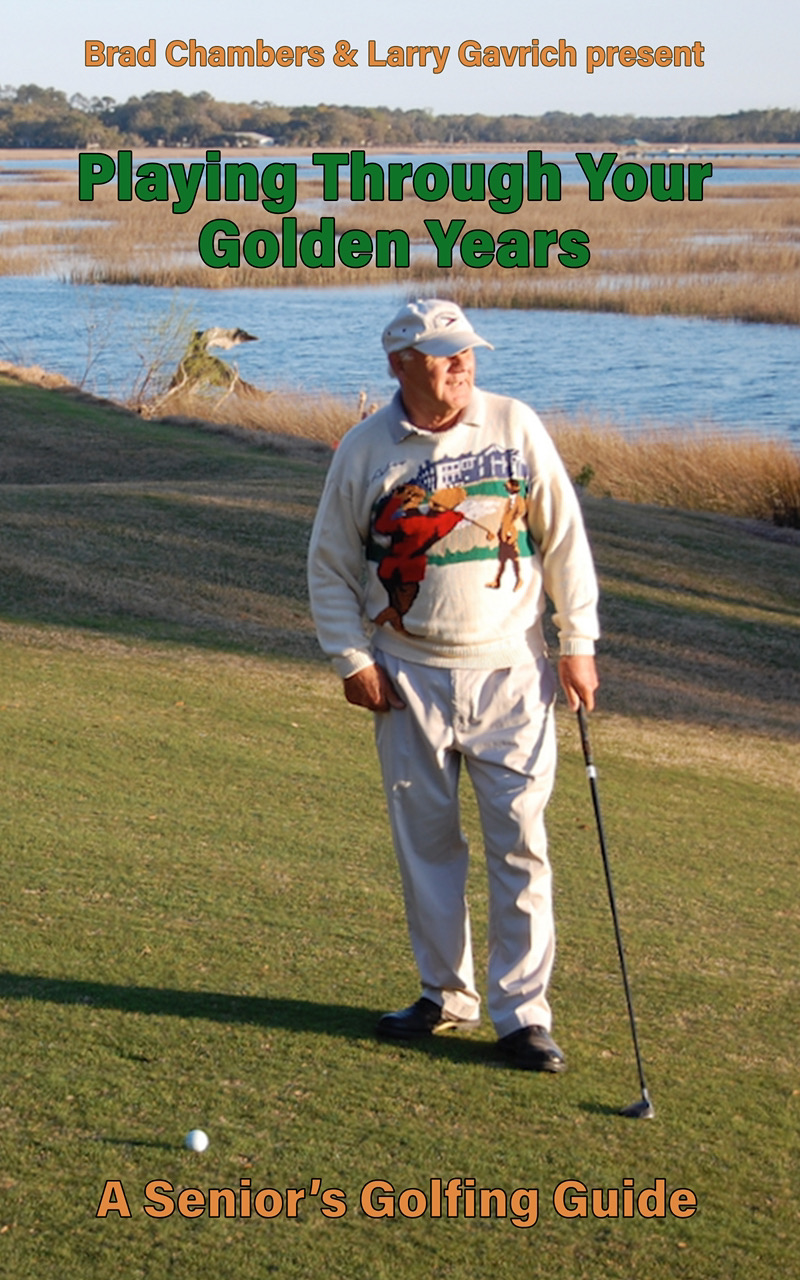
Now on Sale

- The only book about golf communities in the last 10 years.
- 156-page step-by-step guide to finding your dream golf home.
- Info on nearly 100 golf communities the author has visited.
- Paperback version costs less than a sleeve of Pro VIs.
Here is what the experts are saying:
“The book is chocked full of information…applicable to anyone looking for a move to the Southeast regardless of whether they are looking for a golf community or not.” — John LaFoy, golf architect (Linville Ridge CC, CC of Charleston, The Neuse GC)
“Larry has done a tremendous amount of work and anyone — like me — who is looking to search for a golf home now or in a few years needs this book.” — Brad Chambers, golf blogger, ShootingYourAge.com
“Wow! What a thorough piece of work…a must for anyone moving South. This book will help many people.” — Brett Miller, owner and founder of MMA, Inc, a golf industry consultancy
Buy It Now at Amazon.com or BarnesandNoble.com.