108 Scottish holes, not a bad one among them
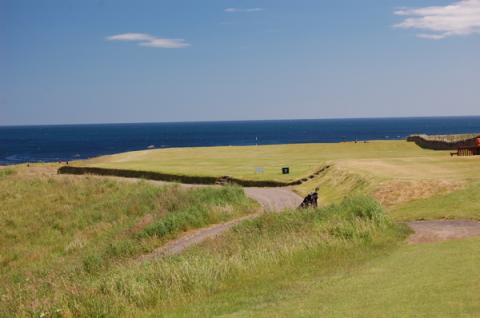
The 340 yard 7th at Crail Balcomie Links plays even shorter than that downhill and downwind, but the blind tee shot, out of bounds on the right and rough on the left makes the conservative play the best option.
We are on the train from Edinburgh to London after a week of golf in the Kingdom of Fife. We bracketed our week with rounds at the Crail Golfing Society's Balcomie Links; otherwise, we played a different course every day.
My son Tim and I are comparing notes and can't recall even a mediocre hole we played. I suppose a couple of short par 3s came closest, those that lacked bunkering or any other visible hazards from the tees, but invariably when we arrived at the green on those, the contours in front and on the surface seemed hazards in their own right.
We agree that the Old Course at St. Andrews was the best for all the clichéd reasons related to history and classic course design - some might say "ancient" course design. I wrote about our round at the Old Course a few days ago and won't belabor again the emotional delight of the experience. Suffice to say it lived up to all expectations.
Sometimes, though, the most memorable courses are those for which you have no expectations whatsoever. Count Scotscraig Golf Club, 20 minutes north of St. Andrews, in that category. Our hosts for the week, George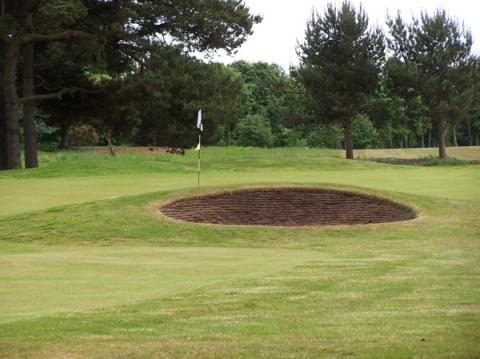 and Dorothy Horsfield of Crail (and Glasgow) invited us for a round at Scotscraig Tuesday after George learned there were no tee times at the fabled Kingsbarns. Any disappointment was more than assuaged by our round at Scotscraig, the only inland, non-links course we played during the week. Somewhere between a heathland and parkland layout, Scotscraig's charms were fully on view from the tee boxes and fairways; no hidden bunkers here, although plenty of nasty ones. In a few days, Tim will contribute more elaborated thoughts about Scotscraig in this space.
I would be hard-pressed to choose a favorite from among the rest. After the Old Course Saturday, I may have lowered my expectations a bit, but Lundin Links on Sunday was no major comedown, perched as it is above the Firth of Forth, with plenty of sea views and excellent links turf. If anything, the greens could have been faster. All the courses on the Fife coast are short, at under 6,200 yards, and with a little discipline, you should score low when friction, especially on the greens, works some magic on the ball.
Elie Links, our Monday choice, provided dramatic views from a little bit inland of the sea cliffs. Elie Links appears to have been shaped by some significant volcanic activity. The 10th green, for example, is framed by a severely vertical rock mountain, and a sheer rock cliff behind the 13th green dominates many of the views on the course. Views aside, I found Elie to be one of the sterner tests of the week and, as well, the toughest walk for this sexagenarian.
Balcomie Links featured the best combination of views and stellar golf holes of our entire week, better even than the Old Course (because of the more dramatic views at Crail). From the first hole to the last, the sea is always in view at Balcomie. The first day we played the course, the renowned Scottish wind was rather tame, but on the sunny day that wound up our week of golf, the strong breezes caused a typical two- or three-club change on most shots. Many of Balcomie's greens are pitched forward, elevated enough to require shots that must negotiate the false fronts and still stop within, say, 20 feet of the hole, by no means a given on such firm greens. Again, Tim the golf architecture maven will hold forth in the coming days with more detail here about Balcomie Links.
More later.
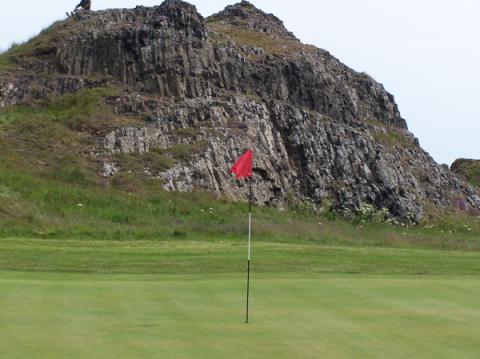
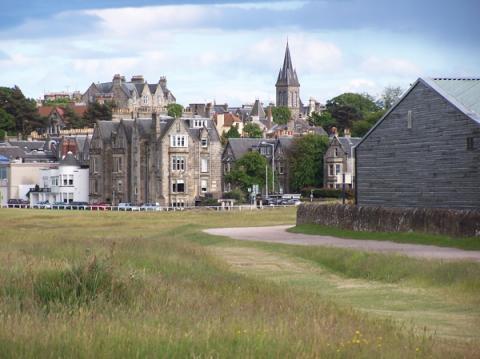
The views at Elie Links feature not only water, but also some impressive hard rock formations -- like this one behind the 10th green -- the most dramatic backdrops of the week (except for the city of St. Andrews at the Old Course).
 Home On The Course newsletter
Click here to sign up for our Free monthly newsletter, loaded with helpful information and observations about golf communities and their golf courses.
Playing Old: At the Old Course, keep your eyes closed in the loo
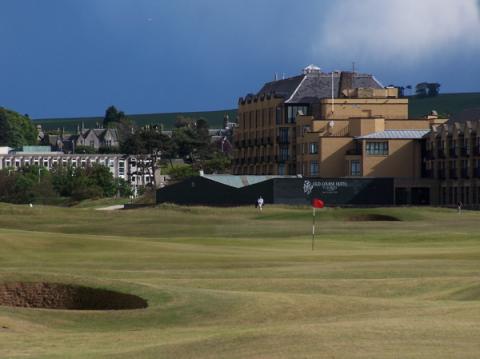
The drive over the Old Course Hotel at #17 is a knee-knocker, but the sense of achievement once you clear the shed is worth the sweat.
One visitor to this space from Denmark wrote me the following the other day about his own experience playing the St. Andrews Old Course for the first time:
On the back nine I had developed a so severe case of the shanks that I did not dare aim for the 18th green in fright of hitting one of the expensive cars parked alongside the fairway. It took almost a year to get rid of the shanks and lots of hours on the range. I will never forget the embarrassment. I cannot say that I enjoyed the round...
My own first-round intimidation at the Old Course last Saturday was at the very beginning of the round. From watching the televised Open Championship (what we Yanks refer to as The British Open) and from reports of those who had played it, I knew the fairway on the first hole was wide. But nothing can prepare you for just how much room you have -- two enormous fairways with no rough to speak of between them, and a fence so far right as to make it superfluous. If you aim down the left side of the first fairway, it is impossible to hit the ball out of play on the first at the Old Course.
Well, almost impossible. I ripped my initial drive hard left off the tee yesterday and watched it roll and roll on the hard turf toward the famous Swilken Bridge in front of the 18th tee. Friction finally took hold and the ball
I was just about to right the ship when summer changed to winter in a matter of minutes, another thing you take for granted and even wish for at St. Andrews so that you can experience the wind and rain that is as much local custom as kilts and haggis. But just two holes of pouring rain were enough "real" experience for me. By the time sunshine had returned, I was done in, a 10 handicap carding a sloppy and unforgivable 44 on the first nine (and that with a 20-foot putt that fell for birdie on #9).
But the Old Course giveth as well as taketh away, and one 60-yard six-iron roller from off the 12th green to two feet (for birdie) set me right. I began channeling Kel Nagle, the Aussie who surprised everyone, including himself, in 1960 by defeating Arnold Palmer. On the famous Road Hole, #17, I hit my best drive of the day straight over the middle of the Old Course Hotel shed, then nailed a five-iron to three feet, prompting my young caddie to announce it as one of the best approach shots he had seen there; discreetly, he did not add "...by a
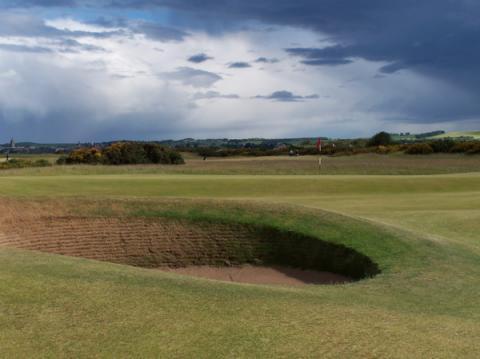 guy who shot 44 on the front." (I gave him a generous tip later for his discretion.) In shock, I made the putt for birdie on the Road Hole, followed it with a good two-putt par in the shadow of the members' clubhouse at the 18th, and carded the most memorable 83 of my life. I racked up three birdies overall for the day (and just five pars) and bore proud witness to my son Tim's even par round of 72, with three birdies himself.
It is hard to judge the Old Course the way you might any other great golf course, such is the aura and history of the place. I don't have much to compare it with in terms of truly "great" golf courses I have played. The Old is not as tough as Pine Valley, which is an exhausting experience that presents trouble on virtually every shot, no let-up whatsoever. St. Andrews gives you a breather now and then but a few misplaced drives might very well cause you to play sideways, or even backwards, out of one of its many sod-faced bunkers. The medicine you have to take on the Old Course can be more bitter than anywhere else because, at just 6,300 firm yards, every green is easily approachable if your aim is true off the tee box. But sometimes even the well-struck drive hits a mound and bounds into a deep jail. I was lucky and found sand only twice, both times at greenside, and was able to play forward although with no opportunity to get close to the hole. The backsides of those greenside bunkers slope down to the putting surfaces, leaving no good way to get close to most holes.
The Old Course cannot be compared to any great course that has some length to it. You play a different game at the Old than, say, at Shinnecock Hills, a relentlessly long and windblown track. Although the wind plays a vital role in strategy at both courses, a winning stroke at Shinnecock is likely to be a blast - think Corey Pavin's sparkling 4-wood on the 18th to win the U.S. Open in 1995 - whereas the winning stroke at The (British) Open Championship is likely to be a 40-yard putt at the Old Course finishing hole.
Pinehurst #2 and the Old Course share an emphasis on the short game, the severely rolling greens providing a number of options - putter, six-iron, lob wedge - from 20 yards off the putting surfaces. I chose putter for anything within 60 yards unless there was a hazard in my way. It was exhilarating to be able to use the flat stick in ways most U.S. courses never permit. My putting from 20 feet seemed to improve as I bore down on those 60-yarders, and the most memorable shots at the Old Course - and indeed of my week of links golf - were the putts and mid-iron chips from well off the greens.
In degree of difficulty, I would put St. Andrews at the Augusta National level, meaning for us normal golfers - i.e. not the pros for whom 450 yard par 4s are short - a good score is possible if you think strategically and stay out of trouble. St. Andrews and Augusta are all about patience and positioning. Greed kills at either place. The Old Course's greens are certainly firmer than Augusta's, but the Georgia course's putting speeds are way faster.
Although you pay mightily for the privilege of playing the Old Course - about $300 per round at the current dollar exchange rate - The Links Trust, which runs the courses of St. Andrews, does its best to pile on the extra bits. A nicely annotated yardage book comes along with the scorecard after payment of your green fees, as
 does a little "commemorative tin" which holds tees, ball marker and divot tool. A cheery gentleman wearing what appears to be a misshapen stovepipe hat greets you on the first tee, welcomes you to the course, and offers to take your group's photo (I took him up on it).
There were just two things that seemed a little odd and out of place at the Old Course, neither of which diminished the experience, for me at least. First, although back tees (white) are in place and add up to just a 6,700-yard layout, no non-professionals are permitted to play from there. Tim, the college golfer, was bummed out by this. The other oddity was the rest room out behind the Old Course's #9 green. The urinal was stamped with the manufacturer's name, Armitage Shanks. No course should ever plant such a seed with a name like that. Perhaps, subconsciously, that is what did in our friend from Denmark on the back nine at the Old Course.
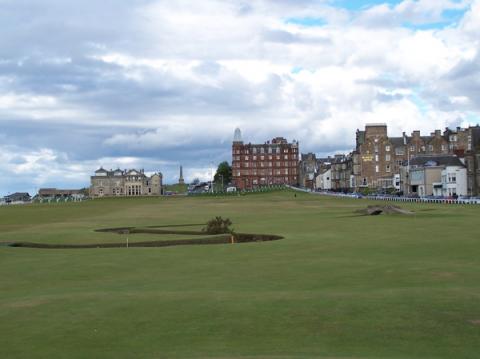
You don't want your round to end as you stand on the 18th tee at the Old Course.
Back online from Scotland
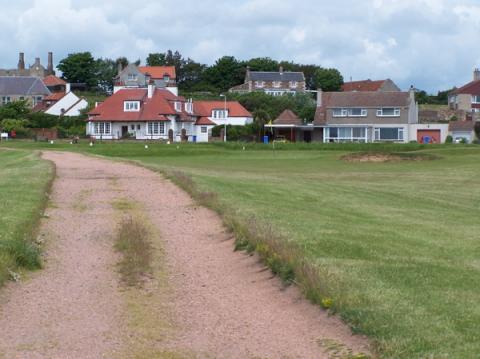
Road hole: It isn't the famous one, but a road runs diagonally across the par 4 8th at Elile Links.
The small coastal towns of Scotland are a grand buffet of great golf holes, but don't expect to find many internet connections. I write this from the Bean Scene, a coffee house in St. Andrews that asks only that you purchase a drink (or food) every hour to have access. So with lemonade in hand, here come some observations on the last few days in the Kingdom of Fife, whose epicenter is St. Andrews, along with a few photos (many more golf photos to follow soon). More extensive reviews will come along in later days as well, internet access permitting, including some thoughts about finally achieving a lifelong dream, playing the Old Course.
First comment: Just south of St. Andrews, you could have yourself a grand week of great links golf without
Add to those the other course at Crail, the Craighead, a Gil Hanse design closed for aeration this week; Charleton Golf Club, a well-regarded layout just inland from Elie with a parkland feel to it; and the nine hole classic at Anstruther, a bustling fishing village with the best seafood restaurants in the area, and you almost wouldn't miss the St. Andrews courses.
Well, almost. To be in the St. Andrews area and miss the Old Course, especially if you have never played it before, would be a tragedy. It is the quintessential combination of history and great design all rolled into one, a place to worship as well as play. It is expensive, yes -- about $500 for my son and me -- but the experience is undeniably rich and memorable and worth the cost (once every decade, say). I'll have more to say about the Old and New Courses soon.
Since this site aims largely at those contemplating life in a golf community -- I use the broad sense of the term community, meaning living in a community, planned or otherwise, with excellent access to golf -- let me make a few comments here about what may be the best place on the planet for golf, at least part of the year. We are staying in the tiny town of Crail, a fishing village of about 1,700 residents, a friendly place but not exactly a hotbed of activity for those who crave the nightlife. That said, my 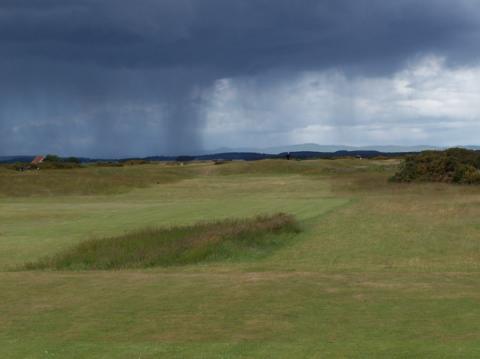 son Tim and I enjoyed the company of fellow golf fans at Crail's Golf Hotel last night. The hotel was the only place in town that had the Skyport Channel on cable television, and Skyport was carrying the U.S. Open. I found myself rooting along with the locals for the lone Brit in the chase, Lee Westwood, but the interest in the crowd for Tiger Woods made me feel at home, literally. That same air of inevitably that Tiger would win, despite the reconditioned and obviously painful knee, pervaded the small but boisterous crowd. As I write this, Tiger is down to Rocco Mediate in the 18 hole playoff. Maybe not so inevitable.
I made some informal checks of real estate in St. Andrews, and it appears possible to purchase a two-bedroom, one bath flat for under 200,000 pounds sterling, or about $400,000 at the current usurious exchange rate. Local residents have an entire range of options for membership in the area's collection of courses, from those at St. Andrews -- the Old Course excepted, but discounted for members -- to a membership card for all the courses in the Kingdom of Fife. As a vacation home, say May through September, it is hard to think of a better place for a golfer to plop himself or herself down (and there are many "her" golfers on the course we have played, excellent ball strikers and they play faster than I do).
Speaking of May to September, the weather so far this week has been spectacular, nothing like the warnings. At the Old Course, we did go from summer to winter and back to summer in the space of four holes, just what you expect along either coast of Scotland. We could see the huge dark cloud and streaks of rain cresting over the hills to the west, and we knew we were in for it. The temperature dropped at least 15 degrees and umbrellas were useless (and dangerous). We had the experience of the brutal Scottish weather and the great good fortune of having it for the briefest of times.
Well, that does it for now. Much more later. Wish you were here.
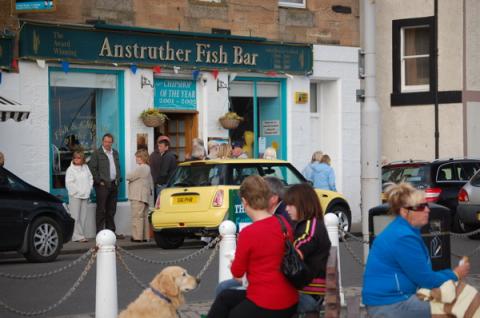
Local folks and tourists alike queue up for an hour or more -- we did -- at the famous Anstruther Fish Bar on the waterfront. The restaurant does a non-stop takeaway business for its famed fish and chips, which most people eat on benches along the waterfront. The bustling, charming fishing village of Anstruther is home to a good 9 hole links, but is also just a few minutes drive from the outstanding Crail, Elie and Lundin links courses.
Luck of draw: Lottery at the Old Course
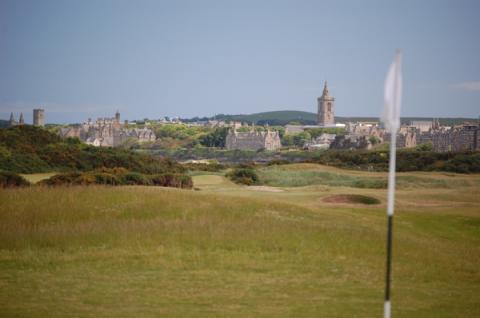
St. Andrews city views are everpresent from the New Course.
I came to Scotland with my son Tim with all but one day of our weeklong visit pre-booked for golf. I left one day open on the chance that we might get lucky and be picked from all the many ballots submitted for a round at the Old Course Saturday (today). Yesterday, we filled out the form at the caddie station by the 2 p.m. deadline, handed it in and then trotted off to play the St. Andrews New Course, which at 122 years is not exactly new - just not as old as the Old Course. St. Andrews Links pulls the ballots after 2 p.m. and announces the results at 4 p.m.
After our round on the New, we stopped in the clubhouse and, after a nail biting search by the lady behind the counter, we found our names down for a two-ball - we will likely be joined by two walk-ons - at 2:10 p.m. today. I
We started our golf in the Kingdom at the Crail Balcomie Links, just two miles from the wonderful two-bedroom cottage where we are staying in the tiny fishing village of Crail. Balcomie is one of the oldest courses in the world, a true links with knockout views of the sea from the links land above. My son Tim, the golf architect aficionado, will follow in the coming days with a review of Crail Balcomie Links (Note: If he seems less than enthusiastic about the challenge, it is only because he shot a sterling 70 with a chip in for eagle).
The Crail Library has the only Internet connection in town, and it is open for limited hours only three days a week. I had to sign up for a local library card to log on, but the Internet connection was spotty and slow when it
 worked. I am sending this article to the web site from a coffee shop in St. Andrews (you cannot find a cup of real coffee in Crail - just instant - although the folks at the Golf Hotel in town did not charge me for the cup early this morning).
 Crail, though rustic, is perfectly situated for a golf week. To the north, just 10 minutes away, are the links at Kingsbarn and the Fairmont Hotel (18 by Bruce Devlin, 18 by Sam Torrance). On the approach to St. Andrews, just eight miles from Crail, is the new and widely celebrated St. Andrews Castle Course, designed by the Scottish wunderkind David McLay Kidd, and then of course all the renowned courses of St. Andrews are a few miles beyond. To the south of Crail are such unheralded gems - not unheralded by those who play a lot of Scottish golf - at Lundin Links and Elie, which are on our list for Sunday and Monday. Tuesday we are set to play Scottscraig, one of the 10 oldest courses in the world, just north of St. Andrews, before winding up our week with another go at Balcomie.
Although I am gaga about being in Scotland for a week of golf, my son has really hit the lottery. His aunt in London has arranged a belated birthday present for him, a round of golf at the famed Royal Sunningdale outside the city, after we arrive there at the end of the week. Lucky kid; he gets a week of golf in Scotland, including a round at the Old Course, at an age 42 years earlier than his father's first sojourn to the Old Sod. I sure hope he can wangle me an invite at Sunningdale. What was it the poet Wordsworth wrote? "Child is father to the man."
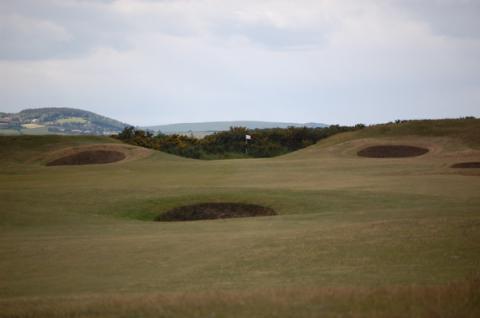
Face of the New Course: The sod bunkers protecting the 8th green at the New Course appear almost to be smiling. You won't be should you find one of them.
Nothing artificial about Edinburgh
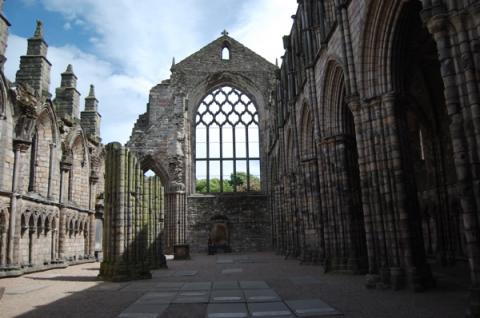
The surviving ruins of Holyrood Abbey date to the 12th Century. The Abbey is adjacent to Holyrood Palace, where Mary Queen of Scots lived before her imprisonment in England, and where the current Queen Elizabeth stays when in Edinburgh.
Our family trip to Edinburgh wound up tonight with a nice meal at a family run Italian bistro two blocks away. The service was efficient, if a bit perfunctory, but the food was generally consistent (the main courses outstripping the appetizers and desserts). We spent most of today at the Edinburgh Zoo, which looked as if it were going to be a disaster from the start. In the first six exhibits we visited, the animals were hiding and the California sea lion had been shipped back to California. This looked like it was going to be the biggest waste of $90 ever. But my zookeeper wannabe 16 year old daughter encouraged optimism, which paid off later with a few decent peaks at large mammals, some colorful birds and a hilarious 100-yard long parade of penguins outside their enclosure.
Here is the skinny on Edinburgh. Concerning the restaurants, we had neither a bad meal nor a great one. Individual dishes stopped just short of memorable - the pasta with king prawns tonight were quite good - but some of the little bites on the "sample platter" at one of the local pubs the other day fell short of decent (strange tasting chicken wings, mealy sausages). The Guiness on tap made up for it. For me, the most memorable bites of the four days were the two scones at Clarinda's Tea Room just a block from the Scottish Parliament building. Brown and rock hard on the outside, a combo of flaky and crumbly inside, they were perfect (embellished beautifully by raspberry preserves and clotted cream - essentially whipped cream, but better). On a scale of 1 to 10, I'd give the food in Edinburgh a wobbly 7.
Our accommodations have been as good as we could have asked for. Not exactly in the middle of the old City Centre, still we are close to the Edinburgh Castle, close to city transportation and close to grocery shopping and breakfast places (the bakery a block away makes a nice scone, if not the stuff that legends are made of, as at Clarinda's). The Knight Residence is an apartment hotel on Lauriston St., and our two-bedroom apartment has been perfect for the four of us (two adults and two teens). Although the wireless Internet connection seemed to shut off around 11 each night, my hard wire connection worked on command all night. The three concierges on call during our stay - Charlie, Chris and Hugh - could not have been more helpful with advice and some hands-on help with the cable TV, which was mesmerizingly complicated (three different remotes and an info box on the screen that wouldn't budge). Chris saved the day with a bit of old fashioned technology; he unplugged and then re-plugged the cable. On my ersatz scale, The Knight Residence gets a solid 8 that would be a 9 if it were not for the strip bars - with discreet signage - down on the corner. Right now, our kitchen has an unobstructed view up to the Castle, but alas next year, no more view when the office building across the street is completed.
The city is wonderful, with a stunning display of history, topography (hills formed by volcanic activity millennia ago), and architecture. Many buildings pre-date American independence and, indeed, a few before Columbus even discovered America. Although enterprising Scots have turned tradition into moneymaking opportunities with fairly expensive tours, there are more than enough chances for the visitor to see things the way they were centuries ago (and without paying for the privilege). Despite the odious monetary exchange rate, we found the 31 pounds charge for tour bus trips around the city to be a good deal. You can use any bus of four lines that cover virtually every part of the city for 24 hours, getting on and off whenever you want. (One catch: The 24 hours is a little misleading since the buses run only from 9 a.m. to 6 p.m.)
We could have used two more days to see the city fully, but not much more than that. Edinburgh is not a large metropolis, and I judge a tourist friendly city by how easily you can learn the local map. Edinburgh's main streets essentially run parallel, east and west, and the Castle is at the heart of it all. You can use it as a kind of navigational beacon wherever you are. As cities go, this is an easy one to traverse, with splendid public bus service (we took one home from the zoo), as well as the aforementioned private bus lines. The people of the city are respectful and friendly, but straightforward, with a wit and humor that can bump up pretty close to biting. At the train station this afternoon, I asked a young man at the information booth how best to get my wife and daughter's luggage onto the train to London tomorrow morning. I said they had a few big bags, to which he said, "Aye, you Americans do travel that way."
For the most part, you know where you stand in Edinburgh.

Every day at 1 p.m., the most extroverted penguins at the Edinburgh Zoo line up to take part in a parade outside their enclosure.
The old is perpetually new in Edinburgh
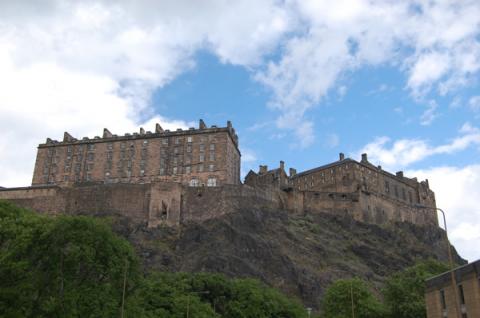
Scale this: Edinburgh Castle's position atop a volcanic rock in the center of the city has protected it through the ages.
Edinburgh is one of the oldest thriving cities in the world, but it has an historical pathology that has forced the new upon the old over many centuries. From the Romans on, everyone seemed to want the city. The city has played offense and defense and, over time, defense has won.
The construction cranes I see all around town bring a tear to an old Otis Elevator Company man like me. Old hospitals and other commercial buildings a century or older are being converted into apartments to meet the demands of a population that can make more of a go of it in a service economy than an agrarian one. For an old city, Edinburghians on the streets skew toward the young end. The cafes and pubs are filled throughout the day with what appear to be young office workers, students or pre-mature pensioners. Nice work if you can get it.
Reinvention is in the lifeblood of the city. We had a splendid tour of Edinburgh Castle yesterday; it dominates the skyline of the town and offers panoramic views across the Firth of Forth to Fife (but not quite as far as St. Andrews) and to the city below. The original Castle was built before years had quadruple digits in them - some evidence says earliest occupation was 900 B.C. - but was lost to the dreaded English in 1296. When the Scots finally recaptured it in 1314, King Robert The Bruce vowed never to let it fall into English hands again. All that remains of that Castle is the tiny St. Margaret's chapel, capacity 20 souls, which is the oldest remaining building in Edinburgh. David II ordered the Castle rebuilt in the 14th Century.
When Queen Victoria visited the Castle for the first time in the late 19th Century, she didn't like one of the towers at the entrance; "Off with its head" she declared, and the tower's top was shaved off and rebuilt to her specifications.
We did one other "tourist" thing yesterday, an hour below the streets of Edinburgh, in a place called Mary King's Close. A "close" is a narrow alleyway with residences lining both sides. In the 1700s, the city decided to build a merchant exchange directly on top of an area of tenements composed of four closes, including one named for the most successful merchant on the street, Mary King.
The tour was a major disappointment and not worth the $50 we paid for four. The tour guide was unpracticed and unschooled, or so it seemed. He had memorized his lines and not permitting of question time (the few that were barked out at him were met with more than perfunctory responses). Worse, he dwelled way too long on the unsanitary conditions of medieval Edinburgh life, returning to graphic descriptions time and time again. It was as gross as it was misplaced, and I needed a shower after the tour, and not just because the underground was a bit dank. The ghost stories, advertised as ghoulish, were not nearly as scary as the repeated references to the raw sewage of Medieval times.
Edinburgh is a great walking city, and of course you can fuel your journey by stopping for a pint in one of the burgh's scores of pubs. They are every two blocks or so, and cover two or three corners at some intersections. The weather has been splendid and everyone, it seems, takes their pints outside to the sidewalks. We finished our day with a walk around Edinburgh University, one of the oldest in the world, and a nice dinner at B'est, which might be a little pricey for most university students but not by much. The two-course "pre-theater" dinner was about $20 and the four course about $30 (that adds dessert). I had my first experience with haggis, Scotland's national dish, a mélange of chopped up organ meats and oats boiled in some animal's stomach. It wasn't bad, although like many restaurants in the city, the Scots are modernizing the dish (this one was molded and placed atop a red wine reduction sauce). I would say the taste was somewhere between meat loaf and Quaker Oats and contributed the better aspects of both. It went splendidly with a reasonably priced bottle of rose wine from Australia.
After eight miles of walking the last two days, we opted for the tour buses today. More later...
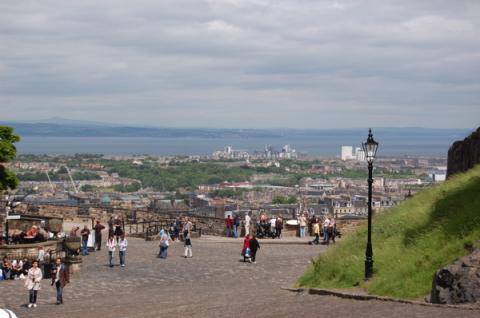
The views from Edinburgh Castle are spectacular, and on a clear day you can see Fife to the north, although not quite so far as St. Andrews.
Edinburgh everything we expected
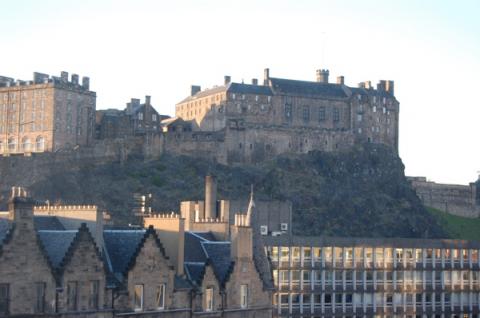
Construction began on Edinburgh Castle in the 12th Century. We walked around it today but jet lag exhaustion prevented a climb up the hill.
We arrived in Edinburgh, Scotland mid morning today after the usual airline issues - flight delayed by more than an hour, and paltry explanations (bags were late getting loaded). The pilot assured us we were #7 for takeoff from Newark with wheels up in 10 minutes. In airline time, that turned out to be 40 minutes. My wife
But now we are happily situated in one of the world's unusual and beautiful cities, and within just a relatively few miles of legendary golf courses. Many of them are well known by the Scots but not by Americans; the nine-hole Musselburgh Links, for example, opened in the 18th Century and is at the edge of the city limits (my son is already plotting to convince my wife and daughter to go shopping so we can go out and play Musselburgh).
You feel the pull of golf in Edinburgh. We were greeted at The Knight Residence by the concierge, Charlie, who noted our golf bags, mentioned he was a golfer too, and we were off and running with excellent advice and golf talk from him. As we left our comfortable rental apartment for an afternoon walk, a gentleman carrying three irons and a putter walked by. There was no course in the immediate area, but chances are he had walked the couple of miles to a practice range or muncipal course.
Our three-hour walk about town included the Royal Mile, which starts at the base of the Edinburgh Castle. The Mile is loaded with shops - lots of cashmere and lambswool at prices that were not as ridiculously high as we would have presumed, but a full outfit that included a kilt was listed for about $1,000. We passed many pubs, and I was taken by how many of them advertised "free wi-fi." If the spirits move me, I just might file a story from one of them this week. We had a relaxing dinner in the beer garden behind one of the pubs on Grassmarket Street. The food lived up to the Scots reputation not pushing the boundaries of culinary artistry. Boring stuff, but you could not beat the atmosphere on a glorious day (70 degrees F, breezy, low humidity).
Our apartment is within close proximity of the famous Edinburgh Castle, and indeed we have a glorious view from our kitchen. The oldest building inside the enormous footprint of the Castle, a chapel, dates back to the 12th Century. We are looking forward tomorrow or Tuesday to checking out the Queen's Jewels on display there. The Knight Residence is clean, comfortable, and reasonably priced - that is, reasonable given the current exchange rates - but certainly a lot more expensive than your average Holiday Inn.
Cheers.
Wings up for Scotland
Crail Links (Balcomie and Craighead courses)
New Course at St. Andrews
Elie Links
Lundin Links
Scottscraig
Old Course at St. Andrews (if our names get pulled in the daily ballot).
Internet service in Crail will be spotty, but I will do my best to post daily reviews of the courses we play, with photos.
Bumper to bumper crop: Can mountain communities survive their popularity?
Well, that could end soon. In some ways, North Carolina is the new Florida.
It is hard for many of us under the age of 50 to remember that in our lifetimes, the over-burdened coastal
Today, North Carolina is experiencing a similar migration. One of the drivers is climate, but certainly not the winter climate in the Carolina mountains as temperatures can drop below freezing on some days and snow is not rare. For years a second-home magnet for Floridians tired of the oppressive summer heat, today the North Carolina mountains are attracting more and more Floridians, some choosing it for year-round living. I heard it from local real estate agents and saw it on the Sunshine State license plates that dotted my long and winding drive from Brevard to Tuckasegee last week.
It left me wondering if all these migrants are trading one traffic problem for another. Florida, of course, is well known for clogged roads, made worse by septuagenarian drivers taking it very slow on their way to the 5 p.m. smorgasbords. Carolina mountain roads are essentially two-lane affairs, with many hairpin turns that
Moreover, and unlike Florida, generally there is no room to expand these mountain roads; the two lanes were originally blasted through rock into the sides of mountains and it is hard to envision anywhere to put more asphalt. Of course, through the marvels of engineering, anything may be possible, at a price.
One local real estate agent told me that a moratorium on building new developments was one local county's response to the population increase and the increased burdens on local infrastructure, such as the roads. That may be what it takes to keep North Carolina from turning into Florida. In the meantime, the guidance here, as always, is to rent before you buy, especially in an area where traffic could scar an otherwise beautiful landscape.
Review: Bear Lake Reserve, Tuckasegee, NC
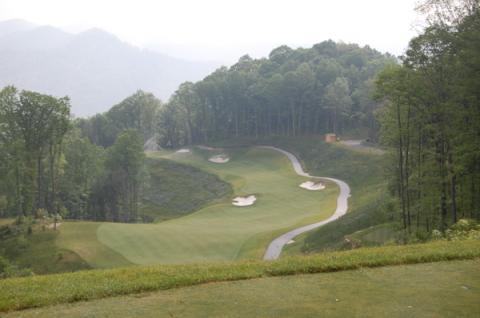
The longest and perhaps toughest hole at Bear Lake Reserve is the 445 yard 1st.
Altitude adjustment: Golfers, boaters and hikers live high life in western Carolina
Most dedicated golfers recoil at the notion of membership at a nine-hole golf course, especially one that plays to a measly 1,900 yards and par 29. For most of us, golf is a game divisible only by 18, and par for the course is somewhere between 35 and 36 per nine holes. No fractional memberships for us.
But you just might change your mind after a spin around the soon to open nine at The Summit Golf Club at Bear Lake Reserve, near Tuckasegee, NC. At an altitude of 3,800 feet, the dramatic routing by Nicklaus Design group is both high and mighty.
Bear Lake's developers say that golf is "just another amenity" at the four-year old community. Perhaps, but a tour of the course with Director of Golf Bo Alexander is persuasive that Terramesa Group, which purchased the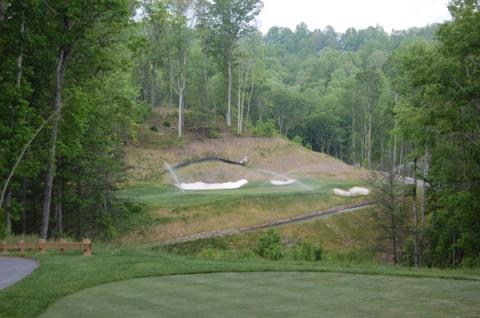 property earlier this year from the original developers Centex Destination Properties, hopes to reel in golfers to the water-oriented property. They have lavished a lot of attention and made a significant investment to produce some impressive eye candy golf that may just overcome the nine-hole stigma.
The cost to build The Summit amounted to about $1 million per hole, or $9.5 million. That compares favorably with one of the most celebrated regulation courses in the area, Mountain Top, where the Discovery Land Group spent $21 million for its 18 holes. The Tom Fazio-designed Mountain Top, Alexander says, would be the likely choice of serious golfers from Bear Lake who feel the necessity to add membership in an 18-hole club.
Any of the nine holes I saw at Bear Lake could be the "signature" hole at most courses. I didn't get to play the course, which opens July 1, but it was obvious that the average golfer with an accuracy problem might very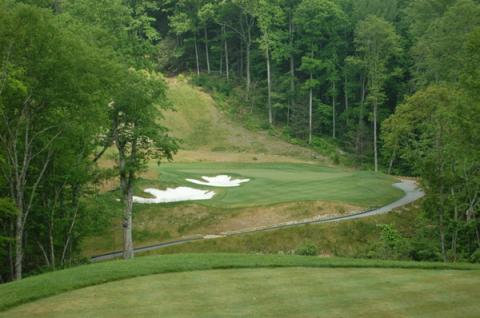 well go through 18 holes worth of golf balls in the span of 9. From the tips, the longest hole, #1, plays 445 yards and the shortest a mere 91 yards. I hope the accompanying photos do justice to how much danger lurks on most shots at Bear Lake.
A pristine 500-acre lake is in the name and at the core of Bear Lake Reserve. Canoes and kayaks dotted the lake during my visit, and I watched a father and two young children placidly fishing from their canoe. For now, powered boats are permitted on the water but the guess locally is that the state will put restrictions on motor boats in the coming years, especially as more and more people move to Bear Lake Reserve and across the lake. The lake, the result of damming the Tuckasegee River in the 1950s, is also accessible to the public.
Bear Lake dominates the views from many of the 2,100-acre community's properties and from the rustic clubhouse - the Lake Club -- where couples and families alike gathered last Saturday. Inside, the Lake Club is large and warm, all hewn wood and stone and dramatic angles. Bear Lake does not attract much traffic in the winter, but food is served year-round by a young and enthusiastic wait staff. The food I had at dinner and lunch was well prepared.
Bear Lake's other amenities have a strongly outdoors orientation. Fifteen miles of hiking trails thread their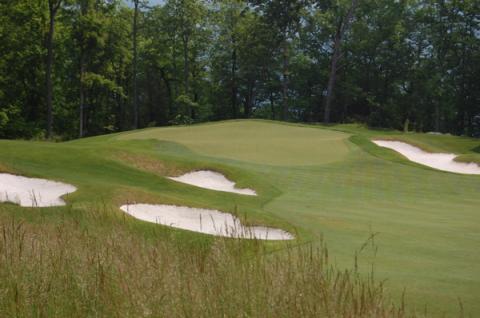 way through the community. Helpfully, Terramesa has published a "field guide" to the hiking trails, identifying their routing and degrees of difficulty ("easy," "moderate," and "strenuous"). A fishing village is also planned although it doesn't take a village today to pull brown trout and small mouth bass from the fertile fishing grounds on the lake.
Bear Lake is somewhat remote, with no commercial airport nearby, but at about three hours from Atlanta and Charlotte, it certainly is close enough to make long weekend stays practical. The community's entrance is at the end of a country lane three miles from State Road 107; the last quarter mile before Bear Lake's entrance is unpaved, a bit of a turnoff but, according to Sales Exec Jeremy Sessoms, the state plans to finally pave it in the coming months. The community is best approached from the north; to get to Bear Lake from the south involves a trip along the winding and often crowded two-lane Highway 64. I drove it during the day but would not look forward to it at night.
Highway 107 continues north past Bear Lake to the little town of Tuckasegee and on to the more substantial Sylva. Sylva is home to Western Carolina University, and consequently the area doesn't want for a little culture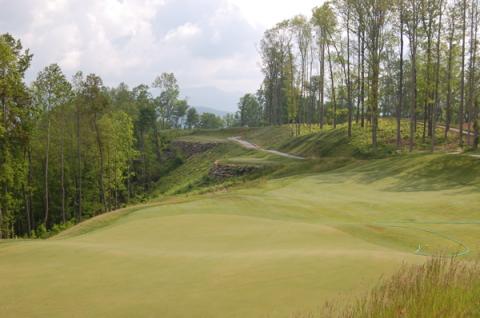 and entertainment. Western Carolina, nestled into the local mountains, is home to 9,000 students and some pretty good sports teams. (Bit of trivia: In 1980, Western Carolina hoopster Ronnie Carr became the first college player to make a shot from outside the three-point line.) Director of Golf Alexander has invited Western Carolina's golf team to use the Bear Lake practice facilities. They will be pleased indeed.
Land prices at Bear Lake, while not inexpensive, are certainly in line with other communities that feature impressive mountain and lake views. But the most significant expenses are in clearing land, blasting rock and laying foundations against the hillsides where, of course, many of the best views are found. The developers have wisely factored in the costs to build and priced the home sites comparatively. It isn't unusual, for example, for a flat piece of land with mountain views to be priced a couple of hundred thousand dollars more than a lot with a sidehill lie but a similar view. In the end, the total costs work out to be about the same.
Home sites at two acres and more begin around $250,000 for a modest mountain-view lot and move up to around $600,000 for the best vistas. Lake view property is slightly higher and one-acre lakefront sites, with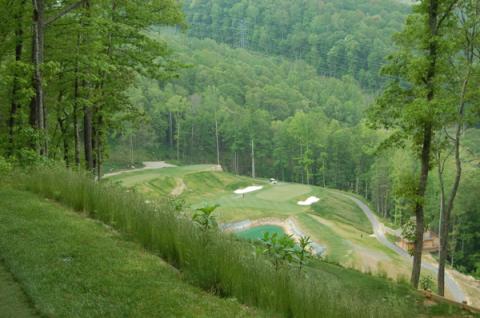 dock, can exceed $1 million for the choicest positions. For those who do not want to make a full commitment, the many cottage communities that dot the hillside might fill the bill. I stayed in Cottage 77 in the Whispering Falls neighborhood, a cluster of comfortable, Craftsman-style cottages. My cottage, owned by the Edwards family of Tulsa, OK, and rented out by Bear Lake in their behalf, featured three bedrooms and as many bathrooms. (Note: As is my custom, I paid for my accommodations.) Cottages begin at $500,000 for a two-bedroom unit and reach $750,000 for the four-bedroom versions. Some are available furnished. As you contemplate a future purchase, you could stay in one of the cottages or handful of condos that look down on the lake. The tariff is $360 per night in summer and includes access to all amenities, including the golf course.
Bear Lake Reserve, Tuckasegee, NC. 828.293.3455. Course designer: Nicklaus Design. Course yardage: 1,900 yards, par 29. Ratings and slopes to be determined. If you are interested in property at Bear Lake Reserve or additional information, contact me and I will be happy to put you in touch with someone who can help.
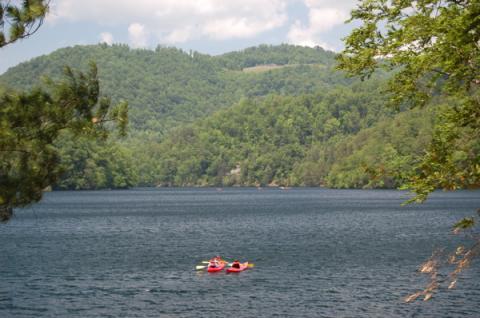
From Bear Lake Reserve's Lake Club, parents can sip a drink and keep a watchful eye on their water-loving children below.
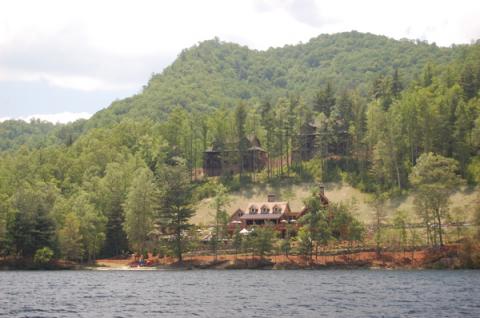
The Lake Club is the social center of Bear Lake Reserve. Behind and above the club, condominium units are available for purchase or rental.
Review: Connestee Falls, Brevard, NC
Review: Cherokee Valley, Travelers Rest, SC
A short sermon on the mountains
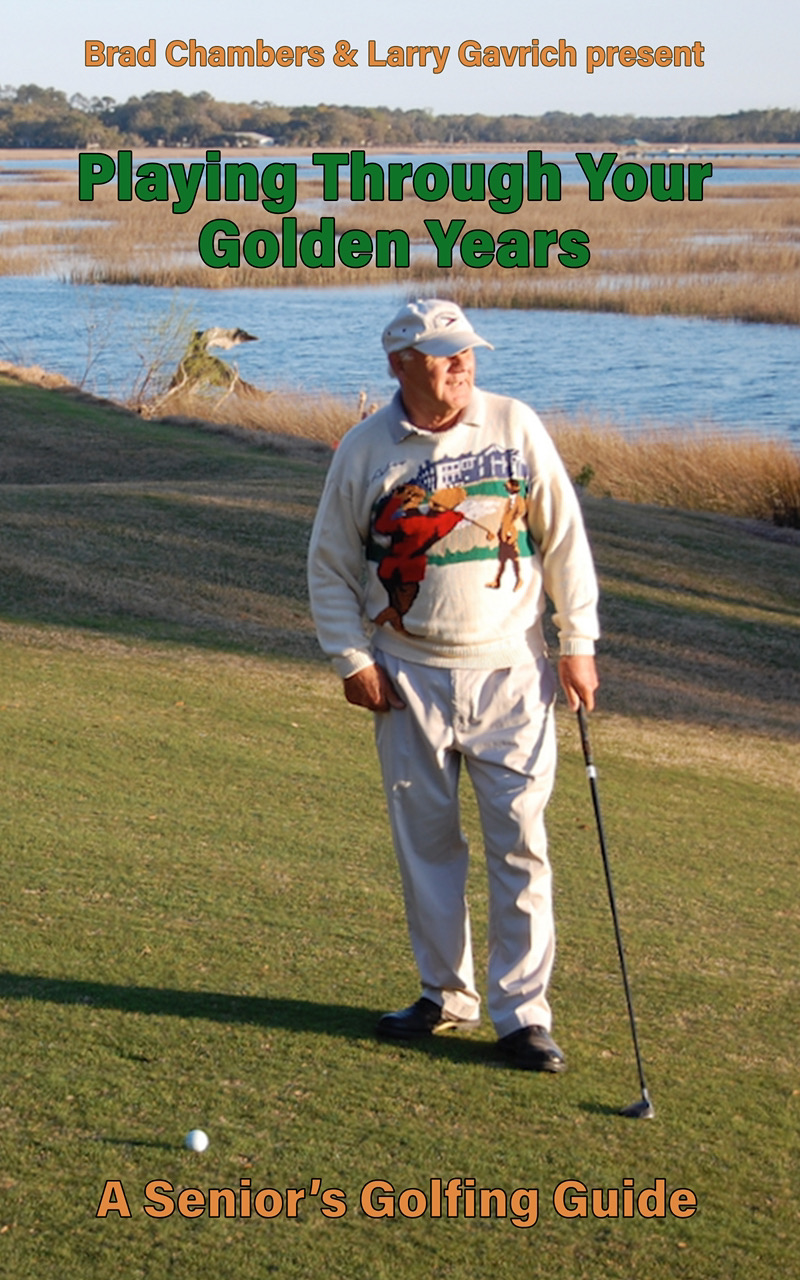
Now on Sale
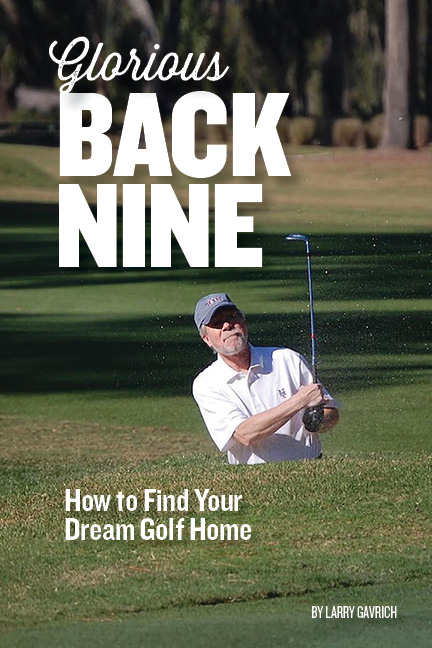
- The only book about golf communities in the last 10 years.
- 156-page step-by-step guide to finding your dream golf home.
- Info on nearly 100 golf communities the author has visited.
- Paperback version costs less than a sleeve of Pro VIs.
Here is what the experts are saying:
“The book is chocked full of information…applicable to anyone looking for a move to the Southeast regardless of whether they are looking for a golf community or not.” — John LaFoy, golf architect (Linville Ridge CC, CC of Charleston, The Neuse GC)
“Larry has done a tremendous amount of work and anyone — like me — who is looking to search for a golf home now or in a few years needs this book.” — Brad Chambers, golf blogger, ShootingYourAge.com
“Wow! What a thorough piece of work…a must for anyone moving South. This book will help many people.” — Brett Miller, owner and founder of MMA, Inc, a golf industry consultancy
Buy It Now at Amazon.com or BarnesandNoble.com.