Green Valley CC: The green, green bent grass of home…in Greenville, SC
When Yankees move to warmer climates, they leave behind things of psychic importance. Try finding a good bagel South of the Mason-Dixon Line. Or thin crusted, brick oven pizza. Or, for that matter, bent grass greens. But members of Green Valley Country Club in Greenville, SC, have a shot at all three, courtesy of a pizza and bagel loving golf course owner who believes he has found a way to maintain bent grass greens as if they were in mid-state Vermont.
Mike Kaplan, the owner of Green Valley, has the passion –- some, like his wife Margaret, call it “obsessiveness” -– to pull off the modern-day miracle of actually running a golf club successively. Golf course operations require a full-time, aggressive  commitment, and Kaplan tends not to do anything halfway. A lover of the pizza he grew up with in his native New England, he decided to replicate the taste and texture he recalled from his youth –- not by searching high and low in Greenville area pizza parlors, but rather by buying and installing his own wood-fired oven and working relentlessly to perfect his dough and sauces. He also couldn’t find a bagel that tasted quite like he remembered it up north –- some swear it’s the water -– and he is on a quest to duplicate that as well. The sleekly proportioned wooden trash receptacles outside the clubhouse and a few furnishings inside are also Kaplan’s own handiwork; he produces them from a small warehouse he bought where he could do his lathe and refinishing work without waking the neighbors or his wife.
The member buys the club
As if he didn’t have enough to do, last year Kaplan bought the bank-owned Green Valley, located on a rolling couple hundred acres in Travelers Rest, SC, just 15 minutes from downtown Greenville, for $2.2 million. The once-again private golf club opened to the public for two years during its financial problems and, consequently, bled members who recoiled at the paltry $25 green fees for non-members. The golf course has excellent bones, having been designed in 1958 by a dean of mid-20th Century golf course architecture, George Cobb; Cobb, golf architecture buffs will recognize, is responsible for a couple of layouts at the Sea Pines Resort on Hilton Head Island, the well-ranked Clemson University Walker
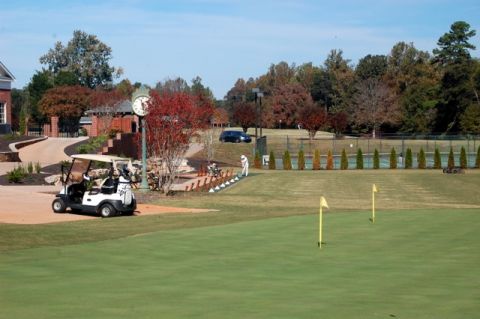
The proximity of Green Valley's practice area and tennis courts makes it easy for a post-workout stop by the clubhouse for a quaff and a snack.
A member in good standing at Green Valley for 15 years, Kaplan, who lives 22 miles from his club, took matters into his own hands after the recession-ravaged club membership dropped below 100, the Bank of Travelers Rest took back the course, the club invited public players, and dues-paying members started to jump ship in droves. When the bank offered the golf club for sale, Kaplan made the successful bid, left the family electronics business he had helped expand to a $100 million-plus venture, convinced his father and brother to sign on as behind-the-scenes partners in the golf venture, convinced his wife to run the club’s office, and went about installing some of the changes he longed for as a member. He commissioned a redesign of holes #1 and #10 and full revision of the compact but impressive practice facility, which includes the usual components (practice range, chipping green, putting green), all within a few strides of the clubhouse patio. The proximity of the practice area to the clubhouse increases the frequency of use by members who, the club owner hopes, will reward themselves with a Killian Red on draft or chef-cooked snack directly after practice.
Manufacturing little preparation for the golf business
Given his business experience but also with a good dose of common sense, Kaplan understands that money to invest in the golf course comes from other sources of club revenue, and therefore he set about improving the food and beverage operations of the club from his first days as owner. Better food and service has led to more weddings, outings, business meetings and added use by members grateful for the upgrades in food and the clubhouse itself, providing the sources of revenue Kaplan needs to support his self-admitted compulsion for golf course improvements.
“We are pretty much fully booked for office and other holiday parties this season,” he says.
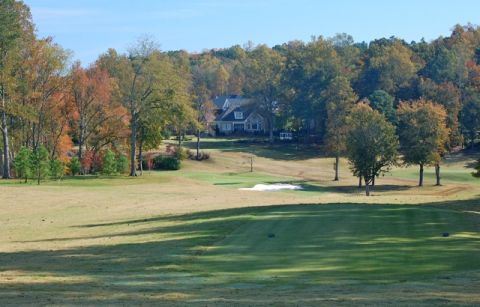
Architect Jan Bel Jan, with an enthusiastic go-ahead from owner Mike Kaplan, removed tons of dirt from the first fairway to reveal a peak at the green from the tee on the formerly blind par 4.
Once word got out in the Greenville area that Green Valley had returned to private status and that the new owner was making improvements, including a new fitness center and a recent complete redecoration of the club’s ballroom, Kaplan was able to add back 108 members in just 16 months. (The country club already had popular pool and tennis facilities.) Full golf memberships, which include all other amenities, are certainly reasonable at $2,500, and the dues are more than competitive at $350 per month. Lower-cost social and “sports” memberships are available, as well as a “non-resident” membership for those who live more than 40 miles from the club. (Those considering a move to the Greenville area take note: Kaplan is seriously considering offering a discounted membership to anyone living within a couple of miles of the club.)
But the transition from his former job to golf club operations has not been quite as smooth as he expected.
“This is different from manufacturing,” he says, referring to the family electronics business he left to run Green Valley. “It takes some time to learn the golf business.” Kaplan cites the construction of holes #1, #10 and the practice area as an eye opener.
“Construction took four months longer than we expected,” he says. “I didn’t count on the weather being such a big factor.”
I ask him how being the owner of a golf club in which he had been a member for 15 years has changed his perspective, and what his relationships with his fellow former members are like these days.
“A few really hate me,” he says, explaining that those who helped keep the club alive through the lean years are a bit resistant to rules such as when to close the clubhouse each night. “You can’t take it personally,” he adds, like a good politician.
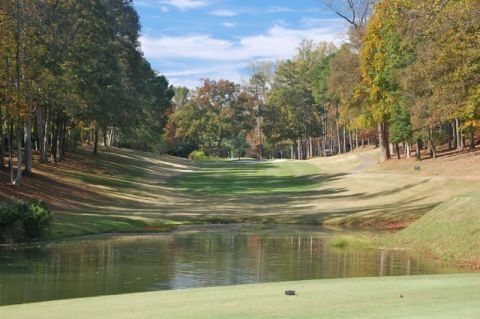
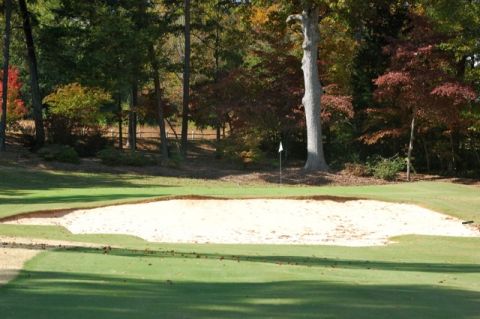
Although owner Mike Kaplan plans to make changes to Green Valley's layout, a hole like the par 4 15th (top photo) may not require much in the way of tweaking. The steroidic bunker in front of the 6th green, however, will go -- as it should.
Big changes ahead for the golf course
Like any involved golf club member who now just happens to own his club, Kaplan is impatient about making changes at Green Valley. His first big move was to commission Jan Bel Jan, a Jupiter, FL-based architect, to reposition and lay out the 1st and 10th holes, which he had always thought were underwhelming starters for each nine. Kaplan is a big fan of Bel Jan, whose skills were honed as an architect assistant to Tom Fazio. Since going off on her own, she has worked solo on such projects as restoration of all 36 greens at Pelican’s Nest in Bonita Springs, FL, a clubhouse landscape plan for the famous Seminole Country Club in Juno Beach, and a landscape review of Orangeburg, SC, Country Club, one of the better classic courses in that state.
“She’s terrific,” he says, “one of the most under-appreciated golf architects working today.”
During a round of golf at Green Valley with Kaplan, who is a single-digit player and former club champion, hardly a hole goes by without him explaining some change he wants to make, including moving the location of a couple of greens, expanding the size of others, removing bunkers (like the aforementioned grotesquerie at the 6th green) and adding new contours to a few of the holes; he has plenty of dirt for that, having stored tons of it next to the 13th hole from the excavation that reshaped the 1st and 10th holes earlier, and he plans to use some of it to add a landscaped “backstop” behind the 13th green.
No change may be the best decision of all
But, ultimately, a Kaplan decision to leave one aspect of the greens unchanged at Green Valley may be his legacy as owner. Since its founding almost 60 years ago, through searing heat of summer and occasional freeze of winter, Green Valley’s putting surfaces have been composed of bent grass, adored by northern U.S. golfers and loathed by southern golf superintendents who spend sleepless nights trying to figure out how to keep them from browning out in relentless summer heat. While competing golf courses in the area have transitioned to more weather-resistant hybrid grasses, Kaplan and Bel Jan believe they have the magic formula to maintain Green Valley’s bent grass greens. arguably the best greens when they are well maintained. The secret, he contends, is MaxAnd, an organic material invented by two doctors in Florida and encouraged by Ms. Bel Jan. The club’s greens keepers have injected the material into the greens’ sub-surfaces and also used it for top-dressing, and as the MaxAnd has sunk in, it has formed a layer under the turf that provides much needed moisture and a cooling effect on the grass roots during hot summers. Members from some of the better private clubs in the Greenville area have visited Green Valley, putted on the greens and gone back to their clubs asking what it would take to replicate Kaplan’s greens.
Kaplan is confident he can defy Mother Nature and keep most golfers’ favorite putting surface healthy at Green Valley, despite the challenges. I can testify personally that his greens did remind me of the beloved putting surfaces New England golfers are as used to as well-made pizza and bagels. Passion counts for a lot in successful golf club management, as does business experience, and more and more new members are betting on Mike Kaplan.
*
With an already solid private golf club at its core, and an owner planning significant upgrades to it, the neighborhoods adjacent to Green Valley Country Club should be in prime consideration for retirees or families relocating to the Greenville, SC, area. If you would like see a selection of current homes for sale in Green Valley, please click here.
 Home On The Course newsletter
Click here to sign up for our Free monthly newsletter, loaded with helpful information and observations about golf communities and their golf courses.
Good News on Home Front, But Will Pols Actions Affect Second-Home Sales?
The housing market had a good day yesterday and appears to be encouraging confidence in the overall economy. “An improving housing market is buoying consumers’ spirits and spurring spending” is the way today’s Wall Street Journal put it on page A3.
The S&P/Case-Shiller Index, which looks at home-price changes in 20 metro areas, reported a 3.6% increase in September prices from the same month in 2011 and an increase of 7% for the first nine months of this year. That represents the biggest jump in seven years. (Remember those heady days of 2005?)
The Journal, in highlighting the turnaround in the market, cited Maracay Homes in Phoenix, which is adding another 10 developments on top the 12 it has already built in the area. Four of the 12 sold out this year alone. Importantly, many homebuyers seem to be shrugging off the potential for a leap off the so-called “fiscal cliff” that could push the nation
Mark’s good question goes to the motivations behind a family’s or a couple’s desire to purchase a second home. Let’s assume, for the sake of argument, that the politicians sacrifice second-home tax and interest deductions at the altar of deficit reduction. Will a couple with, say, $200,000 to invest, and an urge for a family vacation home, decline to buy that golf community condo they’ve had their eye on because they lose $100 per month in tax deductions? (I use the $100 per month figure because that is about what my wife and I would lose for the tax deduction on our condo in Pawleys Island, SC.) Will the couple in question earn potentially more over time in, say, the stock market than in their vacation home? (We know they won’t come close in a Bank of America savings account.) What about the relative risks of a real estate investment compared with a stock market investment? And what price can we put on the entertainment value of a vacation home?
The lost deductions on taxes and mortgage interest for second homes, if it comes to pass, will have an effect on the market -– in the short term. After a while, couples and families will readjust –- and pick up the slack by reducing other discretionary spending to cover the loss of deductions, or they will opt to buy a little less house.
Regardless, it is nice to finally see consistently positive headlines about home sales and prices. After helping to push the nation into recession in 2008, the housing market owes us. It appears this could be payback time.
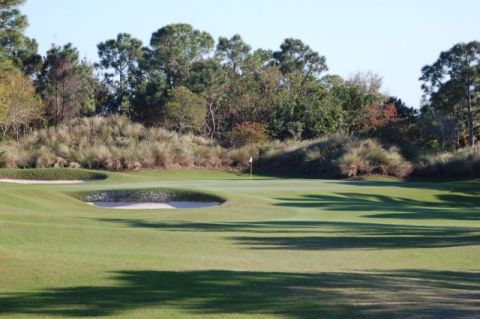
In the short run, sales of vacation homes in a community like Willoughby, in Stuart, FL, may be affected by a change in tax and mortgage interest deductability, but in time, second-home-seeking couples will readjust.
Post-election, housing market will do what it will absent unwanted "help" from Congress
During a recent-two week swing through South Carolina and Georgia, I was amazed at the responses by Realtors to my question, “How are sales going?” The consensus first part of the answers -– “We’re up over last year quite nicely” – made sense to me, but the follow-on from more than a few of my contacts was a bit perplexing: “Buyers tell us they are waiting to see how the election turns out before they commit.”
With most economists calculating before the election that the economy was already rebounding, and employment, the linchpin to overall economic good times, poised to improve, it struck me as odd that folks
The day before the election, without any clear sense of who would win, Local Market Monitor President and respected economist Ingo Winzer indicated that the economy is already in motion, and housing will hold the key to further momentum. He wrote:
“The major element we'll see more of in the next year is construction. Our Housing Demand Index is hovering just above zero -- after 5 years in negative territory; home prices have bottomed out in more than half of the 315 local markets we cover; and home vacancy rates have fallen from an historically high 3 percent in 2008 to just under 2 percent now. This doesn't mean we're on the brink of another boom, but it's clear that the excess inventory from the boom years has largely been used up (except in Florida).”
Given the vagaries of the stock market and the paltry interest rates on “safe” investments, real estate still looks like one of the better areas to park some money -– especially if the home you buy is doing double duty as shelter and, even more especially, if it gets you to your dream of a warm-climate retirement in a golf community. Never forget also, especially if you live in a high-cost area, that one of the best returns you can generate is to move to an area with a significantly lower cost of living. If you would like to discuss how to do that and consider some lower cost lifestyles in high-quality golf communities, please contact me.
*
Speaking of the election, we have taken a quick look at the results for the 2012 election, and below is a snapshot of how folks voted in the counties in which some of our favorite golf communities are located. Note, of course, that the county results may, or may not, reflect how voters living in the golf communities voted. [In the September edition of our free Home On The Course newsletter we published a breakdown of the 2008 Presidential election results in counties surrounding some of our favorite golf communities in the southeast. You can read that issue by clicking here.]
In North Carolina, New Hanover County, home to Wilmington and the ocean-side community of Landfall, with 45 holes of golf by Nicklaus and Dye, Romney garnered 51.7% of the vote to Obama’s 47.1%. Immediately south of Wilmington, in Brunswick County, where Brunswick Forest, St. James Plantation and Ocean Ridge Plantation are located, Romney outpolled Obama by a 60.7% to 38.5% margin. Voters in Buncombe, which surrounds Asheville, and Craven County, where New Bern’s Carolina Colours is located, gave Romney comfortable nods of 55.5% and 58.5%, respectively. Only in Orange County, the location of Chapel Hill, University of North Carolina, Duke University and the fine community Governors Club, with a 27-hole Jack Nicklaus Signature layout, did Obama win overwhelmingly, with more than 70% of the vote.
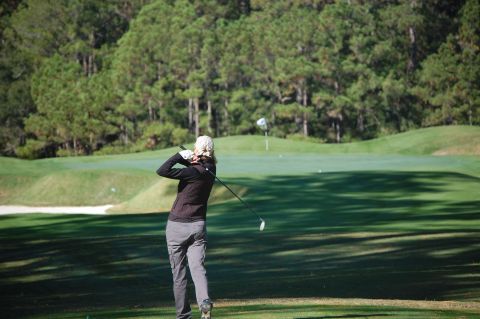
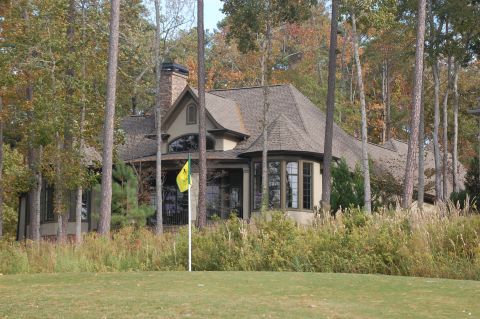
In Georgia, residents of Chatham County, home to The Landings at Skidaway Island (top), cast 55.5% of their votes for President Obama. In the more rural Greene County, where Reynolds Plantation is located, residents went for Mitt Romney 61% to the President's 38.4%. For those who needed a pleasant distraction post-election, the two communities combined offer 12 1/2 excellent 18-hole golf courses.
Not surprisingly, Obama did well in other university-dominated counties, such as Albemarle in Virginia, where the University of Virginia is located in Charlottesville. There, Obama notched a 55.3% to 43.3% win while squeaking out a smaller margin -– 50.7% to 48.0% -- in Nelson County, west of Charlottesville and home to the sprawling Wintergreen Resort (45 holes of golf by Rees Jones and Dan Maples). In New Kent County, between Richmond and Williamsburg and where the unique Viniterra golf community is located (Rees Jones), Romney won comfortably with 66.2% of the vote.
Romney swept Georgia easily, but Obama actually won the vote in Chatham County, which comprises Savannah and the 4,800-acre Landings on Skidaway Island, home to six golf courses and nearly 8,000 residents. Greene County, where the large Reynolds Plantation is located –- it features six and a half golf courses -– was more representative of the state, with Romney winning 61% to 38.4%.
South Carolina also went for Romney by a significant margin, with one of Obama’s only county victories coming from Charleston, where the golf communities in the Mt. Pleasant area (RiverTowne, Charleston National, Dunes West, Wild Dunes) and on Daniel Island are located. There, Obama won 50.4% of the vote to Romney’s 48.0%. In the counties that host Greenville area golf developments like The Cliffs Communities' Valley and Greenville Country Club, in the vast number of communities in Myrtle Beach and those in Aiken, Romney’s totals were above 60%. The tally was only a little closer in Beaufort County, which includes Bluffton, just off Hilton Head Island and comprises the upscale Colleton River, Berkeley Hall and Belfair golf communities, where Romney earned 58.2% of the vote. Romney won as well in Georgetown County, home of DeBordieu Colony, Pawleys Plantation and other Pawleys Island golf communities, but by a smaller 53.4% to 45.7% margin.
The Naples, FL, area (Collier County) went overwhelmingly for Romney (64.7%) while it was a little tighter in Sarasota’s Manatee County, with Romney taking 55.8% of the vote. And although Obama did well in the northeast, Delaware’s Sussex County, which comprises a nice range of golf communities in the Rehoboth Beach area, went for Romney 55.9% to 42.9%.
Properties currently for sale in most of the aforementioned golf communities are posted at GolfHomesListed, our companion site.
Love & War: Remains of Revolutionary War fort highlight unique SC golf community
You can imagine the rat-a-tat-tat of snare drums and bullets as you play a round of golf at The Patriot Golf Course in Ninety-Six, SC, the center point of the Grand Harbor Golf & Yacht Club community on Lake Greenwood. Designer Davis Love III provides a history lesson along with challenging golf at one of America’s unique golf layouts.
A Revolutionary War battle known as the Siege of Ninety-Six was fought nearby, and visitors can spend the better part of a day learning all about it at a national park not 10 minutes from Grand Harbor. The 28-day attack by 550 Continental Army troops in the Spring of 1781 was designed to rid South Carolina of one of the last two British strongholds in the state (Charleston was the other), but the siege failed to dislodge Loyalists from the Star Fort in Ninety-Six. Despite the failure, the Americans forced the British from South Carolina later that year.
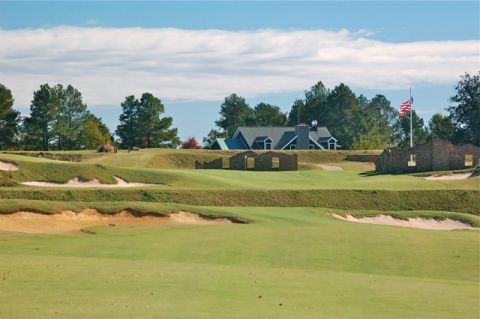
Players at The Patriot can claim an historic finish on the 18th hole, with the remains of the Star Fort ringing the green.
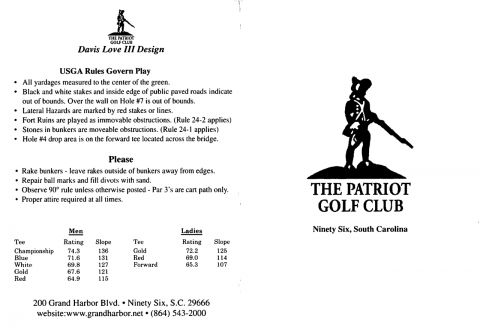
Love’s Revolutionary sculptures of crumbling embattlements at Star Fort form the backdrop for anyone fortunate to play the well-conditioned and imaginatively laid out Patriot course. The PGA Tour-tested designer produces some unusually tough courses, but if you choose your tee boxes wisely at The  Patriot, your round will not feel like a forced march. Those who choose the blue tees at 6,523 yards (rating 71.6, slope 131) will face enough in-play bunkers and forced carries to make the round enough of a challenge, as some of the approaches to greens on the otherwise relatively flat lakeside course are modestly uphill. Mid-teens handicappers will find that the white tees, at 6,176 yards (rating 69.8, slope 127) will set the stage for a pleasurable round.
The pushed-up piece of property from which the 1st and 10th holes start at The Patriot and where the 9th and 18th finish seems like a veritable outdoor museum, including the main simulated ruins of the Star Fort and a tunneled cart path ringed in the same bricks that form the fractured embattlements. You could be forgiven for feeling like an historical tourist as you approach the first tee, but once you are a few holes into your round, the education is forgotten as the layout demands attention of another kind. Between protective bunkers and false fronts, few greens at Patriot provide easy bump and run opportunities. And although the fairways are generously wide, and fairway bunkers tend to favor one side or the other (rather than pinching in), they are well in range and a reminder that Love, for all his own length off the tee, suggests a tighter grip on your thinking than on your golf clubs. The Patriot puts a special premium on positioning.
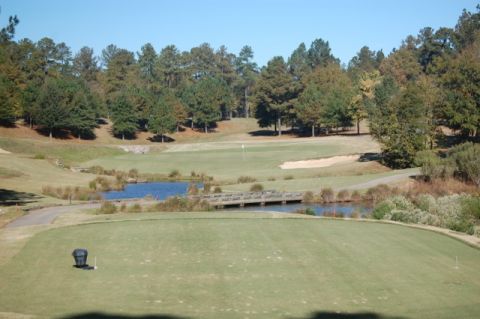
Designer Love confronts the player with water and sand hazards, as well as false-front greens, sometimes all on one shot, as at the par 3 4th at The Patriot.
Grand Harbor is a modest-sized golf community about 15 minutes from the town of Greenwood, population 23,000, which offers all the convenient necessities of life, and then some. (Note: I’ve had two nice meals over the last three years at Pascals, owned by a French chef; the pork osso buco was especially good.) Grand Harbor barely survived the recession but is now under the ownership of Challenge Golf, an experienced developer with a dozen communities in its portfolio, most in Texas, but with a desire to expand its holdings east of the Mississippi while the golf club market is still depressed. About the time it bought Grand Harbor, Challenge also added Balsam Mountain Preserve, a mountaintop community in western North Carolina with a dramatic Arnold Palmer design golf course that had been through a couple of owners previously.
Golf property prices in Grand Harbor reflect its 80-minute distance from Greenville, one of our favorite southern cities, and seem more than reasonable given the presence and views of Lake Greenwood. Home sites on the golf course begin as low as the $30s, some with additional views of the Star Fort ruins. Combination golf and water view lots start as low as the $40s. Home sites that abut the lake, with docks in place, begin in the low $100s. Low-maintenance townhomes along the 18th fairway, up to 2,800 square feet, are priced below $400,000. Single-family resale homes start in the high $200s.
We are currently featuring Grand Harbor golf homes for sale at our companion web site, GolfHomesListed. Please register there today for unlimited access to the full details on all listings at Grand Harbor and the more than 50 other communities featured at the site. If you have further questions about the community, would like to see additional photos or a copy of the golf course scorecard, please contact us.
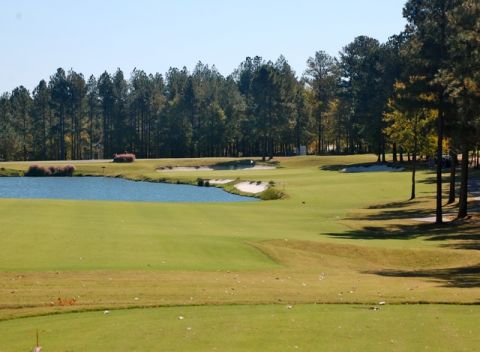
The 9th at The Patriot is a terrific risk/reward mid sized par 4, 392 yards from the blue tees, that presents a risky, all-water carry appropach for those who play safe, and a rewarding over-land approach for those who hit a thread-the-needle fade off the tee.

The bell stops tolling for golf industry
Golf course operators who open a new club in the current environment should have their heads examined, right? Not so fast. According to a recently released report from the National Golf Foundation, golf rounds played this year are on track to increase by a whopping 30 million from last year’s totals, the best year since 2000.
The unusually warm weather to the start of the year certainly propelled golfers to drag their clubs out of the closet earlier this year, especially in the northeast quadrant of the nation where nearly half the rounds in the country are customarily played. But balmy temperatures can’t account for all the drama in the numbers; consumer confidence also helped thaw the frozen state into which golf play had fallen. Consumer confidence has been up much of the year, and the feeling that things are getting better economically is as warming as a 50-degree March day in Vermont.
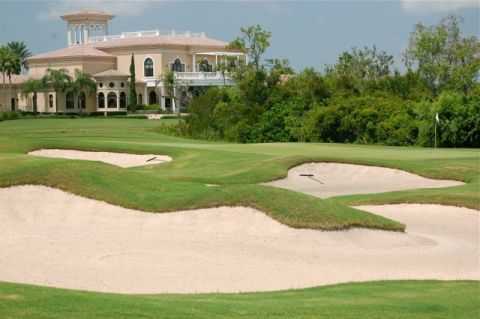
Development group Taylor Morrison has announced it will build an 18-hole golf course in its Esplanade community in Lakewood Ranch, FL, a town unto itself which already has a few golf community courses, one of which surrounds a pretty-in-pink clubhouse.
According to the Herald Tribune of Sarasota, FL, Taylor Morrison, a respected national builder, has plans for two new golf communities on the Gulf Coast. In Lakewood Ranch, just southeast of Bradenton, adjacent to its existing Esplanade community, Taylor Morrison will construct an 18-hole golf course and add 800 homes on a 400-acre piece of property. The company also announced it will build a 1,100-home community in Collier County, near Naples, that will include a new 18-hole golf course.
In the last few years, most industry observers had written off any chance of meaningful new golf construction. But the National Golf Foundation said it could account for 150 or so new golf courses planned for the coming few years, certainly more than we have seen built in the last few years. We are likely never again to see the explosion of golf course construction of the 1990s and 2000s but sophisticated builders like Taylor Morrison can do simple math, and in the millions of additional rounds played this year, and in the magic number of 76 million -– the total of baby boomers in or moving toward retirement –- we can very well envision a mini-boomlet in golf community construction over the coming decade.
*
For a list of homes currently for sale in Lakewood Ranch, please click here.
Golf community prices on the rebound; read about it in Home On The Course
No matter how they may differ in their perspectives, every four years the two major party candidates for U.S. President agree that they “learn a lot about the American people” when they get outside of Washington, D.C. or wherever they happen to be living. Your correspondent learns plenty too when he gets outside the confines of his home office in Avon, CT, and travels through the Southeast to talk with golf club owners, real estate professionals, developers, golf professionals and residents.
I came away from a recent two-week trip through South Carolina and Georgia and visits to Reynolds Plantation, The Cliffs Communities and others thinking optimistic thoughts about the leisure residential market, and about golf communities in particular. My conclusion is that golf community real estate prices have hit bottom and have actually begun to take an upward trajectory that is likely to accelerate in the coming year or two. To confirm my observations, I called real estate agents we work with in the South to ask how this year’s sales compare with last year’s.
You can read about it in our next edition of Home On The Course, free when you subscribe by clicking here. Golf community real estate prices may rise, but our newsletter subscription price won’t.
Puckered Up: Raised greens only sign of land movement at deluxe May River
Caddies (or at least forecaddies with carts) are mandatory at May River Golf Club, part of the Palmetto Bluff Inn and resort complex in Bluffton, SC. The South Carolina Golf Rating Panel held an outing there last week, and I made a point of attending (I am a panel member) because May River is ranked #4 in the entire state by the panel and I wanted to see what the fuss was about. The golf course lived up to expectations, and then some.
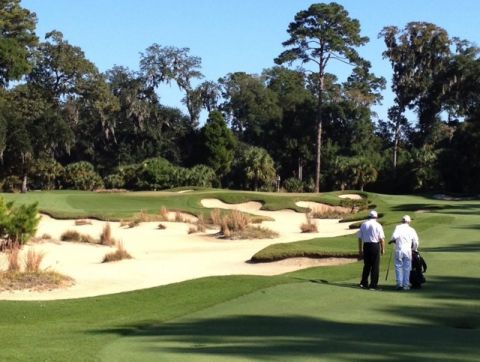
May River is a terrific golf course, but it would not be quite as terrific without the guidance of one of its well-trained caddies. All photos by Lyn Young.
The course is immaculate, as befits a club associate with an Inn with room rates that average more than $500 per night. Palmetto Bluff always ranks near the top in travel- and resort-oriented magazines that consolidate and publish the impressions of their editors and readers. Suffice to say, if you can afford a few days at Palmetto Bluff, do not hesitate. (Golf fees are in the $200s for resort guests, plus caddy fees that run to nearly $100, tip included.) Otherwise, the only ways to play the golf course are as a member -– you must be a property owner to qualify for membership –- or as a guest of a member.
The design is by Jack Nicklaus who obviously respected the impressive piece of Low Country canvas he was granted, which includes expansive live oak trees a few hundred years old and marshland typical of the area. My foursome chose the “Cedar” tees at 6,513 yards, a rating of 72.8 and slope of 137. After a few holes, you can usually intuit the instructions developers gave to the architect, and at May River, I’d guess those instructions went something like “make it challenging, beautiful and fun.” In my experience, especially as a member of a Nicklaus-designed golf club (Pawleys Plantation), the Golden Bear has no problem with the challenging part, but can be a little inconsistent with the fun part. But at May River, Nicklaus and his golf design team did nothing to disappoint his patrons or those lucky enough to play the course.
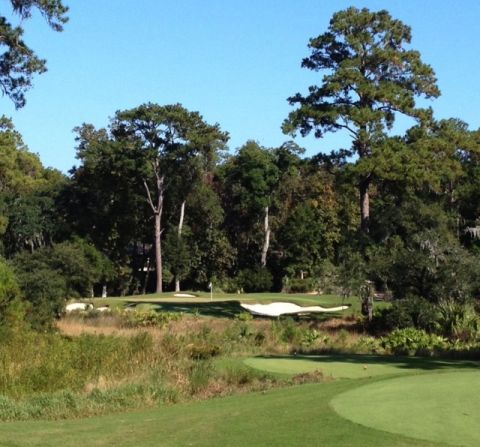
Some approach shots at May River must carry marsh, sand and a false front green.
The May River layout appears a bit easier than it actually plays. Fairways, for example, seem wide enough from the tee boxes, but fairway bunkers have a way of gobbling slightly errant drives. (I played from bunkers on three of the first four holes, but only because when my caddy advised, “Favor the right side,” I pulled it down the left, and vice versa.) Approach shots either must fly an expanse of marsh –- “thin to win” is not a great strategy at May River –- or skirt the deep Nicklaus bunkers that protect virtually all greens. One especially nice feature of the green complexes at May River is the mown grass areas around the greens; if your ball finds the fairway length grass between bunkers, putting from as far off as 15 yards or so is a viable option (especially to front pin positions). I saw no stray sprays of grass near the greens to interrupt a rolling ball’s progress.
You can tell that Nicklaus and his design buddies did not push much dirt around May River. We encountered no moguls or even fairway sloping that would distract from the views of the hundreds of years old live oak trees, the May River beyond or the expansive Low Country marsh areas. The only reorientation of the land seems to be around the greens where areas are slightly sunken, giving the greens a puckered feel, and making shots to front positions extremely challenging. All in all, visually speaking, May River is one of cleanest golf courses in my memory.
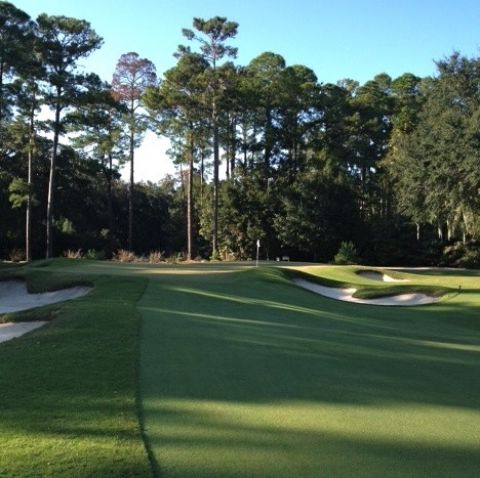
Fairways and rough are sharply defined at May River, part of the attention to detail over the entire expanse of the golf course.
Despite the puckering, the greens were fairly receptive to shots -– as in a well-struck 8-iron, say, would stop about 10 feet beyond the pitch mark -– and as smooth and puttable as you will find. It took me a few holes –- and wasted strokes -– to trust my caddy, but once I did, the ball went where he said it would. May River doesn’t accommodate anywhere near the number of rounds of its upscale Bluffton-area neighbors (Colleton River, Belfair, Berkeley Hall), and it shows in how blessedly clean the green surfaces are. (It helps also that the well-trained caddies are there to fix the occasional stray unrepaired ball mark.) I’d say the stimpmeter on the greens probably read 11 or so; anything faster and the sloping, especially from the front of some of the greens, might have turned a fun day into a frustrating one. May River is tough but never unfair, and for a golfer, that spells fun.
*
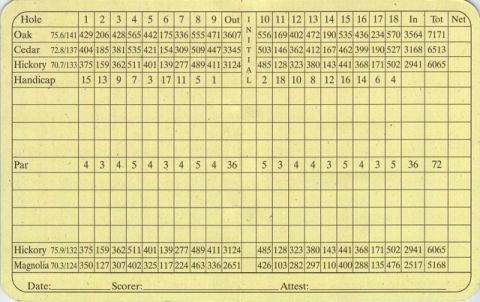
May River Golf Club in Bluffton, SC, was designed by Jack Nicklaus in 2003; Jim Lipe, one of Nicklaus’ senior designers, took the lead. At its longest, May River plays to 7,171 yards with a rating of 75.6 and slope of 141. The Hickory tees run to a total of 6,065 yards, a 70.7 rating and 133 slope. Women’s tees, called Magnolia, are 5,168 yards, rating of 70.3 and slope of 124.
Home sites at Palmetto Bluff begin in the low $100s and range as high as $2 million. Homes begin around $600,000 and reach as high as $3.5 million. Annual golf club dues at $5,400 are reasonable for the high quality of the golf course; initiation fees are under $100,000. Property owner association dues of $6,400 per year cover all the standard amenities, including pools, fitness center, boat and canoe access, and tennis. Docks are available for those who bring their own boats to Palmetto Bluff.
If you would like more information on May River and Palmetto Bluff, we can put you in touch with our highly professional real estate agent in the area, who knows the resort and all the other golf communities in the Bluffton and Hilton Head area as well as anyone (he’s lived in the area for decades). Please contact us for an introduction.
Reynolds rap unfair; plenty of conveniences just outside the community's gates
Before it hit a financial bump in the road, Reynolds Plantation, the expansive golf community on Lake Oconee in Greensboro, GA, was faulted by potential homeowners for only one thing –- its distance from civilization. “Nothing outside the gates,” was a popular refrain from some who visited and otherwise sang the golf community’s praises.
With its financial woes behind it -– the deep-pocketed financial giant MetLife has put its might behind the community -– and the leisure residential market showing strong signs of a comeback, I decided to visit Reynolds for the first time a week ago, expecting to be fortunate to find a cell-phone signal and little else outside the community’s front gate. But on my drive to the terrific Tom Fazio designed National Golf Club course, one of 6 ½ layouts at Reynolds, I was surprised to pass a large supermarket (Publix), medical offices, a steakhouse, and myriad other conveniences, all within five minutes or so of the most remote areas of the sprawling golf community. And during a closer inspection after golf, I noted multiple doctors' shingles hanging outside the modern buildings that comprise Lake Oconee Village. (Ground has been broken for a hospital two miles away.)
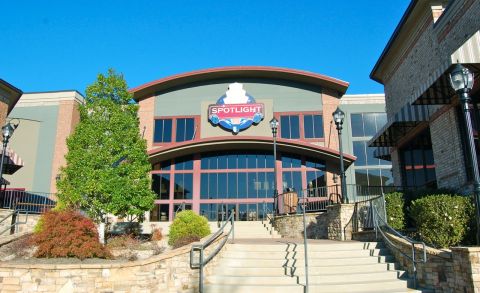
Lake Oconee Village, just outside the gates of Reynolds Plantation, features a large supermarket, multiple doctors' offices, restaurants and an eight-screen cineplex (shown here).
During my two nights at Reynolds, I ate dinner in two of the local establishments –- a decent steak dinner in Lake Oconee Village and a smashing dinner of baked ziti and sausage at the local “saloon,” the Silver Moon Tavern, five minutes down the road. Okay, art museums and minor league baseball parks have not yet made their way out to Greensboro, but Atlanta and its international airport are just 90 minutes away, close enough for retirees looking to get away from traffic, pollution and the stress of a near-urban existence, but not the benefits. For a couple looking for an upscale, golf- and lake-oriented retirement lifestyle, or a family looking for a deluxe vacation spot, Reynolds’ remoteness is more myth than reality.
I will have much more to say about Reynolds Plantation in this space in the coming weeks. But if, in the meantime, you would like more information on Reynolds, whose current real estate offerings begin at $40,000 for lots and $290,000 for a 3-bedroom, 2 ½-bath single-family home, please contact me.
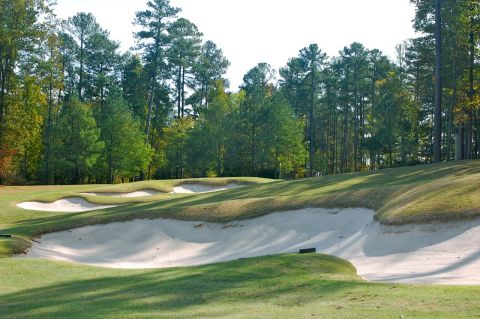
The accent at Reynolds has always been on golf, with Tom Fazio's National golf course layout, one of 6 1/2 immaculately conditioned courses on the property, considered among the top courses in Georgia. (Approach to #2 shown here.)
Palmer design team moves Wexford Plantation's golf club ahead to the past
by Tim Gavrich
Willard Byrd designed the original Wexford Golf Club course in 1983. And it was a good one, albeit not mentioned in the same breath as its more celebrated Hilton Head Island neighbors Long Cove Club and Harbour Town Golf Links. But a team from the Arnold Palmer Design Company led by Brandon Johnson, a promising young golf architect, undertook a considerable slate of renovations to the course in 2011, and their efforts should have the raters moving Wexford up the “best of” lists.
In that all the holes at Wexford weave between homes — big, impressive homes that thankfully sit well back from play — Johnson and the rest of the Palmer team began by removing hundreds of trees that had constricted the playing corridors of the course over the years. Holes that previously demanded a hit-the-fairway-or-else mentality now present players with options off the tee and give those who stray a bit a reasonable chance to recover.
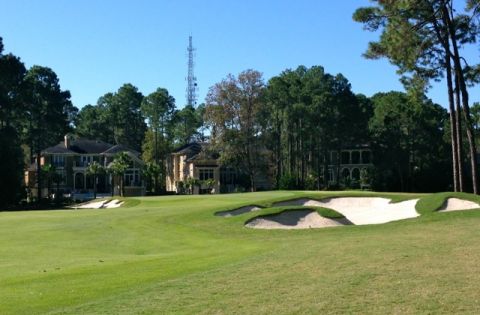
One key part of the increased recovery options at Wexford is the elimination of a large amount of long Bermuda rough in favor of pine straw, presenting a variety of recovery shot possibilities instead of merely hacking the ball forward. Not only do the pine needles increase the playability of the course, they also add some excellent visual contrast as well.
In addition to greens and deep oranges, white is a dominant member of the palette at Wexford. Johnson and the Palmer team eliminated many of Byrd’s bunkers, built some new ones, and gave all sandy areas a more rugged, natural look. In many cases, a bunker that appears to be flush with the edge of a green is a good 30 to 60 yards away. This trompe l’oeil is not only amusing for the first-time player but a renewable part of the psychological intrigue of a round at Wexford for its club members.
A word about the conditioning of the Wexford Golf Club course: It is as well maintained as any course the author has played in the South. Greens are firm and fast, making the relationship with their at-times wild undulations a great joy. The fairways are brand-new sheets of zoysia grass, a breed whose stiff blades prop golf balls up as though on a short tee. Hitting the fairway is a great scoring advantage because of these perfect lies. The same goes for the extensive chipping areas around the greens — also zoysia — from which the player can hit a variety of shots, including a professional-style hop-and-stop shot.
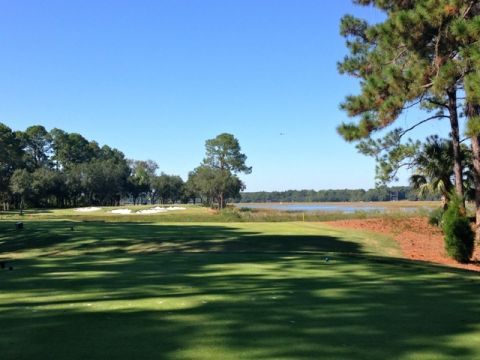
There are no “clunker” holes at Wexford, but there are a few standouts. The par 3s, in particular, are fantastic, where the Palmer team drew particular inspiration from Charles Blair Macdonald and Seth Raynor, two Golden-Age architects who applied numerous “templates” to most holes of their courses. One of the most famous of those is the Redan concept, originally found at North Berwick in Scotland but reproduced across the world. The 13th hole is Wexford’s Redan, with a green that slopes and angles from front-right to back-left. A low right-handed draw with a long iron has the chance to land on the front of the green and trickle some 30 yards to a back-left hole location, avoiding a large bunker that guards the entire left side of the green. It is a fun shot that not many courses permit.
Wexford’s practice facilities, also redone by the Palmer group, are second-to-none as well, sculpted to reproduce many of the visuals one encounters on the course. The clubhouse overlooks a marina surrounded by the property’s most opulent houses and accompanying yachts. The entire scene at Wexford is high-rent but far from stuffy, with a consistently kind, welcoming staff and relaxed vibe. It is a Hilton Head Island paradise.
[Editor’s Note: Current golf homes for sale at Wexford Plantation range in price from the high $300s to $3.2 million. The couple of dozen lots for sale range from under $100,000 to over $1 million for dramatic water views. If you are interested in a visit to Wexford, please contact us and we will put you in touch with a Hilton Head real estate professional who knows the island extremely well.]
*
Tim Gavrich is a public relations coordinator for The Brandon Agency, a marketing firm in Myrtle Beach, SC. He played collegiate golf at Washington & Lee University in Lexington, VA.
The most intimidating tee sign ever
Those of us who play at golf somewhat seriously understand that the game is almost entirely mental. Filter out all distractions, focus singly on the shot ahead, and you have a fair chance of making the golf ball do something close to what you intend. Occasionally stuff happens, like a dog barks at the top of your backswing or a kid screams from a porch just behind the green where you are working overtime to figure out the double break on a 40-footer you must get down in two.
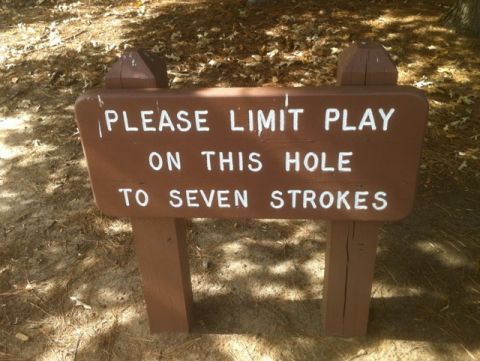
At Hickory Knob State Park’s golf course in McCormick, SC, on Friday, I saw something at a tee box I had seen only on miniature golf courses before. During an outing of the South Carolina Golf Rating Panel, my foursome was greeted at the tee box of the par 4 4th hole with the following sign:
“Please limit play on this hole to seven strokes.” Talk about intimidation.
The tee shot on the 397-yarder is played to a narrow patch of elevated fairway, with trees along the right side and, according to the equally intimidating tee sign that displays the hole’s layout, water down the left, unseen from the tee box, that eventually makes its way in front of the green. You are flying totally blind on your drive and left to wonder what happens once the ball disappears over the top of the hill. (Side note here: You are right, dear reader, to ask why we didn’t take a minute to drive up to the top of the fairway before we hit. Later, like embarrassed schoolboys, not a one of us mentioned that we might have employed that simple strategy.)
Long story short, every shot that made it over the hill stopped on a downhill slope of what seemed like 35 degrees or so, making an all-carry approach over the 75 yards of muck all the more challenging.
Two in our group of single-digit golfers made double-bogey sixes, one a bogey and one managed a par. Even the par maker muttered an oath as we left the green.
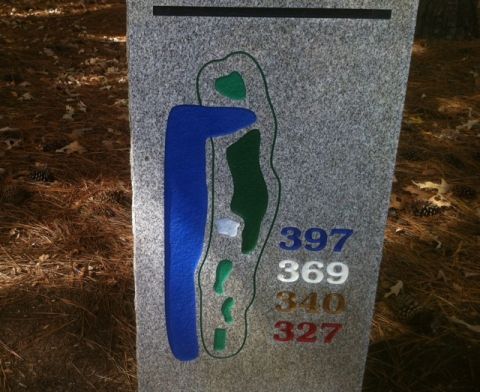
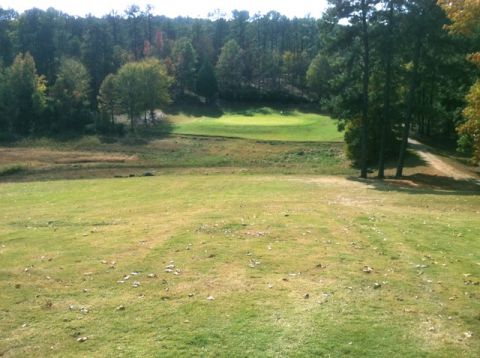
The water has evaporated in front of the green at Hickory Knob's 4th hole, but that doesn't make the severely downhill-lie approach shot any easier...if you are "lucky" enough to find the fairway on your blind tee shot.
On the Road Again…to Greenville, SC
The road back for big, remote communities

Now on Sale

- The only book about golf communities in the last 10 years.
- 156-page step-by-step guide to finding your dream golf home.
- Info on nearly 100 golf communities the author has visited.
- Paperback version costs less than a sleeve of Pro VIs.
Here is what the experts are saying:
“The book is chocked full of information…applicable to anyone looking for a move to the Southeast regardless of whether they are looking for a golf community or not.” — John LaFoy, golf architect (Linville Ridge CC, CC of Charleston, The Neuse GC)
“Larry has done a tremendous amount of work and anyone — like me — who is looking to search for a golf home now or in a few years needs this book.” — Brad Chambers, golf blogger, ShootingYourAge.com
“Wow! What a thorough piece of work…a must for anyone moving South. This book will help many people.” — Brett Miller, owner and founder of MMA, Inc, a golf industry consultancy
Buy It Now at Amazon.com or BarnesandNoble.com.