University confab paints mixed future for golf and golf communities
Clemson University hosted a symposium on Monday aptly titled “Golf SOS: Symposium of Sustainability” which brought together a co-founder of a Lake Keowee, SC, golf community we have visited, a major golf community developer, the head of National Golf Foundation and a well-respected golf course designer.
According to the Anderson (SC) Independent Mail, the death of golf course development might have been greatly exaggerated by NGF President Joe Beditz.
"I would say from looking at this, that the development boom is over," Beditz told the audience, pointing to a graph of course development that resembled the profile of Mount Kilimanjaro, according to the article in the Independent Mail.
Other highlights of the conference included Buddy Thompson’s view of The Cliffs Communities’ financial situation. Thompson is one of the founders of The Reserve at Lake Keowee, both a competitor and a former beneficiary of The Cliffs’ wild marketing spending before the fall. (Cliffs advertising had driven many people to the Lake Keowee area, and some of them stopped to tour The Reserve, thinking it was one of the Cliffs communities.)
At the Symposium, Thompson said of the Cliffs situation, "I don't want to use the word Ponzi scam, but it's almost using one community to pay for the next," Thompson said. "When the music stops, everyone has to sit down, and there aren't enough chairs." The bet here is that Thompson, probably used the word “scheme,” not “scam” and was misinterpreted. (Update: When we visited with Thompson some months ago, he was sympathetic to The Cliffs' current plight and careful not to appear critical of the community or its founder, Jim Anthony. Subsequent to the publishing of the Anderson Independent Mail news article about his comments, Thompson told us he indeed did not use the word "scam" and prefaced his remarks with compliments about The Cliffs and its founder. We are sure he is rooting for their comeback; a healthy Cliffs drives traffic to the gates of The Reserve as well.)
John Reed, who attempted to purchase The Cliffs Communities before it entered bankruptcy, also participated in the panel discussion at Clemson. According to the Anderson paper, Reed admitted that he had “developed too many courses over the years,” among them Belfair, Berkeley Hall and Colleton River just off Hilton Head Island. Talk about developer remorse; Reed said golf will no longer be the core of residential communities like those he developed.
“Five hours on a course — nobody wants kids and grandkids around for that," Reed said, according to the newspaper. "You wouldn't want to be around them even if they want to be there."
But the confab wasn’t entirely a downer, thanks to Bobby Weed, who earned the Golf Community Sustainability award at the Symposium. Weed, who has a number of excellent golf community courses credited to him, including the Wild Dunes Links Course in South Carolina, struck a practical and more optimistic note.
"Good courses will survive," Weed said. "There's still profitability. That's my new definition of sustainability. We've got to put business back in this industry.”
 Home On The Course newsletter
Click here to sign up for our Free monthly newsletter, loaded with helpful information and observations about golf communities and their golf courses.
Notes from a busy Realtor
There’s a great scene in Woody Allen’s movie “Annie Hall” where Alvie Singer, played by Allen, is standing in line at the movie theater listening to some know-it-all professor espouse the theories of media philosopher Marshall McLuhan. Alvie is engaged in a heated argument with the wise guy when McLuhan himself steps up to rebuke the professor for his ignorance. “Don’t you wish every day could be like this?” Allen addresses the camera.
I had something of an Alvie Singer moment today. After predicting in this space the other day that the market for golf homes in the south was on the rebound, I received the following note from Tom Pace, an expert in real estate at the fine golf community of Glenmore east of Charlottesville.
“I've been going crazy the past few weeks. I was out from 9:30 to 6:00 for two straight days showing homes…There were 27 home closings in 2010 in Glenmore, and 28 home closings in 2011. There are 23 homes under contract this year in Glenmore. The 24th home should go under contract in the next couple of days and it will be for around $1 million. We've had multiple offers on four different properties in the past 30 days. One home was listed at $1,075,000. I had a couple that paid $1,500 over list price on a $575,000 home and were delighted that I knew how to write an escalation clause.”
If you are a golf community blogger, or Realtor, don’t you wish life was always like this?
Crowded parking lots, golf school sign-ups signal revitalized golf home market
I stopped at Martin’s Golf Superstore in Myrtle Beach one recent morning and the joint was jumping. I was fourth in line to pay for my two-dozen golf balls (my customary Bridgestone RX-Tours and a box of Titleist NXT-Tours that I wanted to try out, not that anyone cares); at a couple of other registers, the lines were equally long. As I paid for my purchase, the cashier shouted past me to the next cashier, “It never stops, does it?” “I take it you’ve been busy,” I offered. “Look,” he said, gesturing toward the huge store, “it isn’t like they have to shop here. Their lives don’t depend on it. But still they keep coming.” “So golf isn’t dead?” I asked. “Not here; not hardly,” he replied.
Maybe Myrtle Beach is an anomaly and all those buddy golfers up north have been chomping at the bit all winter to head south to tee it up. They probably booked the trips late last year, before they would learn that New England’s winter was to be the mildest on record. (Vermont National Golf Club, about an hour from the Canadian border, opened last week, about a month earlier than usual.) More likely, the traffic is the result of pent-up demand that is about six years in the making. People aren’t exactly feeling flush yet, but most folks I talk with are starting to consider spending some deferred discretionary dollars on themselves, on golf equipment, vacations, a big screen TV and, bless their hearts, on a vacation or retirement home in a golf community.
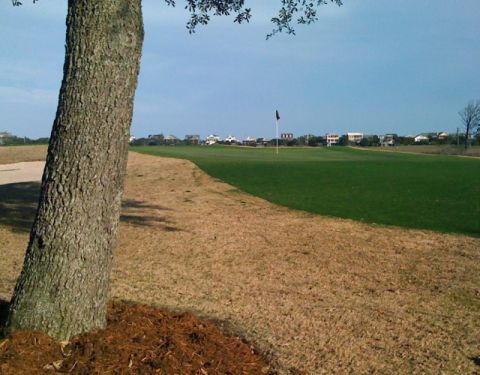
The parking lot has been full and the golf course at Pawleys Plantation jammed for the last few weeks, a sign that both the golf industry and golf developments may be in recovery mode.
The parking lot at Pawleys Plantation Golf Club south of Myrtle Beach has been filled most days for the last few weeks. I am a member of the club and called for a tee time three days in advance the week before daylight savings time. My only choices were 7:36 and 1:46; I’m not an early riser anymore and the 1:46 p.m. time would have meant miners’ helmets on the last couple of holes. Pawleys Plantation and golf clubs up and down the Grand Strand have been experiencing mostly full tee sheets for a few weeks, and on the South Carolina coast that can translate into something like the following scenario: Four golfing buddies stay in a 2 or 3 bedroom condo, have a great time, are curious about the market value of the place where they are staying and find out they could buy one like it for $100,000 or so. Then they go back north with ideas dancing in their heads. Pretty soon they convince their wives that a week near the South Carolina beach in the summer with the kids would be nice, they all have a great time, they look at a few vacation condos (in a golf community, of course), they consider how much more secure the job back home is looking lately as the economy picks up and, voila, they buy themselves a nice little vacation home.
Okay, that may be a bit fanciful, but not by much. Meanwhile, even more likely, many of the baby boomers who have deferred their move to their dream golf homes are starting to feel better about their IRAs and the potential to sell their primary homes, and they are thinking, “If not now, when?” I hear it from my Realtor contacts -- that they are busier than they have been since the beginning of the recession. I am finding it harder and harder to book a few minutes on the phone with my favorite Realtors. (One told me today he couldn’t talk because he had “a new agent in training, by my side 24x7.”) All indications are that the market for leisure residential properties, including in golf communities, is improving. Prices could start to trend up later this year.
The other day I played in a golf outing at Daniel Island. Rosemary and Mel Sole, who run the Ritson-Sole Golf School at Pawleys Plantation, were there too, and they told me that bookings for their golf academy are way up since January and running at a rate much better than any since before the recession. I can’t think of a better “leading indicator” for the game of golf and the reinvigoration of the golf housing market than a golf school. These are purely discretionary dollars people are spending on tuning up their games, and a signal that they intend to go out and play more, and maybe travel to play more, and perhaps even to purchase a home on a golf course.
If the golf schools and parking lots at the golf courses and golf superstores of Myrtle Beach are any indication, rumors of the death of golf have been greatly exaggerated. And if people are spending again on these barely necessities, can a serious uptick in sales of golf homes be far behind?
New Partnership group may inherit the earth in the Cliffs Communities
The bankruptcy court and trustee assigned to the Cliffs’ case will make the final decision on ownership, but the sketchy outline of a plan in the group’s March 23 press release seems to have Cliffs members, at least, breathing a collective sigh of relief (we’ve corresponded with a few in recent days). Beyond the usual corporate gobbledygook of the release -– e.g. “seamless club management and real estate solution” –- the group, which
Sales of lots, of course, are key to reinvigorating the golf clubs because they are the source of new members. If the Partnership does inherit the earth at the Cliffs, they will have to configure a more rational approach to club membership. They could start by abolishing any vestiges of the requirement that ties club membership to a property rather than to the individual. In Jim Anthony’s conception, if you declined membership
One thing missing from the Partnership’s press release was any mention of Tiger Woods and his design for the struggling High Carolina Cliffs Community, where the Carliles own a plot of land. In their desire to turn the ship around at the Cliffs, that is one anchor The Partnership should pull up and stow away, at least until they have bailed all remaining water from the ship.
Attitudes toward investments at The Cliffs depend on who holds the notes
A recent survey of Cliffs Communities members circulated by CIPOC, the Cliffs Independent Property Owners Coalition, only generated 155 responses, but the breakdown of the responses by note-holder and non-note-holder illustrates some of the challenges of building consensus as the community and its residents contemplate a future under new ownership.
In general, non-note-holders considered financially related issues more important than did note-holders, not surprising in that note-holders ponied up at least $100,000 each of the $64 million loaned to founder and
Attitudes toward the unfinished Gary Player golf course in the Cliffs Mountain Park community also implies an anxiety about increased assessments among the non-note-holders; 29.2% of them thought Mountain Park a “Very Important” issue. Note-holders, whose loan to Jim Anthony was supposed to support Mountain Park, saw the completion of Mountain Park as “Very Important” in 54.5% of their responses.
The issue of keeping The Cliffs seven courses together in one membership package -– the seven includes Mountain Park –- demonstrated the greatest disparity of responses. The rate of those considering the multi-membership “Very Important” was just 13.5% for the non-note-holders and 31.8% for the note-holders. More than 38% of the non-note-holders considered the issue “Not Important” compared with just 20.5% of note-holders.
When asked to raise any issues not covered in the survey, one of the top four responses focused on the issue of “uniting the disparate groups that this process has created.” That, in a nutshell, seems to be one of the greatest challenges The Cliffs faces.
*
A total of 450 acres, many of them inside the gates of The Cliffs at Keowee Falls, was sold at public auction two weeks ago to an Atlanta based real estate investment firm that had loaned Jim Anthony and The Cliffs $20 million. Worthington Hyde paid a reported $3.5 million for the undeveloped lots. A Carlile Group spokesperson told the Independent Mail of Anderson, SC, that the new Cliffs owners had begun discussions with Worthington Hyde to “provide stability and a new sense of vitality to The Cliffs Communities.”
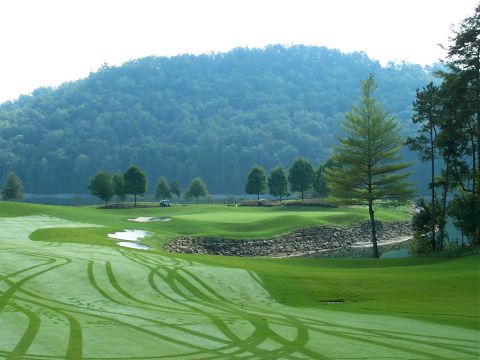
The Cliffs at Lake Keowee golf course, designed by Tom Fazio, is one of the best in the state of South Carolina.
Below Par: Public golf courses continue to close; could the privates be next?
Golf courses continued to close at historic rates in 2011, according to a recent report released by the National Golf Foundation. In all, since the industry started taking on water in 2006, 358 ½ golf courses have closed, a reduction of 2.4% since the peak year of 2005. (Note: The NGF calculates 9-hole courses as a half course.)
Golf industry professionals moan about societal issues causing the loss of golf courses, but as the NGF indicates, the growth of golf courses over the last 30 years -– a 30% increase –- has way outpaced
Also, the NGF has released the results of a recent study it undertook to determine public golfers’ behavior during the recession, specifically what approaches they are taking to save money at the golf course. The study found that the most popular ways to save money (indicated by between 43% and 45% of players) were to play in off-peak times, use coupons for green fees (and food) and book discount rounds online. Only 15% said they were buying cheaper golf balls and gloves.
Most of the golf courses that closed in the last half dozen years are public facilities, many of them nine-hole tracks whose former clientele moved to the more upscale courses down the street when they dropped their green fees significantly during the depths of the recession. As the economy improves, we should see the rate of public golf club closures slow. But we have to wonder if the next golf shoe to drop is among private golf clubs that have slashed their initiation fees to the bone –- some have dropped them altogether -- but haven’t raised their dues enough to pay for higher gas prices and other costs of doing business. Many have trimmed staff as well and, over time, proper course maintenance may be affected. Good economy or bad, club members are not going to tolerate less pristine conditions on their golf course or in their clubhouse, especially if the cost to switch to the better-maintained club down the street is a couple of thousand dollars -– or nothing at all.
*
Speaking of higher gas prices, we learned today that Direct Air, which serves every buddy foursome’s favorite destination, Myrtle Beach, SC, from such secondary northeast airports as Plattsburgh, NY and Worcester, MA, has suspended service for almost two months because of excessive fuel costs. The low-priced airline decided that, rather than raise prices, it would take cover for now and wait until fuel costs abate (they hope). They indicated they will consider resuming flights in May.
Daily Double? Same day ski and golf
The New York Sunday Times Real Estate section today features a resort in northwestern New Jersey where, because of abnormally warm weather this month, locals can ski on artificially made snow in the morning and play golf in the afternoon. The golf course has opened six weeks earlier than usual.
For those who play on snow and bent grass, this is a nice little bonus, but don’t count on it every March, global warming notwithstanding. In western Virginia, however, at the Wintergreen Resort, the opportunity to ski after breakfast and play golf just after lunch is an annual affair -– as early as December and January every year. With 27 of its 45 holes open year round, and prices for vacation condos and single-family homes well below their mid-last-decade levels, golfing skiers – or skiing golfers, if you prefer -- from Washington, D.C., Philadelphia and even points farther north are looking seriously at Wintergreen as a place to satisfy one of their strong summer urges during the winter.
Wintergreen recently suffered a bit of a financial setback when Bank of America pulled its multi-million dollar line of credit in the wake of a warm winter that hurt ski season revenues -- a lot of that going around –- but the board that runs the community’s amenities reacted swiftly and appropriately by cutting expenses and shedding a dozen jobs. The consequent publicity is bound to push prices even lower, making Wintergreen worthy of scrutiny by those looking for a bargain. Homes start in the $100s.
Interested? Please contact us for more information.
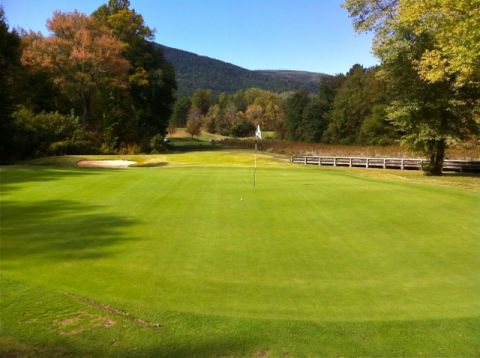
Wintergreen's Rees Jones golf course at the bottom of the mountain is open year round, making it possible to ski and play golf in the same day.
The Donald makes his case for The Point; our point is higher potential home values
For all we know, the direction of Donald Trump’s life might have taken an early turn in high school English class, courtesy of a famous quote by the poet William Blake: “The road to excess leads to the palace of wisdom.” Never mind that some believe Blake was taking a shot at excess, implying that you really can’t know (be wise about) what constitutes appropriate behavior until you cross the line. Be it an obsession with birth certificates, preening for the camera, or an over-the-top glee at faux-firing people, no one would ever accuse the Donald of staying on the discreet side of the line.
Which brings us to The Point Golf Club, the upscale golf community
Some of The Point’s residents fear the road to excess is leading to their own buttoned-up community. But, to be fair, there is no denying that when Trump takes on a golf club or any other property, he puts his money where his mouth is, and in this case, his mouth says he wants The Point; it is therefore unreasonable to assume he is looking to be a passive investor in The Point. (Is there anything passive about The Donald?)
Some of The Point members argue that Trump’s very excessiveness will cause him to raise dues significantly. There is some logic to that, but one could also argue logically that as the quality and reputation of the club at The Point increases, so too will the market values of members’ homes. For the sake of argument, would you rather pay 20% more in dues over time on, say, $10,000 per year, or accept a 10% increase in the value of your $1 million home? You don’t need to work for Donald Trump to figure that one out.
Members will vote later this month on whether to accept Trump's reported $7 million offer. If they think deeply about it, club members may come to reconcile that Trump’s highway of excess could lead to much loftier values for their palaces. And that will make everyone wiser in retrospect.
Doing Their Bidding: Foreclosed golf community attracting strong interest
Two locally owned firms are fighting each other for the property in a state-sponsored auction that amounts to a poker game with unlimited raises. In North Carolina, a “winning” bid for a property in foreclosure can be “upset” by other bids within 10 days. The “upset bid” restarts the clock, and that bid can be lost to yet another higher bidder. For a prized property, this bid and re-bid process can go on until all parties put down their paddles.
A paddle has been going up every week or so in Tryon since
Because I recognized White Oak’s potential to attract serious golfers and equestrians alike, and because one of our dedicated readers owns property there, I offered the developers that I would nose around for potential funders to help them get through their rough patch. I spoke with industry sources with connections to investors in large properties, and they all said basically the same thing (I’m paraphrasing): “There are many properties in trouble, and the money will be looking first at established communities like The Cliffs Communities and Reynolds Plantation. White Oak is last in line.” But there is so much money on the sidelines looking for a home (literally and figuratively) that even a roughed out community with a golf course that requires additional investment is attractive to some investors. Clearly, that is the case at White Oak.
This is a signal that the bidding for bigger prizes like The Cliffs, where the bankruptcy court may be entertaining an "upset bid" type process, could intensify; recent statements by The Cliffs board imply they are expecting bids to exceed the "winning" offer by Steve and Penny Carlile. Even more importantly, investor activity at both ends of the golf community market is a signal that the smart money thinks the economy is improving. And there is nothing “upsetting” about that.
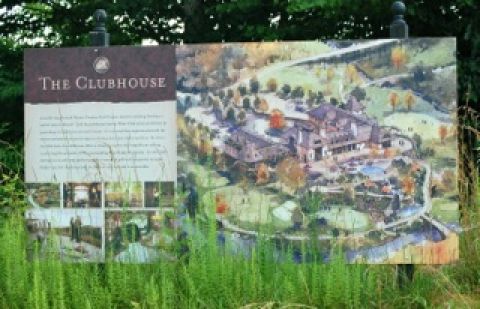
What might have been: Before the housing market tanked, White Oak's developers had big plans. Now the golf community is in foreclsoure proceedings, with two investors locked in fierce bidding which is approaching $5 million.
Myrtle Beach golf giants consolidate
Two of the biggest golf club operators in the Myrtle Beach area have merged, bringing 23 of the 90 golf courses along the Grand Strand under one umbrella, National Golf Management. The newly formed company will own and operate 15 clubs and manage another eight. According to a recent article in Golf Inc. magazine, National Golf Management is the 19th largest golf management company in the world.
Golfers who beat a path to Myrtle Beach on an annual basis will recognize many of the courses in the NGM portfolio; they include “The Grandaddy,” Pine Lakes International, the first course to open in Myrtle Beach (1927); Arnold Palmer’s King’s North; the Grande Dunes Golf Resort Course; the challenging Pawleys Plantation Golf & Country Club, a Jack Nicklaus Signature layout that plays through a former rice plantation; and the highly regarded Tidewater Golf Club, perennially rated in the top 10 of all courses in the area.
Myrtle Beach National was formed when the company that built the golf development of the same name just off Highway 501 and the 100-year-old Burroughs & Chapin merged. Burroughs and Chapin had operated primarily as a real estate development company before it expanded into golf course ownership. In Myrtle Beach, real estate and golf have gone hand in hand for the better part of a half-century.
The new company’s choice of a “national” name may signal larger aspirations beyond Myrtle Beach. A number of regional and national golf course operators are looking to expand their holdings while prices for good clubs are at bargain-basement levels, and with its new heft and expansive name, National Golf Management may be ready to compete with the likes of Donald Trump, Toll Brothers Golf and other giants of the game.
Note to potential golf home buyers: The Grande Dunes community, which features large- and medium-sized homes done in a Tuscan country style that many Floridians will recognize, had the bad fortune to open just a few years before the housing crisis. Prices there plummeted, and although there are signs that the bottom is at hand, a couple looking for a great golf retirement home or family looking for a vacation spot to call their own will find plenty of bargains at Grande Dunes. If you are interested in learning more about Grande Dunes or other great golf homes for sale in the area, please contact me.
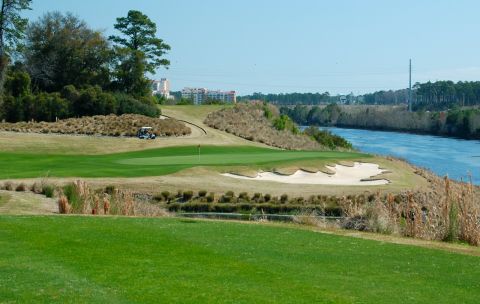
The Grande Dunes Resort Course is one of 23 in the Myrtle Beach area that now comprise National Golf Management. The Grande Dunes community and its two golf courses -- the other is the private Members Club -- were developed by Burroughs & Chapin, which merged with Myrtle Beach National to form the new company.
Cliffs makes it official: Chapter 11

Now on Sale

- The only book about golf communities in the last 10 years.
- 156-page step-by-step guide to finding your dream golf home.
- Info on nearly 100 golf communities the author has visited.
- Paperback version costs less than a sleeve of Pro VIs.
Here is what the experts are saying:
“The book is chocked full of information…applicable to anyone looking for a move to the Southeast regardless of whether they are looking for a golf community or not.” — John LaFoy, golf architect (Linville Ridge CC, CC of Charleston, The Neuse GC)
“Larry has done a tremendous amount of work and anyone — like me — who is looking to search for a golf home now or in a few years needs this book.” — Brad Chambers, golf blogger, ShootingYourAge.com
“Wow! What a thorough piece of work…a must for anyone moving South. This book will help many people.” — Brett Miller, owner and founder of MMA, Inc, a golf industry consultancy
Buy It Now at Amazon.com or BarnesandNoble.com.